The aggregate production industry is increasingly moving toward engineered material performance, where consistency, durability, and application reliability have become key requirements in modern infrastructure development. As construction standards continue to rise, traditional production approaches are facing greater challenges in meeting the stability and quality expectations of engineering projects.
Industry Shift Toward High-Quality Aggregate Production
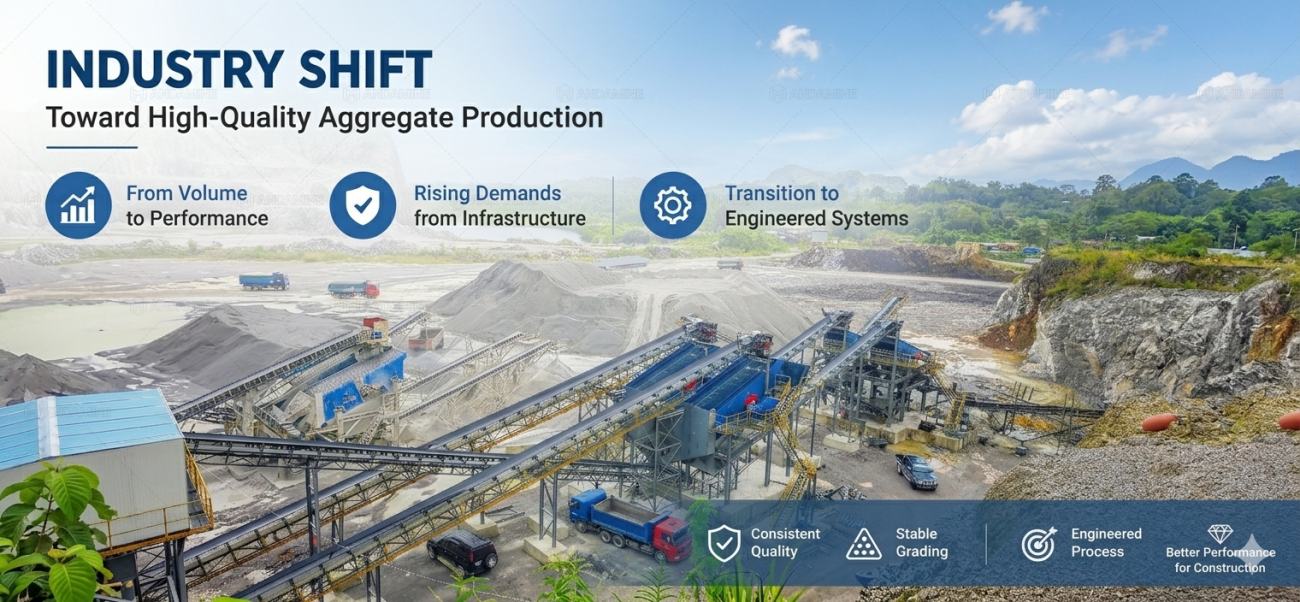
From production volume to material performance
In traditional aggregate production, output capacity was often the primary performance indicator. However, modern construction projects place greater emphasis on material behavior in concrete and structural applications.
As a result, the industry is gradually shifting its focus from maximizing tonnage to ensuring consistent particle quality, grading stability, and overall engineering suitability.
Increasing requirements from infrastructure development
Large-scale infrastructure projects such as highways, bridges, and urban developments are raising the bar for aggregate quality. Engineering specifications now demand more stable and predictable materials to ensure long-term structural durability.
This shift is pushing producers to move beyond basic crushing operations toward more controlled and standardized production systems.
Transition toward engineered production systems
Rather than relying on traditional single-process crushing methods, the industry is increasingly adopting integrated production systems. These systems are designed to manage the full material flow—from feeding and crushing to screening and recirculation—ensuring more consistent output quality and improved operational stability.
This transition marks a clear move toward engineered, process-oriented aggregate production.
Defining Premium Aggregates in Modern Construction Standards
Premium aggregates refer to construction materials that meet strict engineering performance requirements. Their quality is evaluated based on particle shape, gradation stability, cleanliness, and mechanical strength.
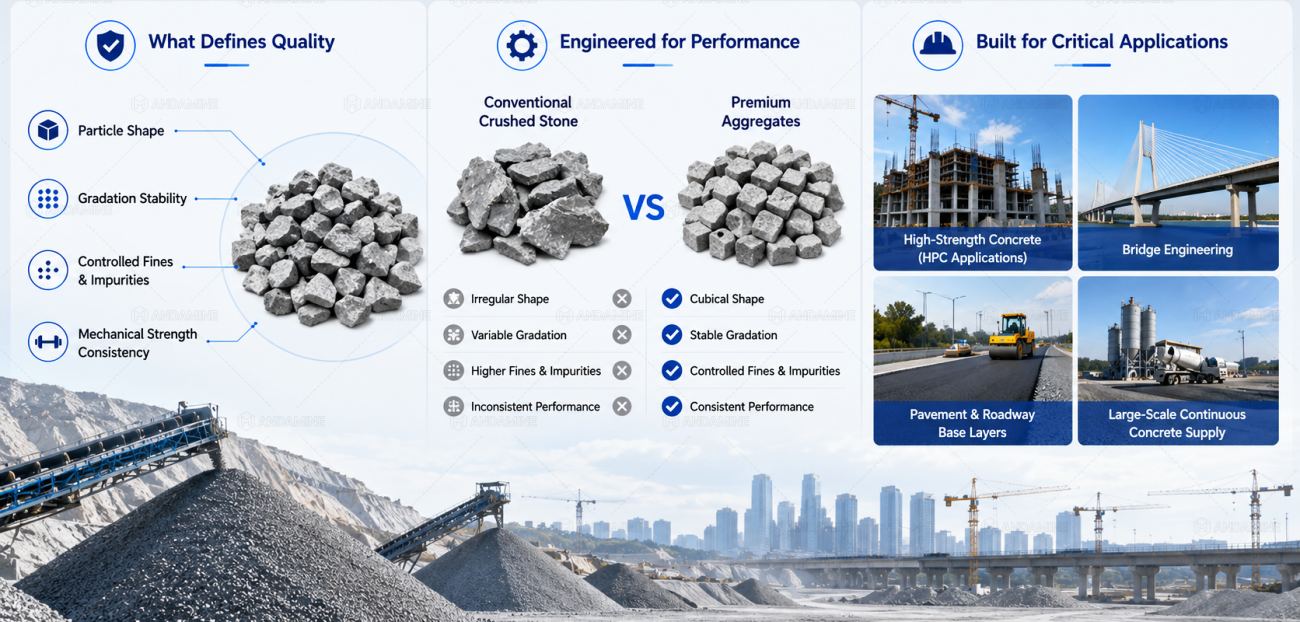
Key Quality Indicators Used in Engineering Evaluation
In modern construction engineering, premium aggregates are not defined by their source, but by a set of measurable performance indicators that determine how the material behaves in concrete and structural applications.
- Particle shape is one of the most critical factors. Cubical particles are preferred because they improve interlocking, reduce voids, and enhance concrete strength. Flaky or elongated particles, by contrast, tend to weaken structural stability.
- Gradation stability refers to the consistency of particle size distribution across different production batches. Stable gradation ensures predictable workability of concrete and reduces variation in mixing performance.
- Controlled fines and impurity levels are also essential. Excessive fines can increase water demand in concrete, while impurities such as clay or dust can negatively affect bonding performance.
- Mechanical strength consistency reflects the ability of aggregates to maintain structural integrity under load and during mixing, transportation, and compaction processes.
Together, these indicators define whether aggregates can meet the requirements of modern engineered construction systems.
How Premium Aggregates Differ from Conventional Crushed Stone
The difference between premium aggregates and conventional crushed stone is not only in appearance, but in how the material is produced and how consistently it performs in engineering applications.
- Conventional crushed stone is often the result of basic size reduction processes, where the focus is primarily on achieving target output size. This approach typically results in variations in particle shape and grading consistency.
- In contrast, premium aggregates are produced under controlled engineering conditions where output quality is considered as important as production capacity. The goal is not just to crush rock, but to produce materials with predictable physical and mechanical behavior.
From an engineering perspective, this difference becomes critical in high-performance concrete systems. Premium aggregates contribute to better bonding between cement paste and aggregate particles, which directly improves compressive strength, durability, and long-term structural stability.
Engineering Conditions Requiring Premium-Grade Aggregates
Premium-grade aggregates are not defined by the type of construction project, but by the performance requirements they must meet in concrete and material systems.
- In high-strength concrete, the quality of aggregates directly affects how strong and durable the final concrete will be. If the aggregate quality is unstable, it can lead to variations in strength and reduce overall structural reliability.
- When concrete is exposed to repeated loading or long-term stress, consistent aggregate shape and quality become more important. Poor-quality aggregates may cause weak points inside the concrete, which can reduce long-term performance.
- In projects that require strict control of concrete mix design, stable aggregate quality is necessary to keep the mixing process consistent and predictable. This helps ensure that concrete performs the same way across different batches.
Overall, premium aggregates are required whenever engineering projects demand stable performance, long service life, and reliable concrete behavior under real working conditions.
Why Traditional Aggregate Production Systems Struggle to Meet Modern Requirements
Traditional aggregate production systems often face limitations in meeting modern engineering requirements, particularly in terms of consistency, control accuracy, and long-term operational stability. These challenges directly affect final aggregate quality and concrete performance.
Inconsistent Quality: Particle Shape and Grading Instability
- Particle shape issue: Traditional systems often produce aggregates with unstable particle shapes, including a high proportion of flaky and elongated particles. This reduces interlocking performance and negatively affects concrete strength.
- Grading stability issue: In many cases, grading distribution varies between production batches, making it difficult to maintain consistent workability in concrete applications.
- Overall impact: These inconsistencies lead to unstable material behavior in real engineering use, especially in projects requiring long-term structural reliability.
System Limitation: Simplified Structure and Low Classification Accuracy
- System structure limitation: Most conventional production lines are built on simplified crushing configurations, which limits their ability to achieve refined aggregate control.
- Process imbalance: Crushing stages are often not well coordinated, meaning different size reduction steps cannot work efficiently together.
- Screening accuracy limitation: Restricted classification capability in screening systems results in uneven final material distribution.
- Overall impact: Even under normal operation, the system may still produce non-uniform aggregate output due to structural constraints.
Operational Variability: Raw Material Fluctuations and Long-term Instability
- Raw material variation: Changes in rock hardness, abrasiveness, and feed size directly affect system performance and output consistency.
- Operating sensitivity: Traditional systems are highly sensitive to changing feed conditions, making stable operation difficult in real quarry environments.
- Long-term stability issue: Over continuous operation, these variations accumulate and lead to inconsistent production quality.
Evolution of Core Crushing and Screening Equipment
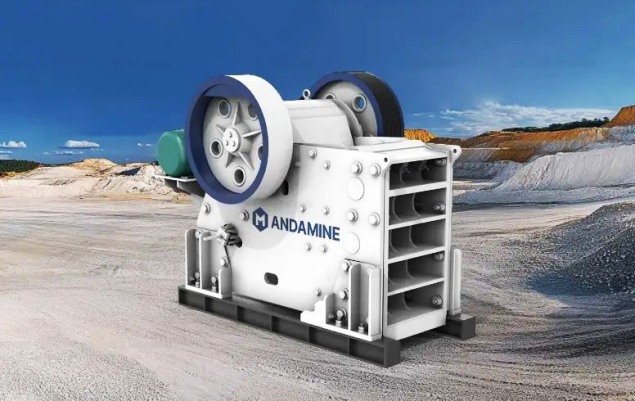
Jaw Crusher: Primary Crushing Efficiency and Hard Rock Adaptability
- Primary crushing role: The jaw crusher performs the initial size reduction of large raw materials, establishing the foundation of the entire crushing process.
- Throughput stability: Modern designs enhance continuous crushing performance, ensuring stable output under long-term operating conditions.
- Hard rock adaptability: Reinforced structural design enables the equipment to process high-hardness and abrasive materials more effectively, reducing performance fluctuations in quarry applications.
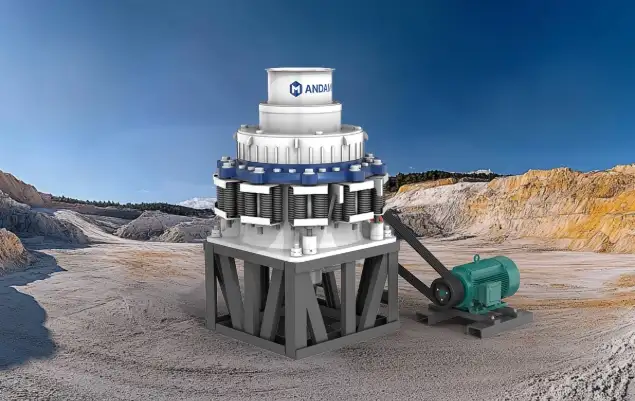
Cone Crusher: Secondary Crushing Precision and Particle Size Control
- Secondary crushing function: The cone crusher further refines material after primary crushing, preparing it for final shaping and screening processes.
- Particle size control: Optimized crushing chamber dynamics enable more stable control of particle size distribution, ensuring higher consistency in final aggregate output.
- Operational efficiency: Advanced chamber design improves energy utilization and supports stable, continuous production with reduced operating fluctuations.
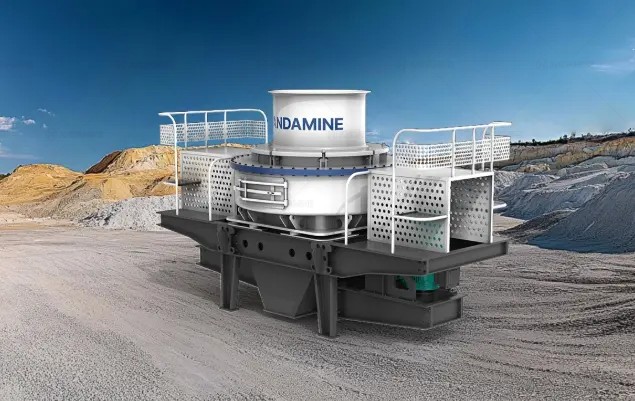
VSI Crusher: Aggregate Shape Optimization and Manufactured Sand Production
- Particle shape control: The VSI crusher improves aggregate shape by producing a higher proportion of cubical particles while reducing flaky and elongated materials, making it ideal for high-quality concrete and asphalt applications.
- Impact crushing mechanism: Using a high-speed rotor, the VSI crusher accelerates materials to create particle-to-particle (rock-on-rock) or particle-to-anvil (rock-on-iron) impact, depending on the machine configuration. This process improves particle consistency and shape.
- Manufactured sand production: The VSI crusher plays a key role in producing high-quality manufactured sand (M-sand) with stable grading, excellent particle shape, and consistent performance for modern construction requirements.
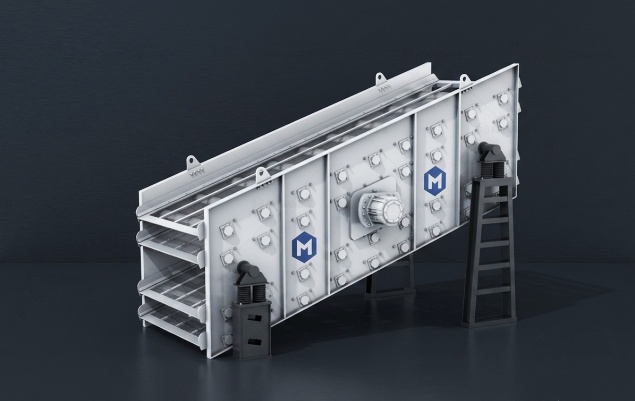
Vibrating Screens: Material Classification Accuracy and Grading Consistency
- Classification function: Vibrating screens separate crushed materials into different size fractions, forming the final aggregate grading structure for downstream applications.
- Screening precision: Modern screen designs improve separation accuracy and reduce material mixing, ensuring more stable particle size distribution between production batches.
- System efficiency: Higher throughput capacity and improved screening stability support continuous large-scale aggregate production with reduced downtime.
How Modern Aggregate Production Lines Are Engineered as Integrated Systems
Modern aggregate production lines are designed as fully integrated systems where every stage works in coordination to ensure stable, efficient, and continuous material processing. Unlike traditional setups, the focus is on system-level optimization rather than individual equipment performance.
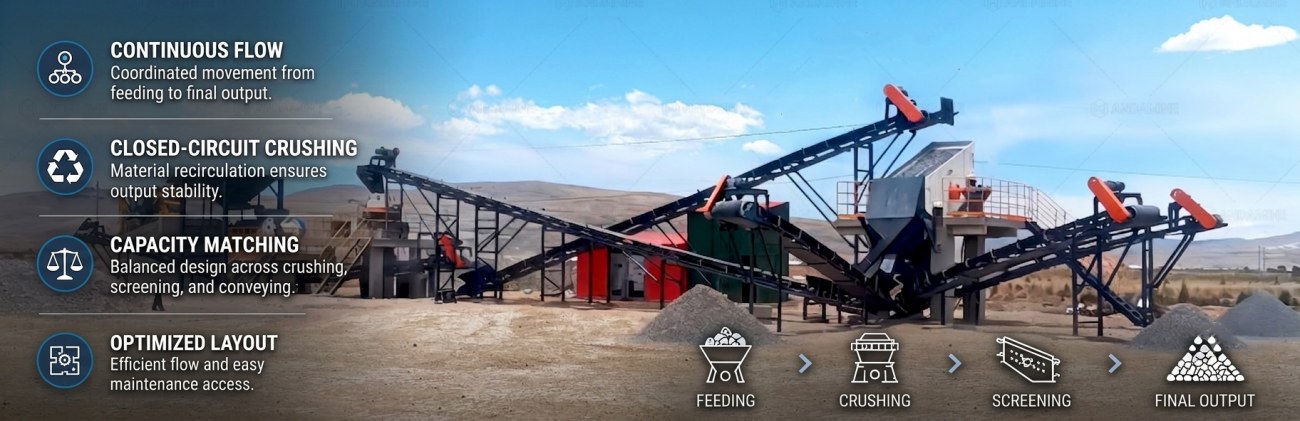
Continuous Material Flow: Coordinated Movement From Feeding To Final Output
Continuous material flow: Modern aggregate production lines are designed around a continuous flow concept, ensuring materials move smoothly through each processing stage without interruption.
From feeding to crushing, screening, and final output, the entire system operates as a connected production chain rather than independent units. This improves overall operational efficiency and reduces idle time between processes.
Capacity synchronization: A key design principle is matching the capacity of each stage to maintain stable throughput and avoid bottlenecks during continuous operation.
Closed-Circuit Crushing: Material Recirculation For Output Stability
Closed-circuit crushing system: This design introduces a material recirculation loop where oversized or unqualified aggregates are returned to the crusher for further processing.
Instead of being removed from the system, materials undergo repeated processing cycles until they reach required specifications. This improves control over final product quality.
Output stability: Continuous recycling within the system helps maintain more consistent aggregate size distribution and reduces variation in final output.
Capacity Matching: Balanced Design Across Crushing, Screening, And Conveying
Capacity matching: Stable plant operation depends on proper coordination of crushing, screening, and conveying capacities across the entire system.
When these stages are not balanced, material accumulation or flow interruption can occur, reducing overall efficiency and system stability.
A well-matched system ensures smooth material transfer between stages and supports uninterrupted production in long-term operation.
Plant Layout Optimization: Efficiency And Accessibility In Engineering Projects
Plant layout design: The physical arrangement of equipment directly affects material flow efficiency, space utilization, and operational safety in real project environments.
A well-optimized layout reduces unnecessary material transfer distance and improves overall production efficiency within quarry or construction sites.
Maintenance accessibility: Proper layout planning also ensures easier access for equipment inspection and servicing, which helps reduce downtime and supports stable long-term operation.
Operational Factors That Directly Influence Aggregate Quality
Aggregate quality is not only determined by equipment design, but also by key operational factors such as raw material conditions, process control, and system automation. These elements work together to influence production stability and final output consistency.
Raw Material Conditions: Impact on Production Stability
- Raw material variability: In real quarry operations, the condition of raw materials is one of the most direct factors affecting aggregate production stability. Variations in rock hardness can influence crushing efficiency and lead to fluctuations in output consistency. Softer or harder sections of the same material often behave differently during processing.
- Moisture content: Excess moisture can reduce screening efficiency by causing material blockage or reduced separation accuracy, which directly affects grading stability.
- Feed size consistency: Irregular feed size increases system load variation and makes it more difficult to maintain stable downstream processing conditions.
Key Operating Parameters: Daily Production Control Factors
- Feed rate control: Stable feed rate management is essential for maintaining consistent system loading and preventing fluctuations in crushing and screening performance.
- Crusher parameter adjustment: Proper control of operating parameters such as CSS (closed side setting) and rotor speed plays a key role in maintaining stable particle size output during production.
- Operational balance: Continuous production requires maintaining a balanced operating state across all stages of the system to avoid instability caused by uneven workload distribution.
Operator Control and Automation Systems: Ensuring Output Consistency
- Operator influence: In traditional operations, manual intervention can introduce fluctuations in production stability, especially when handling variable raw material conditions.
- Automation systems: Modern control systems help reduce human-induced variability by maintaining more stable and repeatable operating conditions.
- Real-time monitoring: Continuous data tracking and system feedback allow operators to adjust production parameters in real time, ensuring more consistent aggregate quality during long-term operation.
Economic and Engineering Value of Premium Aggregate Production Lines
Premium aggregate production lines deliver value not only through higher product quality, but also through improved lifecycle economics, engineering reliability, and operational efficiency. These combined advantages make them increasingly important in modern construction material production systems.
Lifecycle Economic Performance: Higher Value and Lower Production Loss
- Higher product value: Premium aggregate production lines are designed to produce more consistent and higher-quality aggregates, which directly increases the market value per ton of finished material.
- Reduced material waste: Improved crushing and screening efficiency helps minimize the generation of unusable material, reducing the need for reprocessing and improving overall resource utilization.
- Lifecycle benefit: Over long-term operation, these improvements contribute to more stable and predictable production economics across the entire project lifecycle.
Engineering Reliability: Stable Performance in Downstream Construction
- Concrete performance stability: High-quality aggregates ensure more consistent behavior in concrete mixing, improving workability and long-term structural performance.
- Engineering compliance: Stable aggregate quality helps meet strict engineering specifications required for infrastructure projects such as highways, bridges, and large-scale buildings.
- Project reliability: Consistent material performance reduces uncertainty in downstream construction processes, improving overall project execution quality.
Operational Efficiency: Cost Control and Equipment Utilization Improvement
- Reduced maintenance demand: Optimized system design and stable operation reduce wear-related issues, lowering maintenance frequency and unplanned downtime.
- Higher equipment utilization: Balanced system operation allows crushing, screening, and conveying equipment to operate at more stable utilization rates.
- Cost efficiency: Improved operational stability translates into better cost control and higher overall efficiency in long-term production.
Real-World Engineering Applications of Premium Aggregate Production Systems

Highway and Expressway Construction Projects: Stable Supply for Road Base and Asphalt Aggregates
Highway and expressway construction requires large volumes of aggregates that must be supplied continuously during paving operations, especially in long-distance road sections where interruption can affect construction progress.
Stable grading and consistent material flow from premium aggregate production systems help maintain steady paving quality and reduce on-site adjustments during asphalt mixing and road base laying.
Bridge and Large Structural Engineering Projects: High-Strength Concrete Aggregate Requirements
Bridge and structural projects often involve complex casting schedules, including large-volume concrete pours for piers, girders, and foundations that must be completed in a controlled and continuous manner.
Consistent aggregate supply helps support stable batching operations and reduces fluctuations during long pouring cycles, which is critical for maintaining construction accuracy and schedule control.
Hydropower, Dam, and Heavy Civil Engineering Projects: Durability and Abrasion Resistance Requirements
Hydropower and dam projects typically involve long-term exposure to flowing water, fluctuating reservoir levels, and repeated hydraulic impact on structural surfaces.
In these conditions, consistent aggregate supply supports concrete placement in massive structural blocks where construction joints and pouring sequences must remain stable over extended periods.
Urban Infrastructure and Commercial Concrete Supply Systems: Continuous Production Demand
Urban infrastructure and commercial building projects rely on coordinated delivery between batching plants and construction sites, where concrete is often placed in multiple stages throughout the day.
Premium aggregate production systems help maintain uninterrupted supply during peak demand periods, supporting efficient scheduling and reducing delays in high-density construction environments.
Future Development of the Aggregate Production Industry
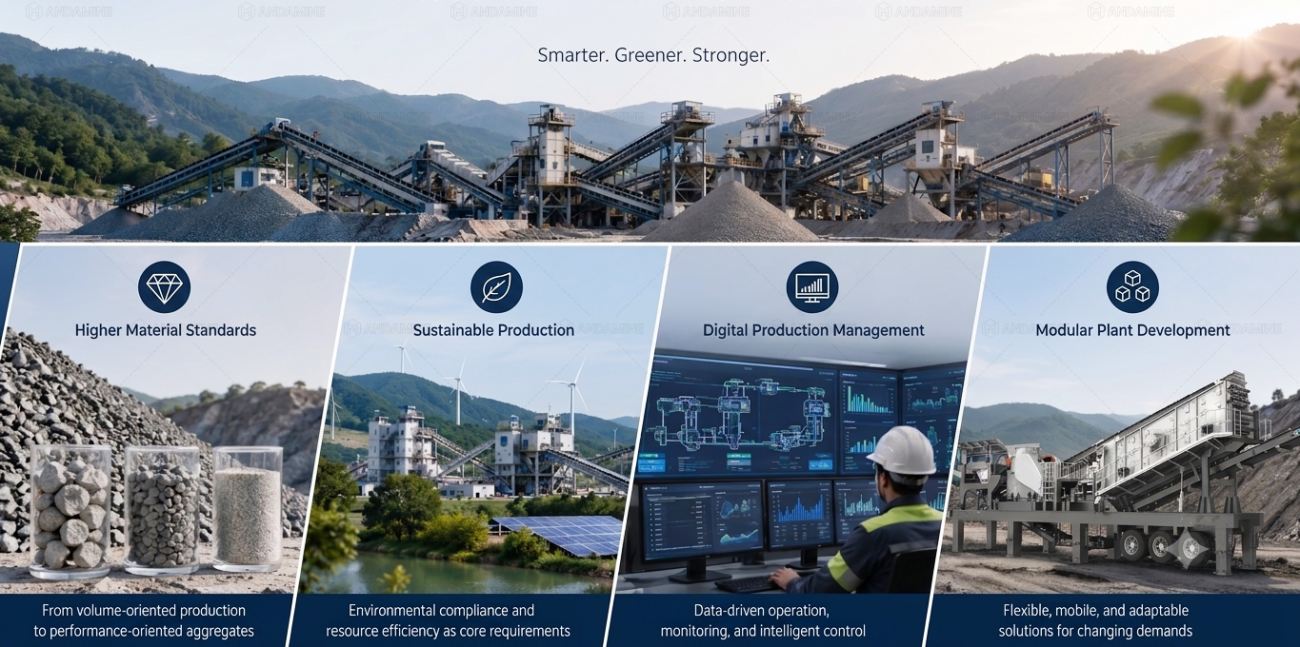
Higher Material Standards: From Volume-Oriented Production to Performance-Oriented Aggregates
Global infrastructure development is placing increasing emphasis on the performance of aggregates rather than production volume alone. Material requirements are becoming more detailed, covering aspects such as particle shape, grading stability, durability, and long-term behavior in concrete and asphalt systems.
At the same time, many projects are shifting toward performance-based evaluation methods, where aggregate quality is assessed based on how it contributes to the overall performance and lifespan of engineered structures.
Sustainable Production: Environmental Compliance Becoming a Core Requirement
Environmental regulations in the aggregate industry are becoming more stringent, particularly in areas such as dust control, noise reduction, and emission management. As a result, environmental compliance is now a standard requirement for most production facilities.
In addition, producers are placing greater focus on improving energy efficiency, optimizing resource usage, and reducing material waste. Sustainability is increasingly becoming an important factor in operational competitiveness.
Digital Production Management: Data-Driven Operation and Control
Digital technologies are gradually being integrated into aggregate production plants, enabling real-time monitoring of equipment performance, output levels, and operating conditions.
Production data is now widely used to support operational decisions, improve process stability, and identify opportunities for efficiency improvements.
With the advancement of automation systems, plant operations are moving toward more centralized and intelligent control, reducing manual intervention while improving consistency.
Modular Plant Development: Flexible Solutions for Changing Project Demands
The demand for modular and mobile crushing plants continues to grow as construction projects become more time-sensitive and geographically diverse.
Modular systems allow faster installation and easier relocation, making them suitable for remote sites, temporary operations, and projects with changing production locations.
This flexibility helps producers improve equipment utilization and respond more efficiently to new project requirements.
Modern aggregate production is no longer viewed as a collection of separate processing steps, but as a coordinated industrial system where material quality is shaped across every stage of production. This structural evolution reflects the increasing importance of process integration and operational consistency in meeting the demands of modern construction projects.