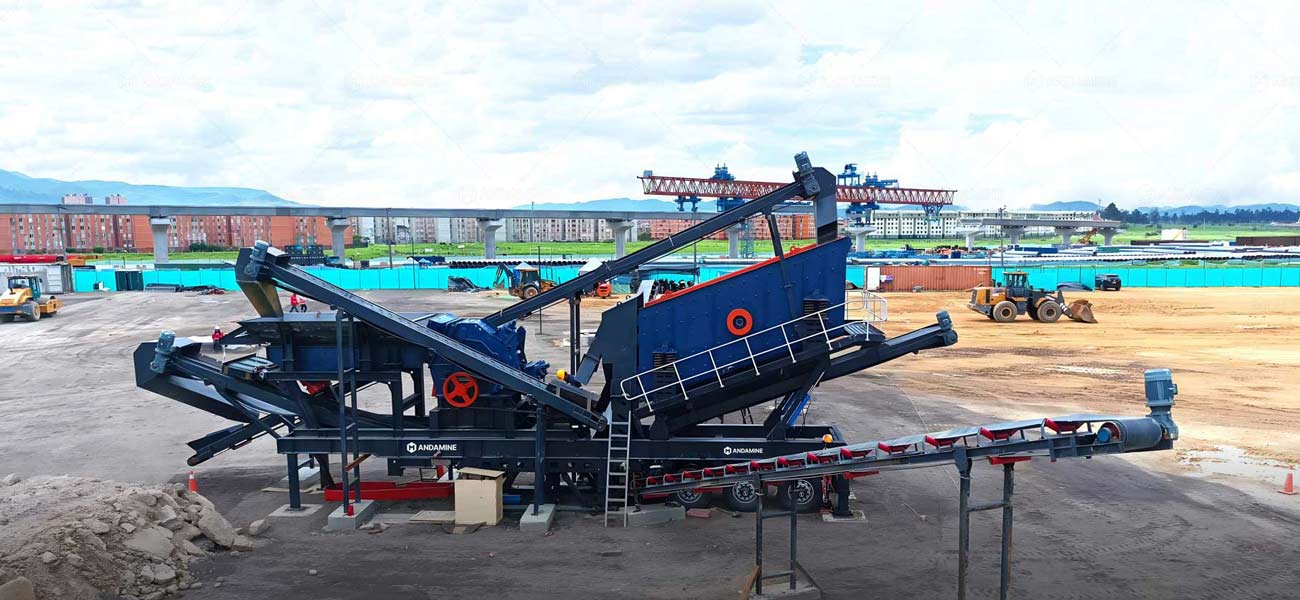
As urbanisation accelerates across Latin America (LATAM), demand for high-quality sand and gravel aggregates is experiencing explosive growth, driven by projects such as the expansion of Brazil’s rail network, Colombia’s 4G/5G “highway” project, and the construction of mega-mine infrastructure in Peru and Chile.
However, whilst facing enormous business opportunities, aggregate producers in Latin America must also contend with extremely harsh natural environments and increasingly stringent industry regulations. How to produce cubic aggregates that meet international standards whilst reducing operating costs has become a matter of survival for sand and gravel plants.
To secure a share of this promising Latin American market, one must first address its unique geographical barriers and complex geological conditions. Next, we will analyse in depth how these natural factors present significant obstacles to aggregate production.
Dual Challenges of Geographical and Geological Complexity
Latin America is home to the world’s longest mountain range—the Andes—which is characterised not only by its extreme altitude but also by its highly active geological structure. This unique geographical environment presents natural obstacles to aggregate extraction and processing.
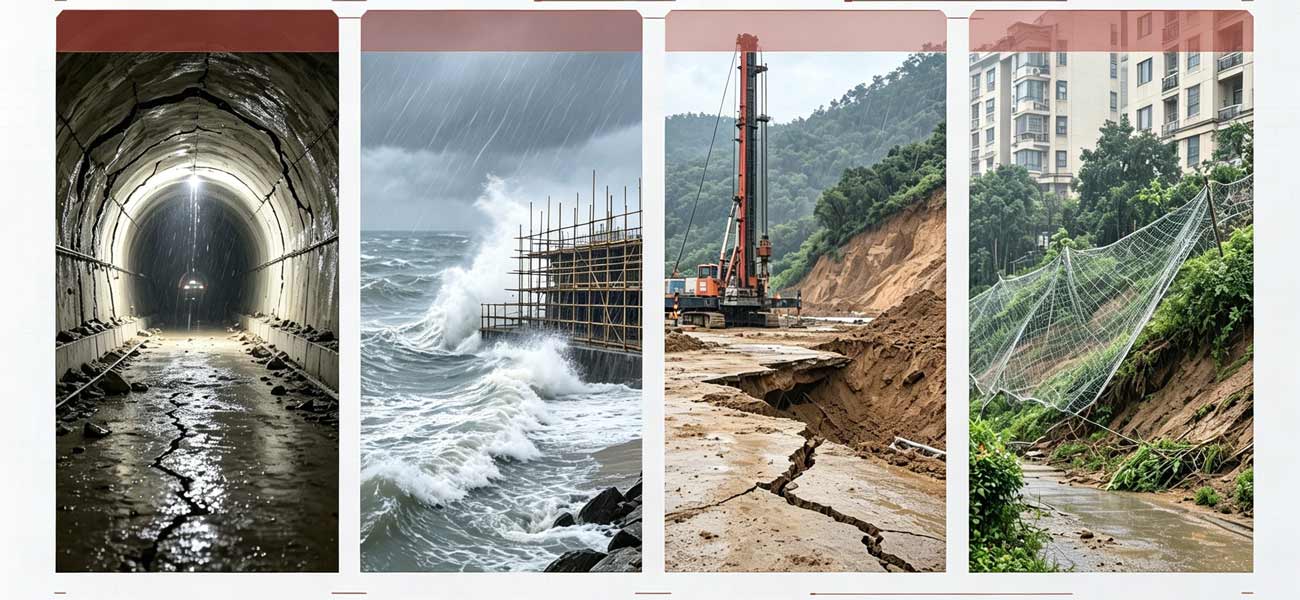
The Strain on Equipment Power Systems Caused by High-Altitude Environments
In the Andean highlands of Peru, Bolivia and other regions, many quarries are situated at altitudes exceeding 3,500 metres, and in some cases even reaching over 4,500 metres.
- Thin Air and Heat Dissipation Challenges: Thin air causes a significant ‘power loss’ in diesel engines (typically, power output decreases by approximately 8–10% for every 1,000-metre rise in altitude).
- Overheating of Hydraulic and Electrical Systems: Low atmospheric pressure significantly reduces heat dissipation efficiency, making hydraulic oil and electrical cabinets highly susceptible to failure due to high temperatures, resulting in unplanned production line shutdowns.
Material Blockages Caused by Extreme Weather and the Rainy Season
In tropical rainforest or monsoon climate regions such as Brazil and Colombia, the rainy season—which can last for several months—brings staggering amounts of rainfall.
- Soaring moisture content in materials: Extracted raw materials contain large amounts of clay and silt, which become extremely sticky in damp conditions.
- Screening system failure: When processing such wet, sticky materials, the mesh openings of traditional dry vibrating screens are highly susceptible to ‘blinding’, leading to a precipitous drop in screening efficiency and even forced production stoppages.
Logistics Bottlenecks Caused by Uneven Resource Distribution
High-quality, high-hardness rocks (such as granite and basalt) are often found in remote inland mountainous regions, whilst the main consumer markets are concentrated in major coastal cities.
- Excessively long transport distances: High lorry freight charges mean that road transport costs account for over 50 per cent of the end-user price of finished aggregates.
- Frequent relocation requirements: Many large projects span vast distances, requiring production lines to be highly mobile so they can ‘move with the project’.
Electrochemical Corrosion in Coastal and Tropical High-Humidity Environments
In Brazil’s coastal metropolitan areas, along the Caribbean coast, and in low-altitude tropical rainforest regions, the air contains high concentrations of salt and extremely high humidity.
- Rapid rusting of steel structures and wear-resistant components: Salt fog speeds up corrosion on exposed steel, shortening the service life of screen panels and conveyor frames.
- Risk of short circuits in electrical control systems: Humid, salty air weakens cabinet insulation and oxidizes terminals, easily triggering short-circuit faults.
When dealing with the high-hardness, highly abrasive rock left behind by tectonic movements in Latin America, traditional crushing processes often face severe equipment wear and frequent downtime for maintenance. To overcome this bottleneck, we need to start with equipment selection and process optimisation to find targeted solutions for hard rock crushing.
The Challenge of Crushing Highly Abrasive and Hard Rocks: Equipment Selection and Process Optimisation
The Andes Mountains contain vast deposits of basalt, andesite and high-silica granite. These rocks typically have a compressive strength exceeding 250 MPa and an extremely high silica content, making them highly abrasive.
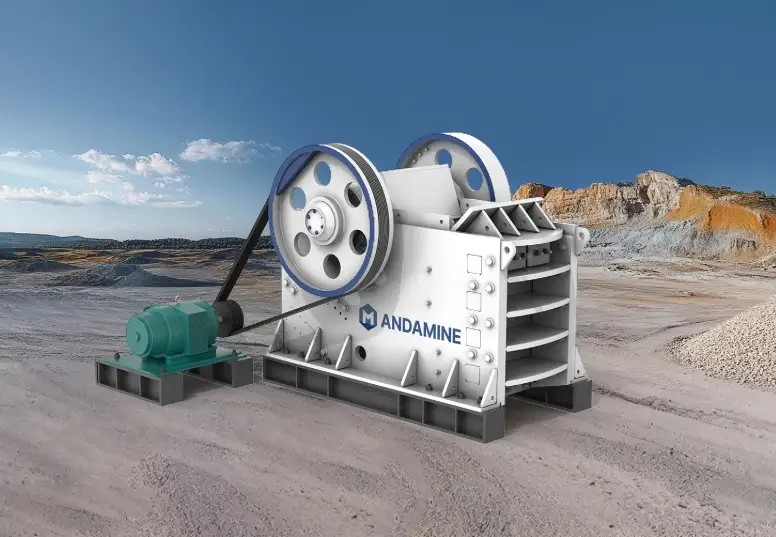
Primary Crushing Stage: Impact-Resistant Design of Heavy-Duty Jaw Crushers
As the vanguard of the entire production line, primary crushing equipment must be capable of withstanding the relentless impact of massive blocks of hard rock.
- Monolithic cast steel frame: Compared to welded frames, non-welded monolithic cast steel frames (such as modular, weld-free structures) are able to perfectly absorb the immense stresses generated by rock impact, thereby preventing weld seam cracking.
- Large bite angle and deep crushing chamber: A well-designed bite angle effectively prevents high-hardness rock from “slipping” and surging upwards within the chamber, thereby ensuring the crushing ratio whilst extending the service life of the jaw plates.
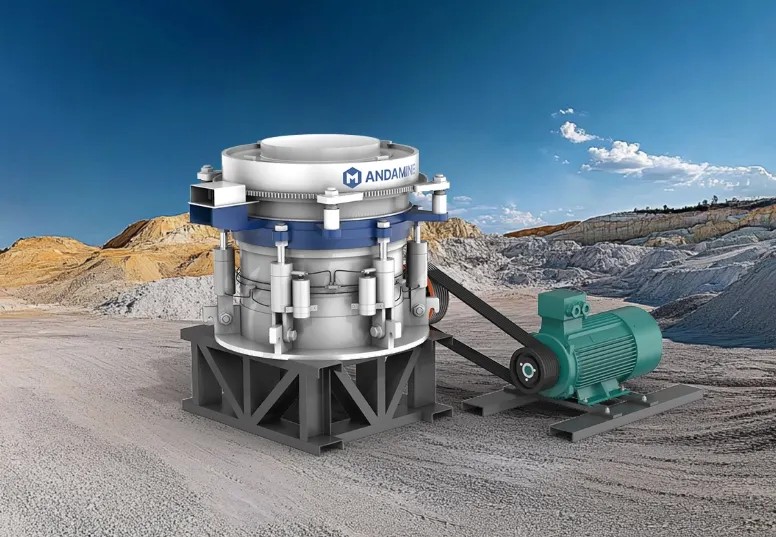
Secondary and Fine Crushing Stages: The Energy Efficiency Revolution of Hydraulic Cone Crushers
When processing highly abrasive hard rock, impact crushers are simply unsuitable for use as secondary or tertiary crushers due to the excessive wear of their hammer plates. Hydraulic cone crushers are economically viable option.
- Multi-cylinder hydraulic technology: By utilising the principle of laminar crushing, rocks are made to “crush against each other” within the crushing chamber, which increases the proportion of fine aggregate and produces a superior particle shape.
- Automatic Tramp Release System: Raw materials from Latin American mines often contain iron objects such as shovel teeth and drill bits. An advanced hydraulic release system automatically allows non-crushable objects to pass through, before automatically resetting, thereby preventing catastrophic shaft breakage.
Customised Selection of Wear Parts Materials
Given the varying characteristics of different rocks, the indiscriminate use of high-manganese steel is not the optimal solution.
- High-manganese steel (e.g. Mn18Cr2): Suitable for materials with high crushing impact forces and medium hardness; its surface hardness hardens rapidly under sustained impact.
- High-chromium cast iron and ceramic composite materials: For fine crushing operations characterised by low impact but high abrasion, the use of ceramic composite wear parts can extend service life by 1.5 to 2 times.
Comparison of Production Line Configurations for Hard Rock vs Soft Rock
| Indicators/Parameters | Hard Rock Configuration (e.g. Basalt/Granite) | Soft Rock Configuration (e.g. Limestone/Medium Hard Stone) |
|---|---|---|
| Main Process Flow | Jaw Crusher (Coarse Crushing) → Cone Crusher (Medium Crushing) → Cone Crusher/VSI (Fine Crushing) | Jaw Crusher → Impact Crusher (Medium-Fine Crushing) or Single-Stage Heavy Impact Crusher |
| Upper Limit of Compressive Strength | > 250 MPa | < 150 MPa |
| Preferred Wear Parts | High Manganese Steel (Chromium-containing), Ceramic Hard Alloy | High Chromium Cast Iron, Ordinary Manganese Steel |
| Wear Cost per Ton | Relatively High (Requires refined control of operating costs) | Extremely Low |
| Finished Product Particle Shape Characteristics | Shaping Machine (VSI) is required for auxiliary shaping | Excellent cubic shape can be obtained only by impact crusher |
Having overcome the challenge of crushing hard rock, the next key issue facing aggregate producers is: how can they ensure that the crushed stone and sand meet the stringent quality requirements of modern infrastructure projects? This involves the control of aggregate particle shape and gradation management.
Strict International and Local Aggregate Standards: How to Achieve Perfect Control of Particle Shape and Gradation
High-end infrastructure projects in Latin America (such as airport runways, cross-sea bridges and high-strength concrete for high-rise buildings) typically adopt the American standard ASTM C33 or variants of European standards (such as the Brazilian ABNT standard) directly. These standards impose extremely stringent requirements on the physical properties of aggregates.
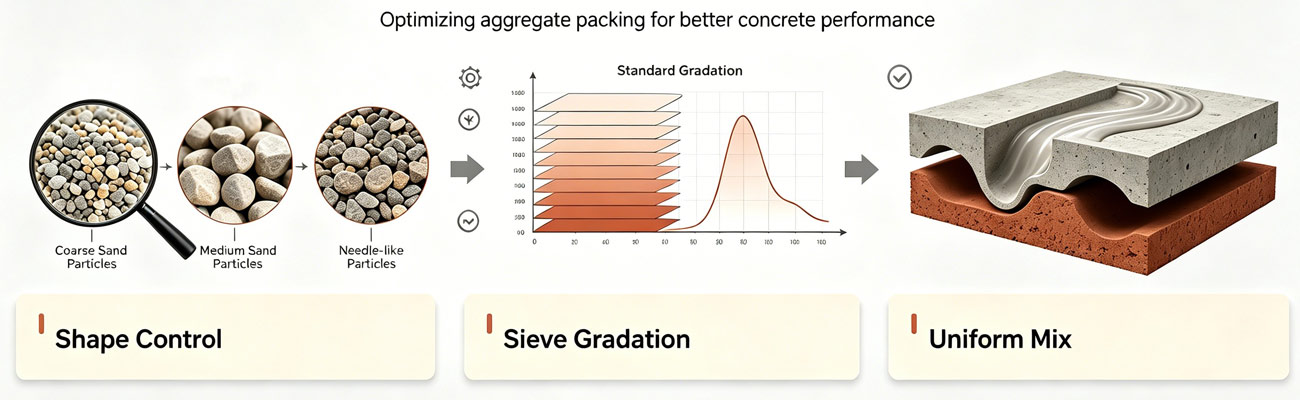
Control of the Flakiness and Elongation Index
If aggregates contain an excessive proportion of flaky or elongated particles, this can lead to a significant reduction in the compressive strength of the concrete and a substantial increase in cement consumption.
- US standard threshold: High-strength concrete requires that the proportion of flaky and elongated particles must be below 10–15 per cent.
- Equipment Solution – Impact Shaper (VSI): Through a high-speed rotating chamber utilising the ‘rock-on-rock’ principle, rocks collide violently with one another under the influence of airflow and centrifugal force, removing sharp edges and corners to produce near-perfect cubic aggregates.
Optimal Grading and Control of Stone Powder Content in Manufactured Sand (M-Sand)
Against the backdrop of strict environmental regulations prohibiting the extraction of natural river sand, manufactured sand has become the sole alternative. However, controlling the content of stone powder (particles smaller than 0.075 mm) in manufactured sand remains the greatest technical challenge.
- The dual nature of stone powder: an appropriate content of stone powder (typically 5–12 per cent) can fill voids in concrete and improve workability; however, excessive stone powder absorbs large amounts of water, leading to cracking in the concrete.
- Air Classifier Technology: In dry-process sand production lines, the use of V-type classifiers in conjunction with high-efficiency dust collectors allows for precise control of the proportion of fine powder in manufactured sand by adjusting the air flow rate, ensuring that the gradation curve perfectly conforms to ASTM standards.
Superior aggregate quality enables producers to command a premium, but to maximise profits, they must also be meticulous about production costs—particularly in many remote mining areas across Latin America, where the electricity grid is unreliable and transport links are poor; energy consumption and operating costs directly determine the viability of a project.
Energy Consumption Control and Operational Cost Management in Remote Areas: Hybrid Power and Modular Design
Many large-scale infrastructure projects in Latin America are located in the heart of the Amazon basin, the Patagonian plateau or the Andes mountain range. In these areas, infrastructure is underdeveloped and the public electricity grid is fragile or even non-existent.
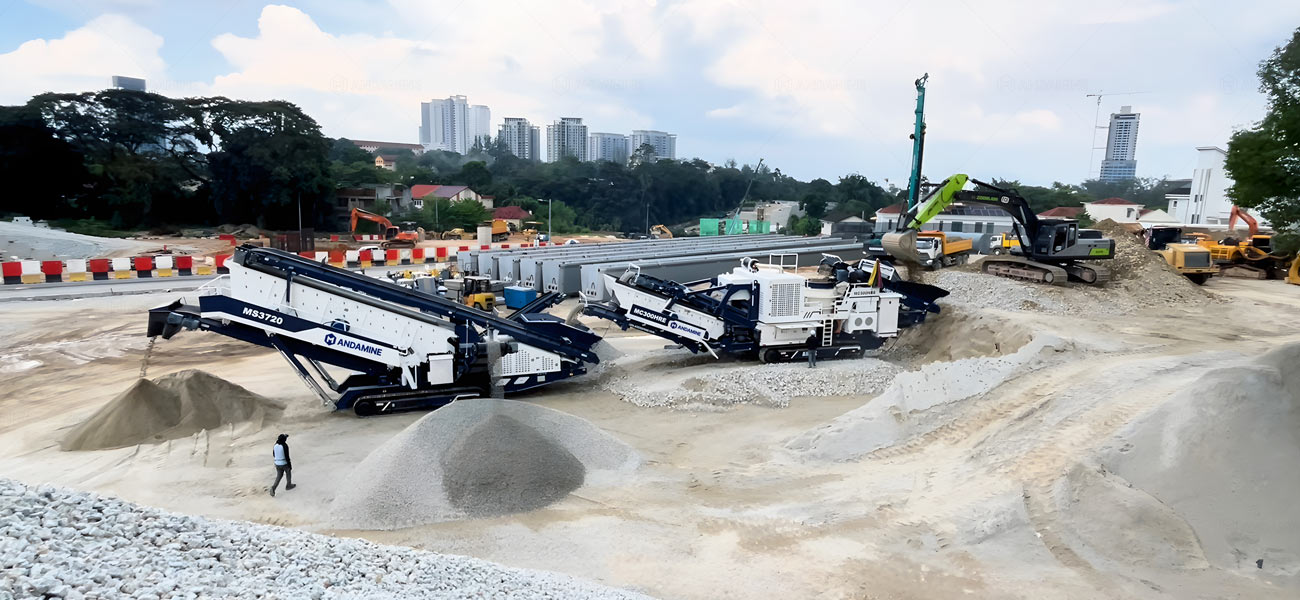
The Rise of Dual-Power Mobile Crushing Plants
In remote mining areas where no grid is available, traditional mobile crushers rely heavily on pure diesel-hydraulic drive systems, resulting in staggering fuel operating costs (OPEX).
- Diesel-Electric Switching: Modern, advanced mobile crushing plants utilise a diesel-electric hybrid drive design.
- Ultimate Fuel-Saving Mode: During the initial phase when no mains power is available, the unit utilises its on-board diesel generator set to produce electricity, which then drives high-efficiency electric motors; this improves fuel efficiency by 30% compared to traditional hydraulic drive systems. Once connected to the mains grid, the system switches to external mains power at the touch of a button, instantly reducing production costs by over 60%.
Advantages of Rapid Deployment for Modular Fixed Production Lines (Modular Plants)
For aggregate crushing plants requiring long-term, stable production, traditional fixed lines with concrete foundations involve lengthy construction periods and high transport costs.
Benefits of Choosing Aimix Combination Solutions
No concrete foundation requiredThe modular design utilises a heavy-duty steel frame as the equipment base, eliminating the need for complex on-site concrete foundations.
Assembly like LegoAll steel structures and equipment are pre-assembled and labelled at the factory. Once delivered to Latin America in standard shipping containers, on-site assembly can be completed within a few days, reducing construction time by 70%.
Rapid dismantling and relocationOnce resources in the area have been exhausted or the project cycle has ended, the modular production line can be directly dismantled, transported to the next mining site and reassembled, ensuring an extremely high retention of value.
Whilst optimising energy consumption in remote mining areas and enhancing economic efficiency, modern aggregate producers must also navigate a strict red line: the increasingly stringent environmental impact assessment policies across Latin American countries. This is driving the industry to transition towards green, low-carbon and zero-pollution production models.
Environmental Regulations and Water Scarcity: How to Create a Green, Pollution-Free Aggregate Plant
The stringency of environmental management in Latin America is increasingly aligning with that of Europe and the United States. For example, Colombia’s ANLA (National Environmental Licensing Authority) and Chile’s SMA (Environmental Regulatory Agency) impose extremely stringent regulations on dust emissions, noise control and water consumption at new quarries.
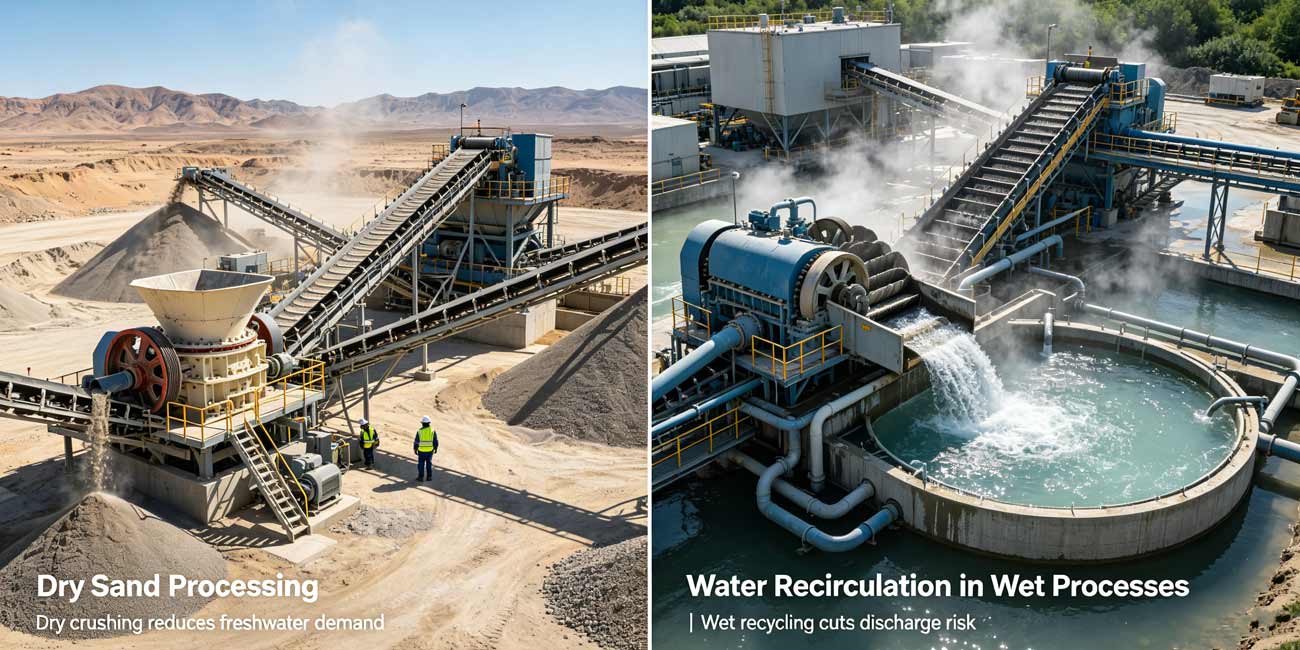
Dry Sand Processing in Water-Scarce Regions
In the Atacama Desert of northern Chile, the coastal regions of Peru and northern Mexico, water resources are extremely scarce, and governments rarely grant water permits for industrial sand washing projects.
The Drawbacks of Wet Sand Washing: Traditional sand washing consumes vast quantities of water, and the resulting sludge is extremely difficult to treat, making operations highly susceptible to being ordered to cease by environmental authorities due to groundwater contamination.
Dry sand processing systems: These require not a single drop of water, relying entirely on high-pressure air streams to separate sand and remove fines. The entire system operates under negative pressure, with all dust being drawn into a bag filter; the collected sand fines can be sold at a premium as a by-product to cement or brick factories, turning waste into a valuable resource.
Water Recirculation and Zero Liquid Discharge (ZLD) in Wet Processes
In Latin America, where rainfall is abundant and wet sand washing is essential, the days of discharging slurry directly into settling ponds are long gone.
High-Efficiency Thickener (Clarifier/Thickener): The slurry wastewater from sand washing first enters the thickener, where, in conjunction with a flocculant (polymer), the silt and sand settle rapidly. The clear water from the upper layer is recovered and recycled at a rate of 85%–90%.
Plate-and-Frame Filter Press: The highly concentrated slurry is pumped into the filter press, where it is compressed under high pressure to form a dry sludge cake with extremely low moisture content. These sludge cakes can be easily transported by lorry for use in tailings backfilling or vegetation restoration, thereby achieving “zero liquid discharge” in its entirety.
Strict environmental regulations have compelled sand and gravel plants to upgrade their technology; however, to maintain profitability in such highly compliant and technically complex modern production lines, another widespread challenge must be addressed: the shortage of highly skilled local technical workers in Latin America and the low efficiency of equipment maintenance.
Intelligent Maintenance and Preventative Maintenance: Reducing Manual Intervention
In many second- and third-tier cities or rural mining areas across Latin America, it is extremely difficult to recruit and retain crusher operators with specialist mechanical and electrical knowledge. Human error (such as forcing a start-up under load when large chunks of rock are present in the chamber, or ignoring lubrication alerts) is the primary cause of equipment failure.
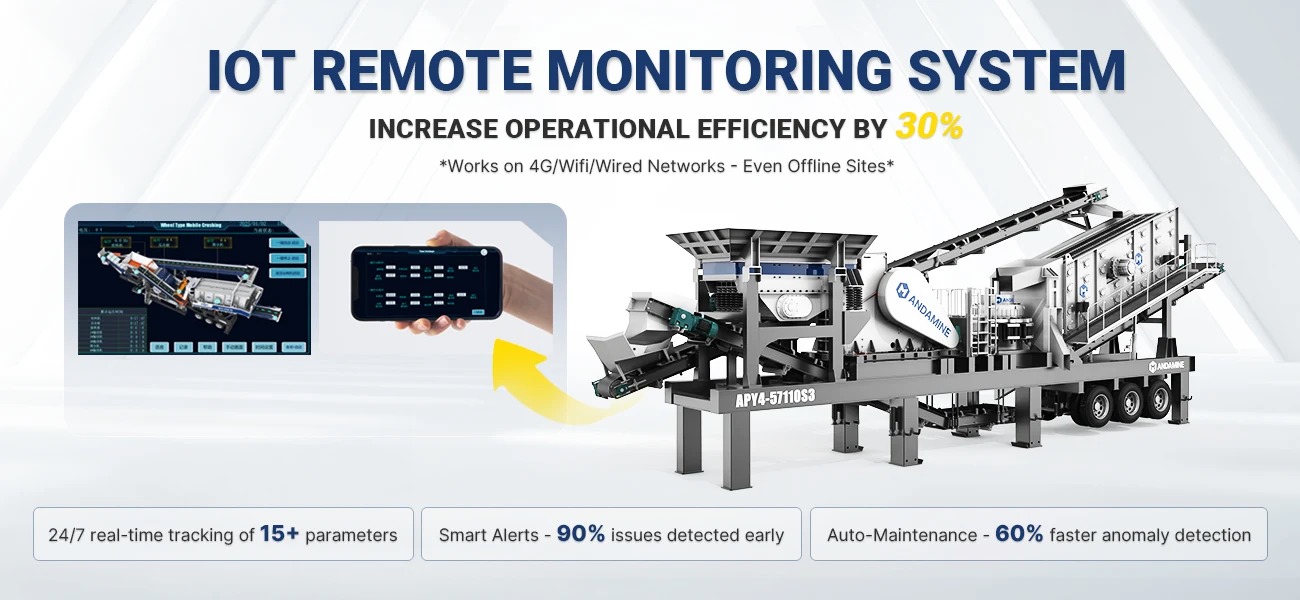
PLC Intelligent Control System (Smart Control Panel)
Andamine’s advanced crushing equipment enables one-button start-up by incorporating complex operational logic into the system (PLC). It can be operated via either the PLC touchscreen or physical buttons, thereby enhancing operational efficiency.
- Automatic Discharge Opening (CSS) Adjustment: As wear parts undergo daily wear and tear, the discharge opening gradually widens. Operators need only enter a value on the central touchscreen, and the hydraulic motor will automatically rotate to adjust the opening, without even requiring the machine to be shut down.
- Visualisation of Operating Parameters: Key indicators such as lubricating oil temperature, oil pressure, return oil flow rate, main unit current and vibration amplitude are displayed in real time as graphs on the screen. Should any parameter exceed safety thresholds, the system automatically triggers audible and visual alarms and initiates a protective shutdown.
IoT Remote Fault Diagnosis and Preventative Maintenance
Addressing the challenge of lengthy travel times for after-sales engineers to reach remote sites, remote cloud-based diagnostics have become a ‘lifeline’ for aggregate producers, whilst automatic maintenance reminders significantly reduce failure rates.
- Real-time Cloud Monitoring: Sensors fitted to the crushing plant transmit equipment status in real time to cloud servers via 2G, 3G or 4G networks.
- Preventative Maintenance Alerts: The system issues advance warnings when wear parts are nearing the end of their service life, lubricant requires changing, or bearings exhibit abnormal, minute vibrations, thereby transforming ‘unplanned downtime’ into ‘planned maintenance’.
Application of ANDAMINE Crushing Equipment in the Latin American Market
Addressing the complex and ever-changing challenges of aggregate production in Latin America does not rely on simply stacking individual pieces of equipment; rather, it requires the customisation of entire crushing lines to suit specific rock hardness, altitude, climatic conditions and environmental policies.
As a leading global specialist in crushing and screening solutions, ANDAMINE has been deeply engaged in the Latin American and global markets for many years, possessing extensive experience in hard rock crushing and manufactured sand project development. Below are some real-world case studies from our work in Latin America:
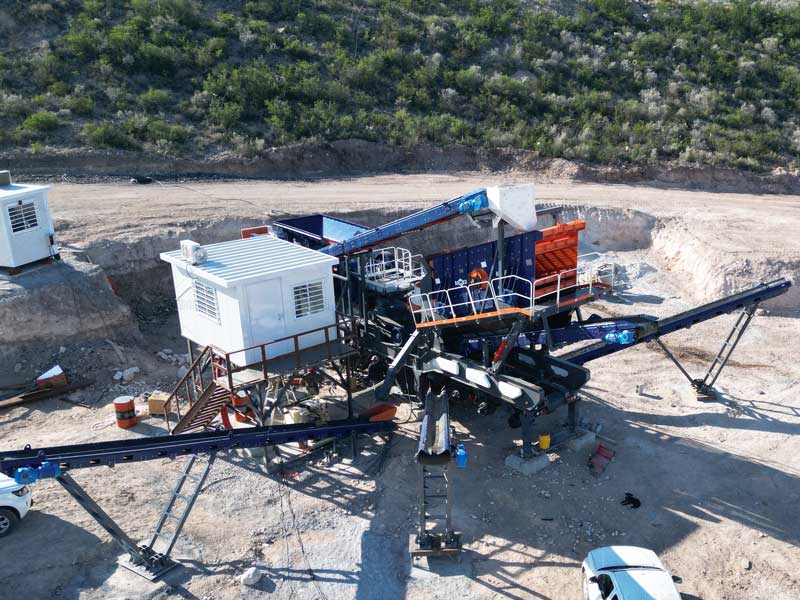
APY-4 Mobile Crushing Plant in Mexico
- Project Type: Aggregate sales and export.
- Client Requirements: With the local sand and gravel market approaching saturation, the client planned to produce standard-compliant aggregates for export to the United States and urgently required a mobile crushing production line.
- Project Challenges: A lack of experience in international trade, concerns regarding the complexity of customs clearance, and the requirement for aggregate quality to strictly comply with US standards.
- Solution: The APY4 tyre-mounted mobile crushing plant. We provided full assistance to the client in liaising with agents to calculate total costs, and coordinated sea freight, customs clearance, on-site installation and commissioning of the entire unit.
- Client Feedback: Andamine one-stop international trade service saved us a great deal of hassle with import and export procedures. The equipment was successfully installed and commissioned, with stable output meeting specifications, helping us to successfully enter the North American aggregates market.
APY3-F Impact Crusher in Colombia
- Project Type: Construction Waste Recycling Project
- Client Requirements: To process concrete, brick and tile waste generated by urban demolition, converting solid waste into recycled aggregates.
- Project Challenges: A continuous surge in construction waste output and high costs associated with long-distance transport of waste materials necessitated mobile crushing equipment capable of flexible relocation and adjustable particle size.
- Solution: 150 t/hour mobile impact crusher, featuring freely adjustable output particle sizes ranging from 0–40 mm and powered by a hybrid engine; equipment delivery and installation were completed within 30 days.
- Achievements: Over 80,000t of construction waste have been recycled to date, with 95% of the waste converted into reusable aggregates. As materials are processed locally over short distances, logistics and transport costs have been reduced by 40 per cent.
- Client Feedback: “The mobile crusher has low fuel consumption and produces well-shaped output, perfectly resolving our challenge of high construction waste processing costs.”
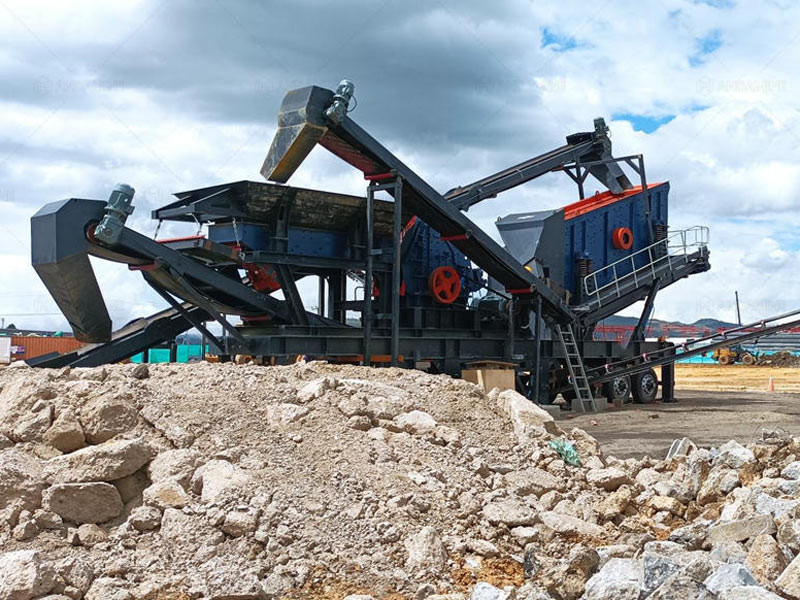
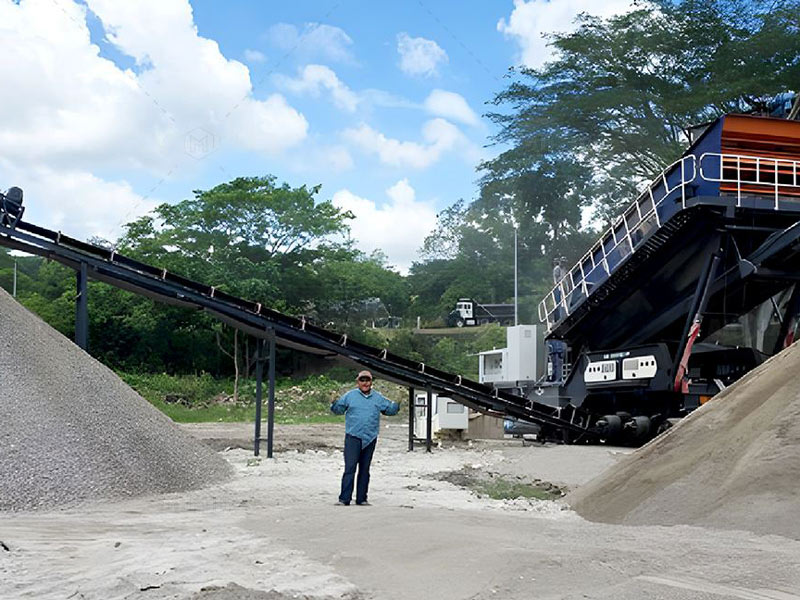
Mobile Cone Crusher in Honduras
- Project Type: Commercial sand and gravel production.
- Client Requirements: A long-established local sand and gravel trading company sought to procure reliable crushing equipment with guaranteed after-sales support to expand its sand and gravel production capacity.
- Project Challenge: Equipment quality on the market varies greatly; frequently require downtime for repairs, severely impacting supply and profitability.
- Solution: 150 t/h tyre-mounted mobile cone crushing plant, with the overall layout optimised to suit the site dimensions and equipped with a wear-resistant crushing chamber and an intelligent monitoring system.
- Results: The equipment achieved continuous, stable operation around the clock; downtime due to faults was significantly reduced; sand and gravel production capacity increased steadily; and the project’s overall profitability improved markedly.
- Client Feedback: The crusher plant has a low failure rate, and your after-sales response is prompt. We no longer lose orders due to machine downtime and look forward to continuing our long-term partnership.
Choose Andamine Crushing Solution in Latin America
Localised Service Network
We have established an office in Peru, equipped with a rapid spare parts warehouse and a professional technical support team, enabling us to respond to your after-sales needs as quickly as possible.
One-Stop Customised Solutions
Whether it is a multi-stage crushing line for high-hardness basalt in the Andes Mountains or a sand-making system operating in the Chilean desert, we can design turnkey projects for you that strike the optimal balance between ‘Return on Investment (ROI)’ and ‘environmental compliance’.
If you are planning a new sand and aggregate production line, or are looking to upgrade an existing, ageing crushing plant to reduce costs and improve efficiency, please do not hesitate to contact the Andamine Mining Machinery team. Our senior engineers will provide you with a free, bespoke production line planning proposal based on your ore sample analysis data and the on-site topography.