
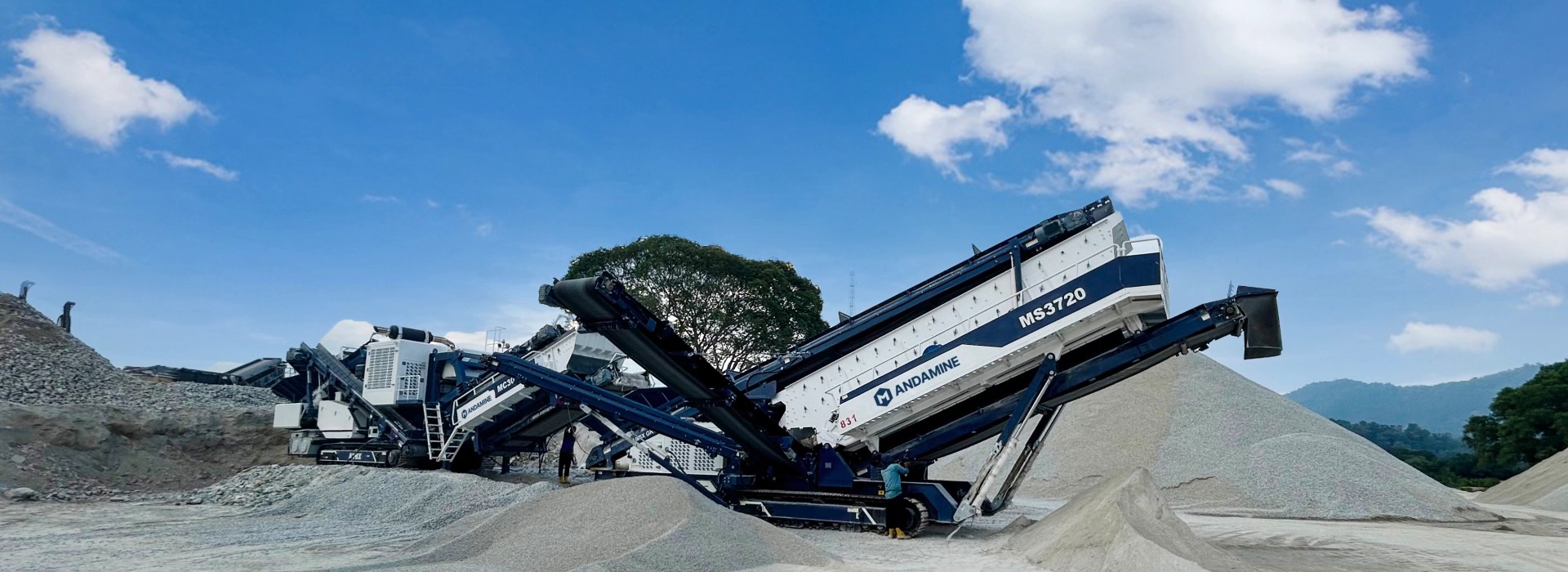
Mobile crusher plant solutions help businesses remain competitive as project timelines tighten and material demand rises. By enabling fast, on-site crushing with flexible capacity options, a mobile crusher ensures continuous aggregate supply while lowering cost per ton and improving overall project efficiency.
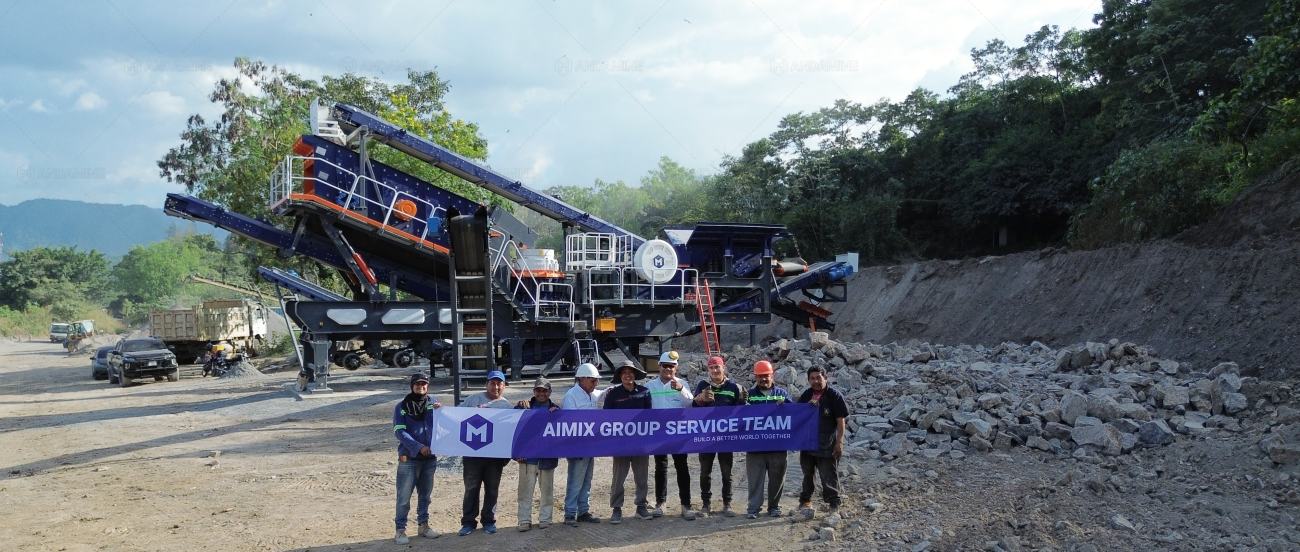
Wheel-Type Mobile Crusher Plant: Flexible, Fast, and Cost-Efficient
The wheel-type mobile crusher plant is a flexible and cost-efficient crushing solution designed for projects that require fast relocation and short setup times. Mounted on a trailer chassis, it is ideal for temporary construction, road building, and aggregate production where mobility and efficiency are essential.
Key features include easy transportation without concrete foundations, saving 30–60 days of preparation time, and hydraulic support legs for quick installation and positioning. The integrated dust suppression system helps control emissions, ensuring environmental compliance while maintaining stable and reliable crushing performance.
APY4-S 4 In 1 Mobile Crusher Plant
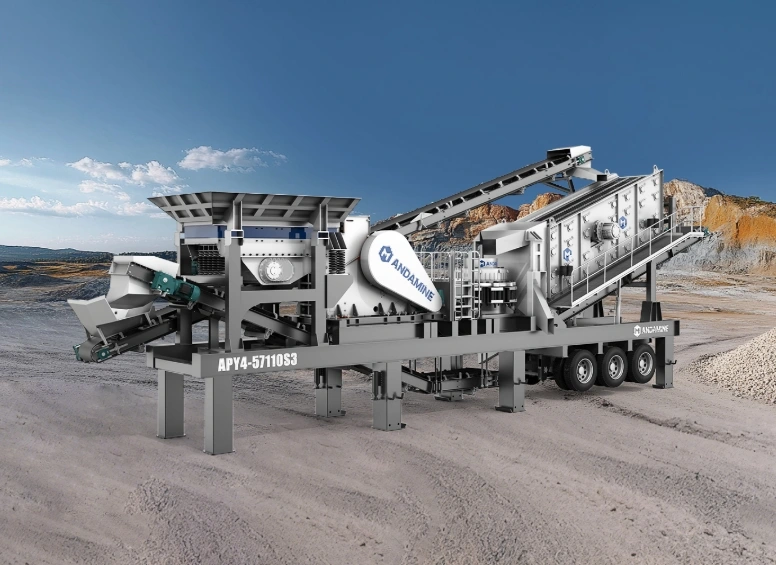
One-click start, Intelligent operation, Efficient production
- Configuration: Vibrating feeder + Primary jaw crusher + Adjustable Secondary Crusher(cone crusher, impact crusher, or fine jaw crusher) + Vibrating screening
- Capacity: 30-200tph
- Feeder Size(mm): <500
- Output Size(mm): 5-80
- Raw Materials: Granite, marble, basalt, iron ore, river pebbles etc.
- Features: ①Tri-axle Chassis Design: Enables rapid relocation and easy site transition; ②With Ski Plate Support, Increased ground contact area for enhanced stability.
- Application: Supplying aggregates for construction industry, especially for infrastructure construction, like roads and buildings
APY3-F 3 In 1 Mobile Impact Crushing Plant

The First Choice for Solid Waste Crushing
- Configuration: Vibrating feeder + Impact crusher + Vibrating screening
- Capacity: 50-350tph
- Feeder Size(mm): <700
- Output Size(mm): 5-180
- Raw Materials: Medium-hard materials: limestone, concrete, asphalt wastes, etc.
Features:
- Heavy-duty rotor design ensures strong secondary crushing performance, with a high crushing ratio and good product shape.
- Rear drum features a slag discharge design to protect the belt and extend its lifespan.
- Main belt uses a shock-absorbing bed for better impact resistance and sealing, prolonging service life.
- Dual-sealed inlets and outlets reduce dust and support eco-friendly operation.
- Equipped with energy-saving motors, cutting energy use by 30%.
APY2-J Mobile Jaw Crusher Plant
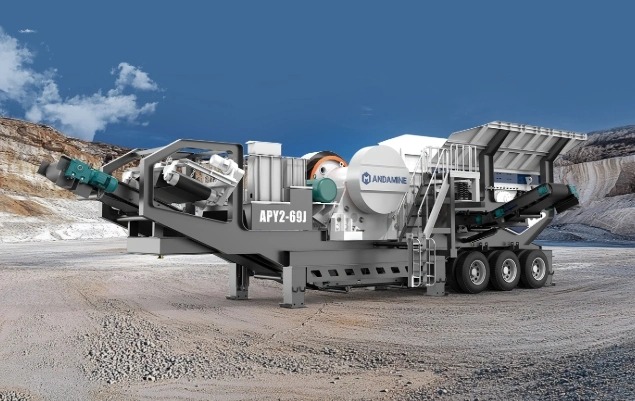
Wheel type mobile jaw crusher plant is equipped with a jaw crusher that utilizes compressive forces to break large rocks and materials into smaller, manageable pieces. It offers high crushing efficiency and productivity, designed for high capacity primary crushing applications. This mobile crusher plant for sale is ideally suited for processing large, hard materials such as granite, basalt, and concrete.
- Capacity: 50-400 T/H
- Feeder Size(mm): <720
- Output Size(mm): 5-180
- Main Crusher: Jaw Crusher
- Raw Materials: Hard and Medium-hardness rocks, limestone, granite, basalt, gold ore, iron ore, etc.
APY2-C Mobile Cone Crusher Plant
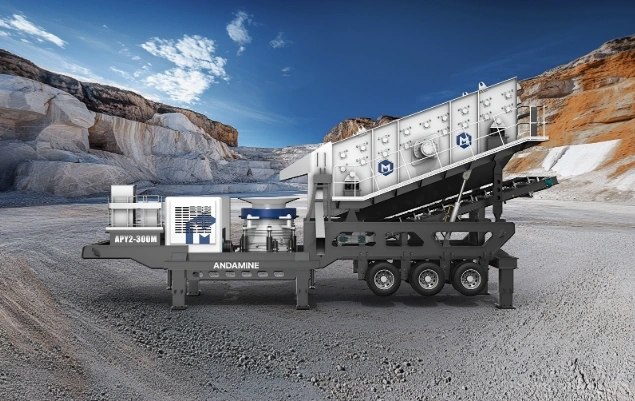
Equipped with high performance cone crusher, mobile cone crusher plant has high crushing efficiency and can stably produce fine and medium size aggregates. Suitable for secondary and tertiary crushing of medium-hard materials. This mobile crusher machine can crush granite, basalt, cobblestone, and other hard and ultra-hard stones into high-quality aggregates for construction and road building.
- Capacity: 50-400 T/H
- Feeder Size(mm): <300
- Output Size(mm): 3-60
- Main Crusher: Cone Crusher
- Raw Materials: Hard and ultra-hard stone: granite, basalt, cobblestone, etc.


APY2-F Mobile Impact Crusher
- Capacity: 60-350t/h
- Max. Feeder Size(mm): 300
- Feature: 2 in 1(crushing and screening)
- Configuration: Impact Crusher, Vibrating screen, PLC control box, etc.
APY2-V Mobile Sand-making Machine
- Capacity: 60-480t/h
- Max. Feeder Size(mm): 30-55
- Output Size(mm): 0-4.75
- Configuration: Vibrating screen, VSI Crusher, PLC control box, etc.
APY-S Mobile Screening Machine
- Capacity: 65-400 T/H
- Max. Feeder Size(mm): <200
- Amplitude(mm): 8-12
- Configuration: vibrating screening, PLC control box, etc.
Crawler-Type Mobile Crusher Plant: Built for Tough Terrain and Long-Term Projects
The crawler-type mobile crusher plant, also known as a tracked mobile crusher, is designed for tough terrains and long-term crushing projects. Equipped with a heavy-duty track system, it can move easily across rough, muddy, or uneven ground, making it ideal for mines, quarries, and remote construction sites where stability and mobility are critical.
Key features include a self-propelled tracked chassis that eliminates the need for foundations and reduces relocation costs. Its reinforced structure ensures stable performance in demanding conditions, while advanced servo control systems provide precise, easy operation and improved efficiency with lower labor requirements.
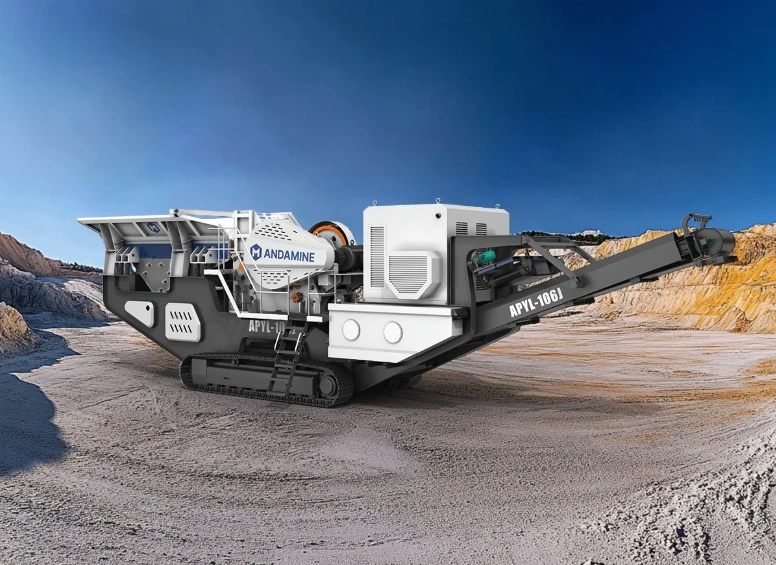
APYL2-J Tracked Jaw Crusher
The tracked jaw mobile crushing plant is engineered for high-capacity primary crushing, combining feeding and crushing functions in one crawler-mounted unit. Equipped with the European C-series jaw crusher, a large folding silo, and a pre-screening system, it excels in coarse crushing of large-sized aggregates.
Its robust jaw crusher delivers high-strength crushing, making it ideal for heavy-duty tasks in rugged terrains such as mining, quarrying, and on-site construction waste recycling. With a wide discharge range and convenient transfer capability, this plant offers high crushing efficiency and reliable performance in challenging environments.
- Capacity: 80-415 T/H
- Output Size(mm): 60-250
- Max. Feeder Size(mm):<700
- Raw Materials: suitable for all kinds of rocks, limestone, granite, concrete waste, etc.
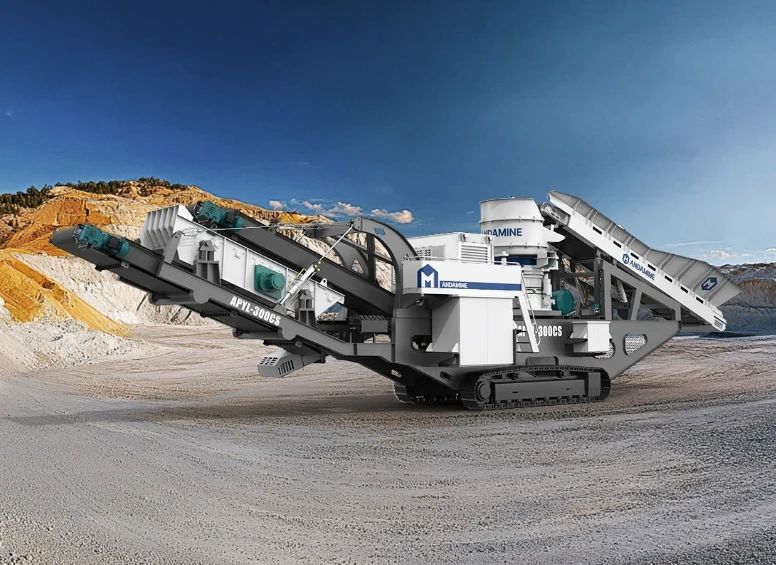
APYL2-C Tracked Cone Crusher
The crawler cone portable crushing plant integrates a cone crusher mounted on a crawler chassis, offering excellent mobility and stability on uneven terrain.
This 2-in-1 model combines the cone crusher and vibrating screen, making it ideal for secondary crushing of various materials, especially hard rocks like granite. The crawler cone crusher features different crushing chamber types—coarse, medium, and fine—providing strong adaptability to various product particle sizes.
- Capacity: 100-310 T/H
- Output Size(mm): 30-60
- Max. Feeder Size(mm):<250
- Raw Materials: granite, limstone, river stone, copper ore, iron ore, etc.
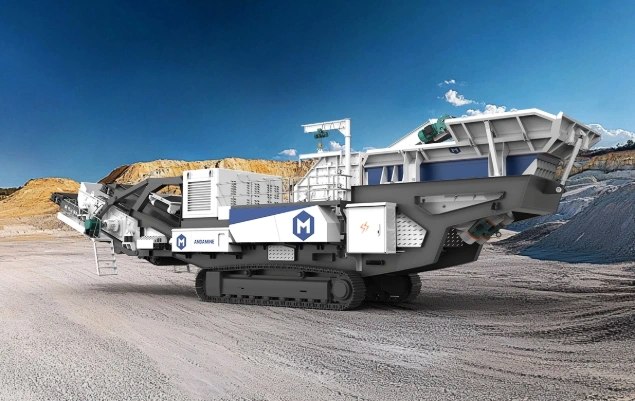
APYL2-F Tracked Impact Crusher
The Andamine mobile tracked impact crusher is engineered for efficient crushing of medium-hard materials like limestone, concrete, and construction waste, making it an ideal choice for recycling applications. Built on a robust tracked chassis, this powerful impact crusher delivers high mobility and performance. With advanced design, the crusher unit produces high-quality cubic aggregates through optimized impact crushing—ensuring superior output for demanding job sites.
- Capacity: 80-300 T/H
- Max. Feeder Size(mm): <600
- Output Size(mm): 5-100
- Main Function: Feeding and Crushing
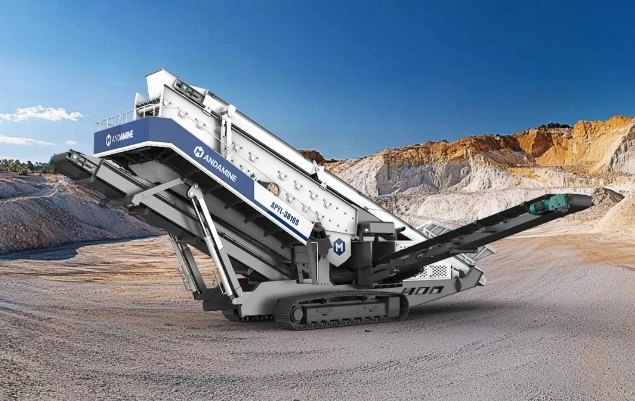
APYL-S Mobile Screening Plant
This mobile screening plant features an automatic folding belt conveyor with high processing capacity, ideal for fine screening of sand and crushed construction waste. Its design ensures flexible mobility, reliable performance, and long-term durability for various on-site material screening applications.
- Driven Method: Remote Control.
- Capacity: 120-450 T/H
- Deck Quantity: 3
- Output Size(mm): 0-10, 10-20, 20-30, or customized.
Wheel-Type vs. Tracked Mobile Crushers: Key Differences Explained
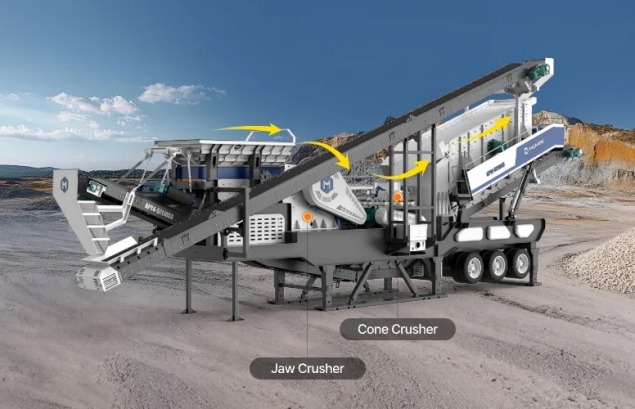 |
 |
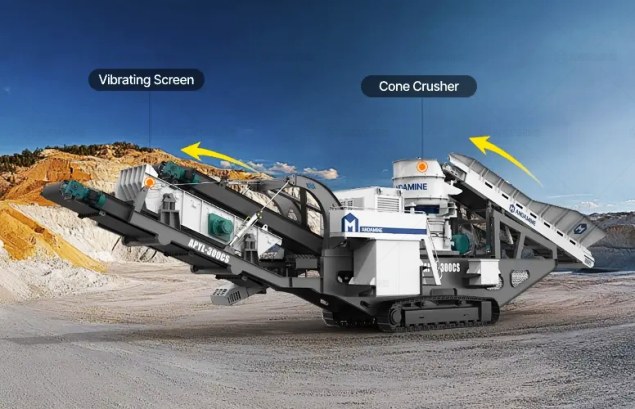 |
|---|
| Feature | Wheel-Type Mobile Crusher | Crawler-Type Mobile Crusher |
|---|---|---|
| Mobility | High mobility on roads and flat terrain | Excellent off-road mobility; handles rugged, uneven, and muddy terrain |
| Transportability | Easily towed or transported by trailer/truck | Self-propelled via crawler tracks; no towing needed |
| Setup Time | Fast setup; minimal foundation required | Moderate setup time; slightly more complex due to track system |
| Terrain Adaptability | Best suited for paved roads and compact job sites | Designed for remote, rough, or off-road locations |
| Operational Stability | Good stability on firm surfaces | Superior stability on steep, loose, or shifting ground |
| Application Suitability | Ideal for urban jobsites, short-term or frequently moving projects | Ideal for long-term, remote, or heavy-duty mining and quarrying operations |
| Cost Efficiency | Lower initial and operating cost | Higher initial cost but adds value in tough environments |
| Fuel Consumption | Generally more fuel-efficient | Slightly higher due to track mechanism and weight |
| Maintenance Requirements | Simpler maintenance; easier access to components | More robust but may require specialized maintenance |
| Resale & Transferability | Easy to move between job sites and resale | Good resale value, but transfer logistics can be more complex |
Based on the introduction to various types and comparison between wheeled and tracked crushing plants provided earlier, we believe you now have a better understanding of our products. If you have any questions about how to choose the right mobile crusher plant or would like to know our mobile crushing plant price, please feel free to contact us anytime. Our professional team will tailor the most suitable solution based on your project requirements, site conditions, and budget to ensure efficient operation and help your project succeed.
Core Technical Features That Improve Mobile Crusher Performance

Intelligent Operating System
- Integrated Control System: Supports one-button start and centralized control via PLC touchscreen or traditional buttons. This dual-mode design simplifies operation, improves coordination, and reduces human error.
- IoT Remote Monitoring System: Enables real-time monitoring of equipment status, production data, and fault alerts. Automatic maintenance reminders help lower downtime and extend service life.
- Intelligent Feeding Control: The feeder speed can be adjusted remotely according to crusher load, ensuring stable material flow, preventing overload, and maintaining continuous production.
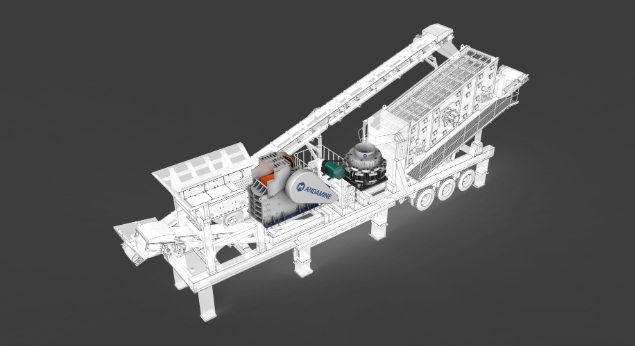
Modular and Flexible Configuration
- Universal Structural Design: High structural strength and compatibility enable flexible integration of crushing and screening units.
- Interchangeable Core Components: Units within the same capacity range can switch configurations by replacing key components.
- Rapid Production Adjustment: Changing the main crusher allows quick adaptation to different materials without investing in a new system.
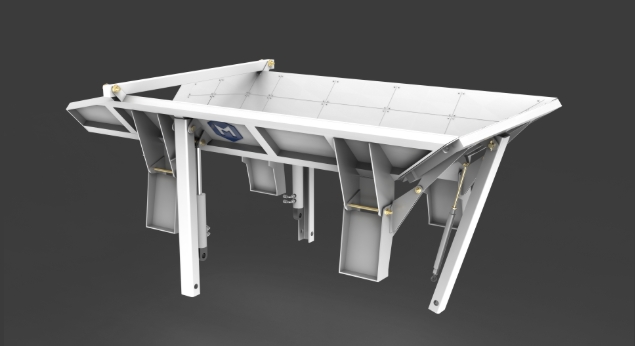
Large-Volume Feeding Hopper Design
- Reinforced High-Capacity Hopper: Both primary and secondary crushers feature large-volume hoppers with double-layer reinforced side plates, improving durability under heavy and abrasive materials.
- Optimized Material Flow: The enlarged hopper opening allows easier loading and more consistent feeding, reducing blockages and stabilizing output.
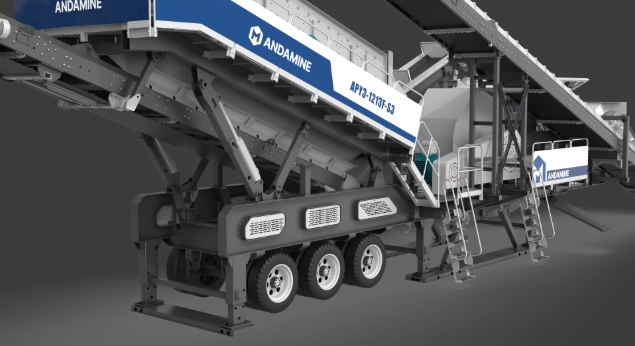
Free-Foundation Installation for Rapid Deployment
- Integrated Support Structure: Built-in outriggers and steel support plates eliminate the need for concrete foundations, lowering civil construction costs and setup time.
- Fast On-Site Commissioning: The widened ground contact area improves stability and allows immediate operation upon arrival, ideal for short-term or multi-location projects.
Capacity, Output Size, and Project Matching Guide
Selecting the right mobile crushing plant is not simply about choosing the largest machine available. Capacity, discharge size, material properties, and project type must align to ensure long-term profitability and stable performance. A well-matched configuration helps control investment costs, reduce wear, and improve production efficiency.
Understanding Crusher Capacity from 30 TPH to 500 TPH
Mobile crusher plants are typically available in capacities ranging from 30 tons per hour (TPH) to 500 TPH. Each range serves different operational needs:
- Small Capacity (30–50 TPH): Suitable for small-scale projects, temporary crushing tasks, and construction waste recycling. These small mobile crusher models require lower investment and are easy to transport and deploy.
- Medium Capacity (100–200 TPH): A common choice for medium-sized quarries, infrastructure development, and regional aggregate supply. This range balances productivity and operating cost.
- Large Capacity (300–500 TPH): Designed for large mining sites and high-volume aggregate production. These mobile plants support continuous operation and long project cycles.
Choosing insufficient capacity can limit output and delay project timelines. Oversized equipment, on the other hand, increases capital cost, fuel consumption, and maintenance expenses. Capacity planning should be based on average production demand rather than short-term peak requirements.
How to Match Capacity to Quarry, Mining, Road, or Recycling Projects
Different industries require different production strategies:
- Quarry operations typically require 150–400 TPH depending on market demand and supply contracts.
- Mining projects determine capacity based on ore extraction targets and downstream processing requirements.
- Road construction projects focus on timeline-driven output, where consistent daily production is more important than maximum hourly capacity.
- Recycling plants often operate within 50–150 TPH, emphasizing flexibility and mobility.
When selecting crushing equipment, consider project duration, expected expansion plans, transportation logistics, and local material demand. A portable crusher plant should support both current workload and future growth potential.
Output Size Adjustment and Screening Integration Options
Final product size directly impacts aggregate quality and market value. Mobile crushing machines offer several methods for controlling output size:
- Adjustable discharge openings allow operators to modify final particle size quickly.
- Multi-layer vibrating screens separate materials into different grades for commercial use.
- Closed-circuit crushing systems recirculate oversized material for secondary crushing, ensuring precise aggregate shaping.
- Integrated screening systems improve grading accuracy and help meet construction specifications. Proper configuration reduces rework and improves overall production efficiency.
Material Hardness and Its Impact on Equipment Selection
Material characteristics significantly influence crusher selection and wear cost.
- Hard rocks (granite, basalt) generally require a jaw crusher for primary crushing combined with a cone crusher for secondary stages.
- Medium-hard materials (limestone, dolomite) are often processed using jaw and impact crusher combinations.
- Construction and demolition waste is commonly handled by impact crushers due to their ability to produce better particle shape.
Matching portable crusher type with material hardness improves crushing efficiency, extends component lifespan, and lowers cost per ton. A correct configuration ensures stable performance across varying material conditions.
What Determines Mobile Crushing Plant Price and Total Investment Structure
Mobile crushing plant price is shaped by overall system design rather than capacity alone. The total investment level depends on configuration depth, mechanical structure, and integration complexity. Understanding these variables allows clients to evaluate quotations more strategically instead of focusing only on headline output figures.

Core Factors That Influence Equipment Price
Several technical elements directly determine the base equipment value:
- Crusher Type: Jaw, cone, and impact crushers differ in crushing mechanism, structural strength, and wear part system. These differences lead to clear pricing tiers across primary and secondary configurations.
- Power System Specification: Engine brand, emission compliance level, and fuel efficiency standards influence both acquisition cost and long-term operating stability.
- Automation and Control Integration: PLC-based control systems, sensor monitoring, and remote diagnostics enhance operational precision while increasing equipment sophistication and price positioning.
- Mobility Design: Tracked chassis systems require hydraulic walking assemblies and reinforced frames, typically resulting in higher manufacturing cost compared to wheeled crusher designs.
- Process Configuration: Multi-stage crushing, integrated screening modules, and closed-circuit setups add structural complexity and expand total system value.
To give you a better idea of the cost, here are some Andamine mobile crusher price examples.
- Simple mobile Jaw crusher: starting at $30,000
- Mobile Jaw Crusher + Vibrating Feeder: starting at $100,000
- Mobile Cone Crusher + Vibrating Screen: starting at $120,000
- Mobile Impact Crusher + Vibrating Screen: starting at $100,000
Please note that the final price depends on the degree of customization, automation configuration, and local regulatory standards.
Cost Components Beyond the Equipment
A complete investment evaluation should also consider supporting expenditures, which typically account for 10–25% of the total project budget:
- International shipping and inland transportation
- On-site commissioning and system calibration
- Initial spare parts allocation
- Technical training and operational support
By analyzing both configuration value and supporting cost structure, customers can develop a more accurate total ownership projection and reduce financial uncertainty during project implementation.
Operating Cost Per Ton and Investment Return Analysis
While equipment price determines initial capital expenditure, long-term profitability depends on operating efficiency and market conditions. Evaluating cost per ton and potential return helps buyers and users understand real earning capacity rather than focusing only on purchase price of the crushing plant.
Estimating Production Output
Example reference scenario:
- Capacity: 100 TPH
- Working time: 8 hours per day
- Operating days: 300 days per year
Daily production: 100 × 8 = 800 tons
Annual production: 800 × 300 = 240,000 tons
Actual output may vary depending on feeding stability, material characteristics, and maintenance planning.
Typical Operating Cost Per Ton
Operating cost mainly includes fuel, wear parts, labor, and routine maintenance. Industry reference ranges:
| Cost Component | Typical Range (USD / ton) |
|---|---|
| Fuel | $1–3 |
| Wear Parts | $1–4 |
| Labor | $0.5–2 |
| Maintenance & Misc. | $0.5–2 |
| Estimated Total | $5–10 per ton |
Fuel price volatility and rock hardness are usually the most significant variables affecting total cost.
Revenue and Margin Scenarios
Aggregate selling prices differ by region:
- Developing markets: $8–15 per ton
- Developed markets: $12–25 per ton
Using a conservative reference range:
- Selling price: $10–15 per ton
- Operating cost: $6–9 per ton
Estimated gross margin: $3–9 per ton
Annual Return Projection (Reference Example)
Based on 240,000 tons per year:
| Profit per Ton | Estimated Annual Gross Profit |
|---|---|
| $3 | $720,000 |
| $5 | $1,200,000 |
| $8 | $1,920,000 |
If total equipment investment is approximately $300,000–$400,000, the potential payback period may range from 6 to 18 months, depending on utilization rate and local market demand.
Key Variables That Influence Return
- Capacity utilization rate
- Local aggregate pricing
- Fuel and energy costs
- Material abrasiveness and wear rate
- Production continuity
By adjusting these variables according to local conditions, clients can build a realistic financial projection and evaluate long-term investment sustainability.
Project Cases of Mobile Crushing and Screening Plants
As a trusted manufacturer of mobile crushers, we have delivered tailored mobile crushing and screening plants to clients across the globe—including in Malaysia, Indonesia, the Philippines, Zimbabwe, Tanzania, Nigeria, Honduras, Colombia, Argentina, Russia, and beyond. Below, we showcase some real project cases to help you better understand our capabilities and choose the right solution for your own crushing needs.
Starting an Aggregate Business in Zimbabwe
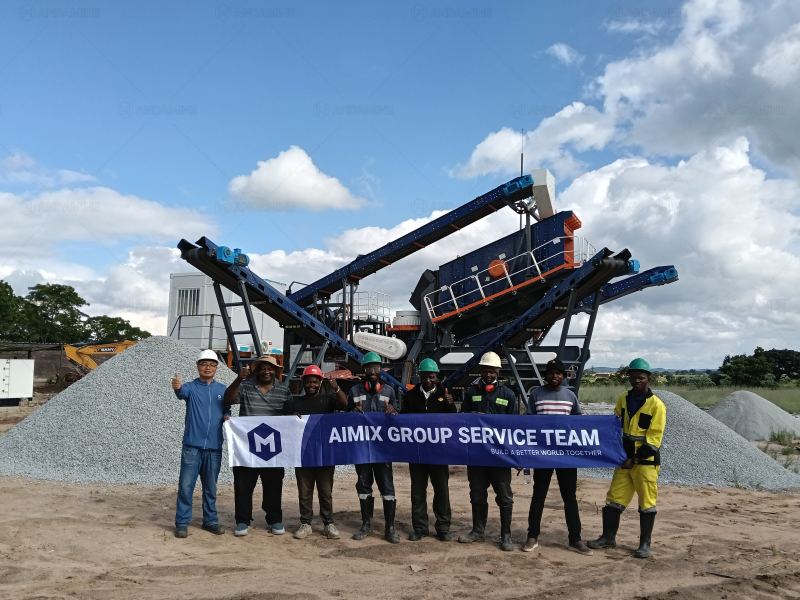
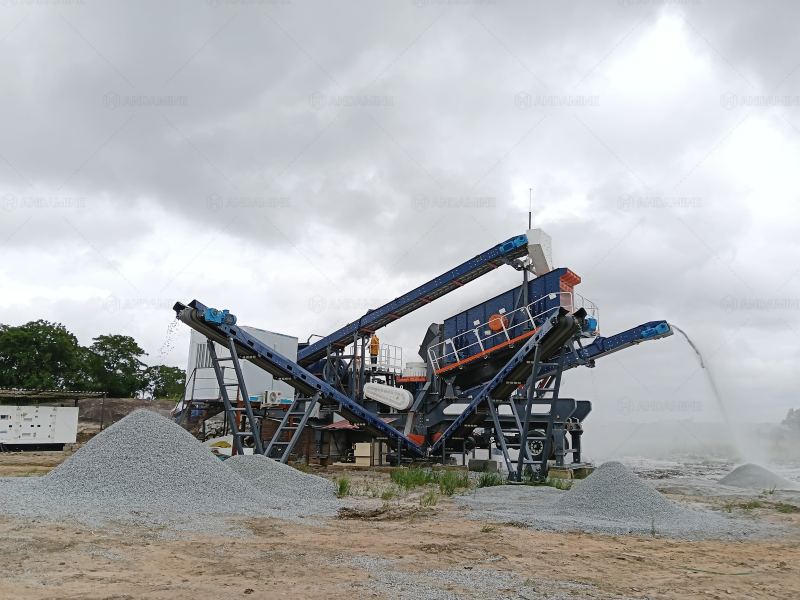
- Operation Date: Jan, 2026
- Location: Zimbabwe
- Material: Granite
- Feeding Size: Up to 430 mm
- Output Size: 0–5 mm, 5–10 mm, 10–15 mm, 15–20 mm
- Capacity: 60–80 TPH
- Equipment: APY4-S Mobile Crusher Plant
Project Challenges
The client had no prior industry experience and needed a cost-controlled, easy-to-operate solution with flexible site mobility. Budget management and reliable production were key concerns.
Solution and Result
A customized mobile crusher plant was configured for granite processing, capable of handling 430 mm feed material and producing multiple graded aggregates at 60–80 TPH.
With on-site installation guidance and commissioning support, the plant was quickly put into operation. The client successfully launched a new aggregate business with stable output, controlled investment risk, and room for future expansion.
80 TPH 4 in 1 Mobile Crushing Plant for Sale in Mexico
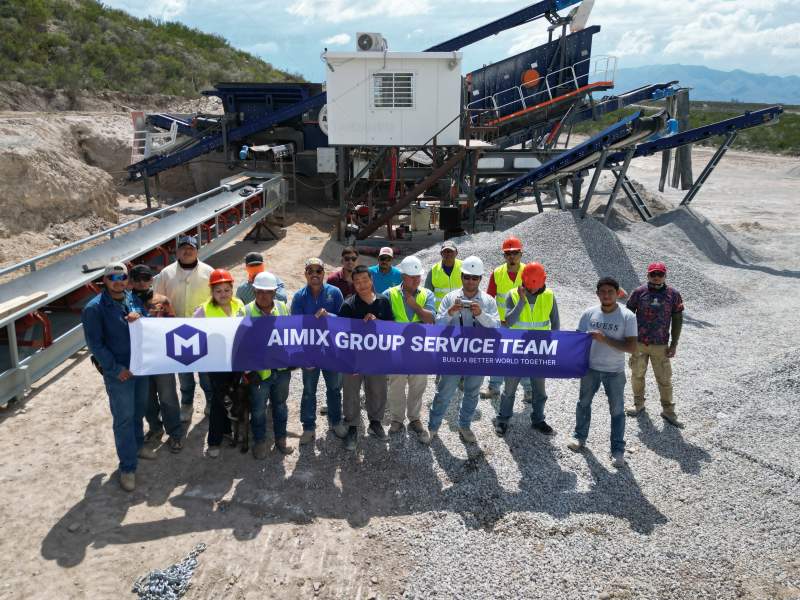
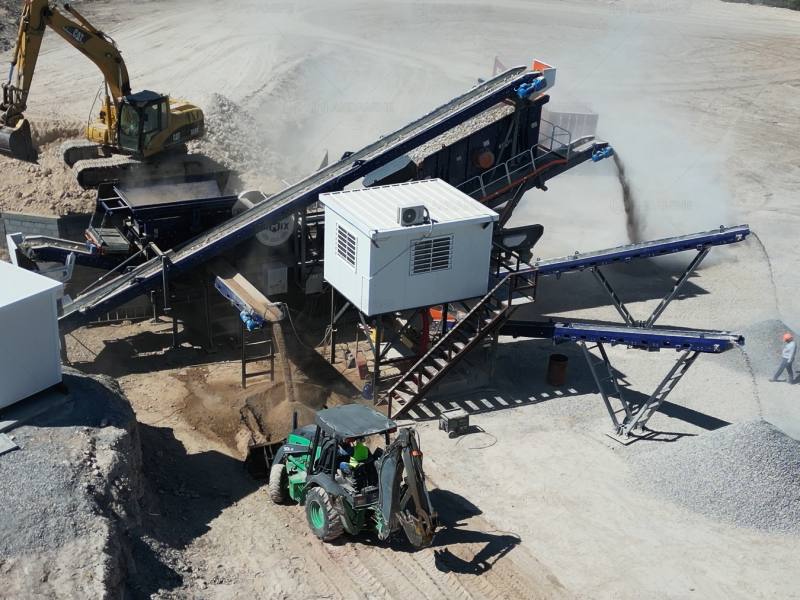
- Operation Date: July, 2025
- Project Location: Monclova, Mexico
- Equipment Model: APY4-57110S Mobile Crushing Plant
- Material: River Pebble
- Feeding Size: Up to 400 mm
- Output Size: 0–20 mm (four graded products)
- Capacity: 80 TPH
Project Overview
The client, a real estate developer and aggregate supplier in Mexico, sought to expand beyond a saturated local market and capture new opportunities in the U.S. aggregate sector. To ensure fast and stable supply, he required a reliable mobile crushing station.
Challenge
As a first-time equipment importer, the client lacked experience with international procurement procedures and was concerned about hidden costs and overall investment risks.
ANDAMINE Solution
ANDAMINE provided full A-to-Z support, including import guidance, cost evaluation, installation supervision, and commissioning assistance.
Today, the APY4-57110S processes 400mm river stone and delivers four grades of 0–20mm aggregates at 80 TPH. With stable production and controlled investment, the client successfully secured a U.S. supply contract and expanded his business.
150 TPH Mobile Impact Crusher for Bogotá Metro Project
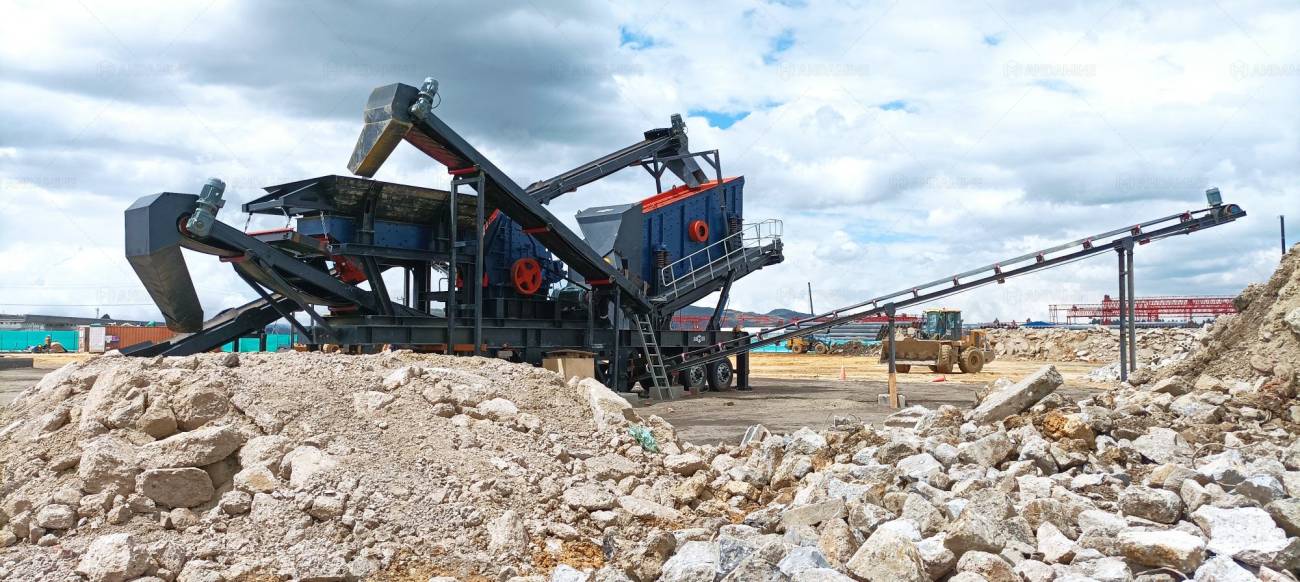
- Operation Date: Jan, 2025
- Location: Bogotá, Colombia
- Application: Demolition waste recycling for metro sub-base
- Capacity: 120–150 TPH
- Plant Type: 3-in-1 Mobile Impact Crusher
Project Challenge
The client needed to recycle demolition waste into qualified granular sub-base material that met strict metro construction standards. Key concerns included particle shape control, stable gradation, and limited urban working space.
Solution
A 150 TPH integrated mobile impact crushing plant was deployed, combining feeding, crushing, and screening on one chassis. The compact design enabled fast setup and flexible relocation as the metro project progressed.
Results
This project demonstrates how a properly configured mobile crusher plant can transform demolition waste into high-value construction material while controlling cost and improving efficiency.
Mobile vs Stationary Crushing Plant — Which Is Better?
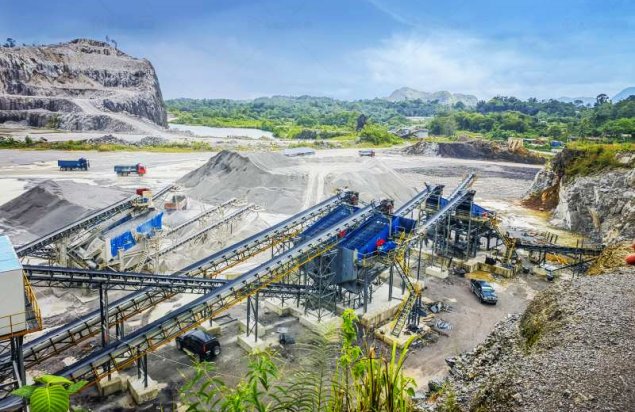
When evaluating mobile and stationary crusher solutions, the right choice depends on project duration, relocation frequency, land conditions, and capital strategy. Below is a comparison to help decision-makers quickly identify which configuration aligns with the operational goals.
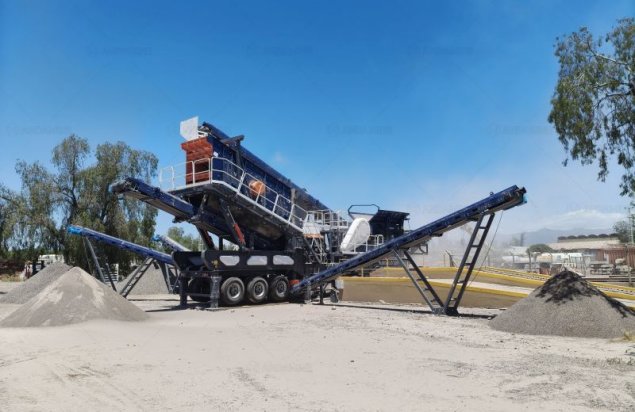 |
|
 |
|---|
| Comparison Factor | Mobile Crushing Plant | Stationary Crushing Plant |
|---|---|---|
| Installation Time | Ready for operation within days; minimal civil work required | Requires foundation construction; installation may take several weeks or months |
| Land Requirement | Compact footprint; adaptable to temporary or limited sites | Requires fixed site planning and long-term land allocation |
| Flexibility | Easily relocated between sites; ideal for multi-location or short-term projects | Fixed in one location; relocation involves high dismantling and reconstruction cost |
| Initial Investment | Lower upfront infrastructure cost; no heavy civil construction | Higher initial civil engineering and structural investment |
| Long-Term Operating Cost | Slightly higher fuel consumption in diesel-driven units; optimized for flexibility | Potentially lower energy cost in electric-powered systems; optimized for long-term continuous production |
| Project Suitability | Road construction, temporary quarrying, recycling, remote mining | Large-scale quarries, permanent mining operations, long-term aggregate production |
| Scalability | Modular units can be added or replaced as needed | Expansion requires additional construction and layout redesign |
Key Decision Considerations:
- Choose a mobile crushing plant if mobility, fast deployment, and reduced infrastructure commitment are priorities.
- Choose a stationary plant if long-term production stability and high-volume continuous output are the main objectives.
In summary, the advantages of mobile crushing plant solutions lie in flexibility, faster deployment, and lower site preparation requirements, while stationary systems excel in permanent, high-capacity production environments. The better option is not universal—it depends entirely on project duration, production scale, and financial strategy.
Regional Factors That Influence Mobile Crusher Plant Selection
Different regions present unique operational, regulatory, and economic conditions. Understanding these regional differences helps clients select configurations that align with long-term performance and cost control goals.
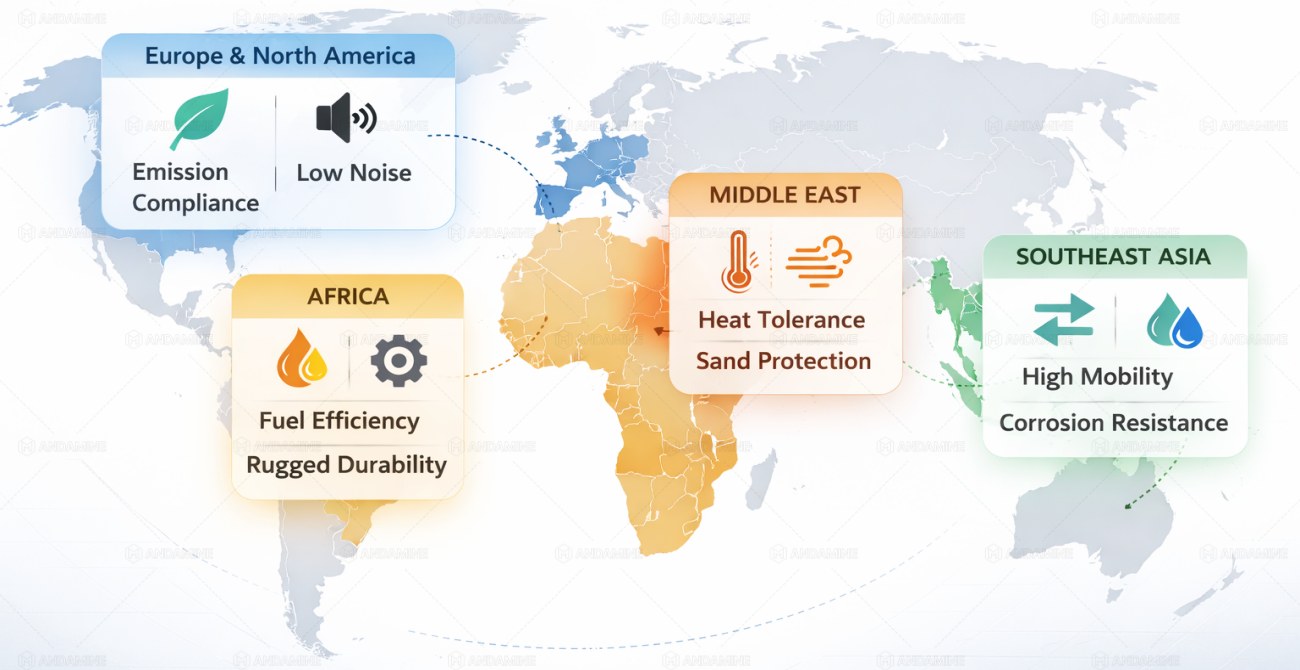
Africa — Cost Control and Structural Durability
In many African markets, operating stability and fuel efficiency are key decision factors.
- Fuel Cost Sensitivity: In remote mining or quarry areas, diesel transportation increases operational expense. Clients and users often prioritize engines with stable fuel consumption and simplified hydraulic systems to reduce long-term cost per ton.
- Rugged Structural Design: Equipment is frequently deployed in areas with uneven terrain and limited infrastructure. Reinforced frames, heavy-duty suspensions, and dust-resistant components are preferred to ensure reliability under harsh conditions.
Southeast Asia — Mobility and Climate Adaptability
Rapid infrastructure expansion shapes equipment demand across Southeast Asia.
- High Project Turnover: Road construction and urban expansion projects require flexible relocation. Compact designs and fast deployment capability are highly valued.
- High Humidity Environment: Tropical climates increase corrosion risks. Anti-rust treatment, sealed electrical systems, and moisture-resistant control cabinets improve long-term durability.
Middle East — Heat Resistance and Sand Control
Extreme environmental conditions influence equipment configuration in this region.
- High Temperature Performance: Cooling systems, radiator capacity, and engine heat tolerance should be carefully selected to prevent overheating during continuous operation.
- Sand and Dust Protection: Fine sand particles demand enhanced air filtration and sealed hydraulic systems to protect internal components.
Europe & North America — Compliance and Environmental Standards
Regulatory compliance strongly affects equipment selection in developed markets.
- Emission Regulations: Engine emission standards (such as Tier or Stage requirements) directly influence engine selection and investment level.
- Noise and Environmental Control: Urban and recycling projects often require lower noise levels and integrated dust suppression systems to meet local environmental standards.
How to Choose a Reliable Mobile Crusher Plant Manufacturer
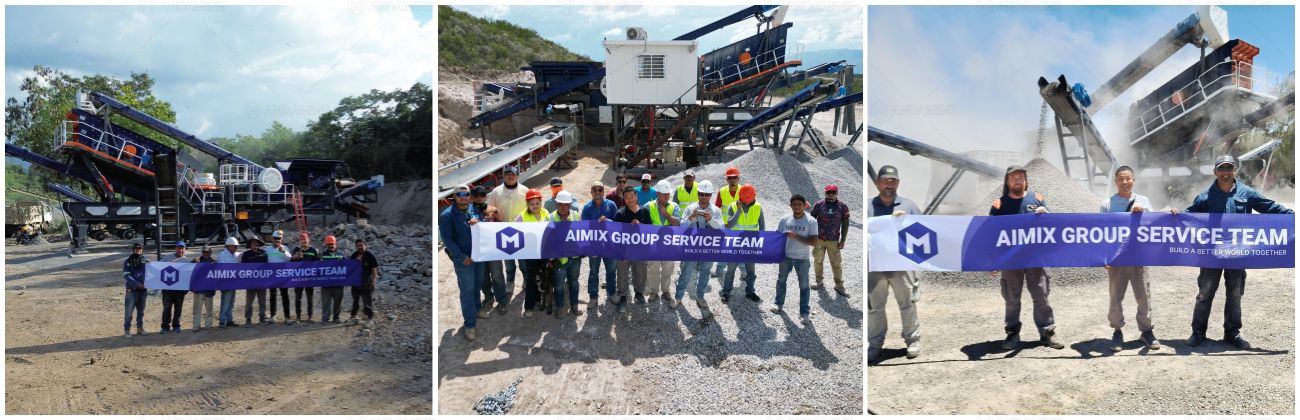
Choosing a reliable mobile crusher plant manufacturer is a strategic decision that impacts equipment lifespan, operational stability, and overall profitability. When evaluating a crusher plant supplier, focus on the following key aspects:
Manufacturing Experience
- Look for mobile crusher manufacturers with substantial industry experience and a dedicated production facility. Established suppliers typically have mature engineering teams, standardized production processes, and strict quality inspection systems.
- Review completed projects and request case references. Real operating cases in mining, quarrying, or recycling applications demonstrate proven structural durability and performance reliability.
Global Export Experience
- Suppliers with international project experience are usually familiar with various regulatory standards, voltage configurations, and environmental requirements across different regions.
- Experienced exporters can efficiently manage logistics, documentation, and shipping coordination, reducing the risk of delivery delays or compliance issues.
After-Sales Service Capability
- Reliable crusher plant suppliers provide structured commissioning guidance, remote technical support, and clear maintenance instructions to ensure smooth equipment startup.
- Fast response time for troubleshooting and technical consultation is critical to minimizing unexpected downtime. Andamine delivers complete lifecycle services to ensure your crushing process runs smoothly and reliably.
Spare Parts Availability
- Confirm whether the portable crusher supplier maintains stable inventory for key wear parts such as jaw plates, blow bars, and liners.
- Clear part identification systems and reasonable lead times help maintain consistent production without extended stoppages.
Local Support Network
- A supplier with regional offices or authorized service partners can provide faster on-site assistance when needed.
- Localized support improves communication efficiency and significantly reduces operational risk in long-term projects.
Future Trends in Mobile Crushing Plants
The future of crushing industry development is increasingly driven by sustainability goals, digital transformation, and stricter energy standards. Companies and project teams are focusing not only on capacity, but also on long-term efficiency and environmental performance. As regulations tighten worldwide, sustainable crushing equipment is becoming a strategic investment.
Electrification and Hybrid Power
New-generation mobile crushing plants are shifting from diesel-only engines to hybrid or fully electric systems. In areas with stable grid access, electric-driven units can reduce fuel-related operating costs by approximately 20–30% while lowering emissions and noise. Hybrid systems maintain mobility while improving overall energy efficiency.
AI Monitoring and Predictive Maintenance
Integrated sensors now monitor load, vibration, and temperature in real time. Predictive maintenance technology can reduce unexpected downtime by up to 30%, helping operators improve utilization rates and control operating cost per ton.
Smart Fleet and Low-Carbon Applications
Fleet management platforms enable centralized monitoring of multiple machines, improving dispatch and fuel efficiency. At the same time, on-site recycling applications can reduce material transportation costs by 25% or more, supporting long-term low-carbon production strategies.
Make the Smart Investment Move Today
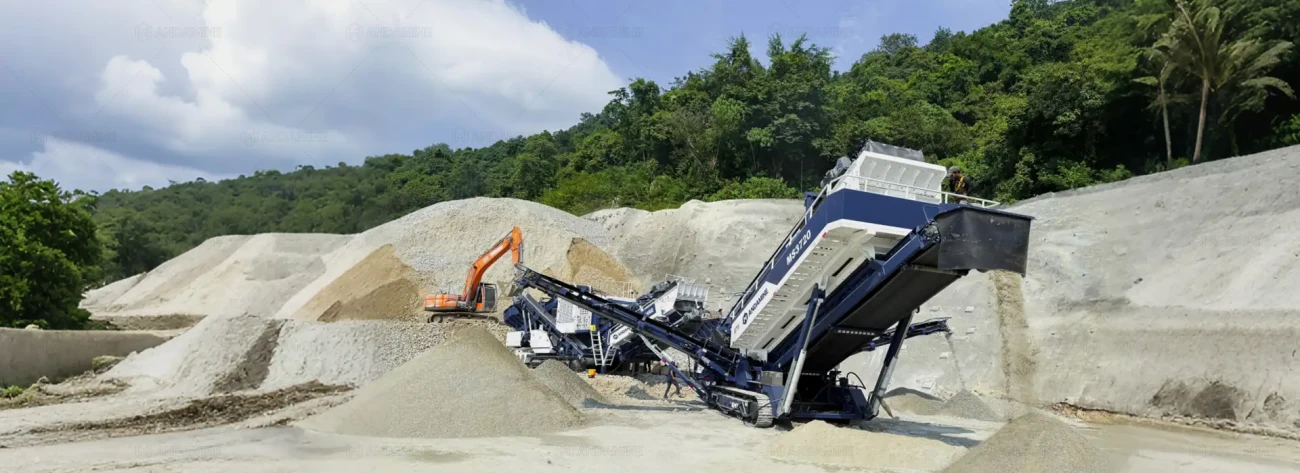
Mobile crushing equipment is not just a production tool—it is a strategic investment that enhances operational agility and long-term profitability. With scalable configurations and rapid deployment capabilities, it allows businesses to respond quickly to market changes while maintaining stable output and margins.
If you are planning equipment upgrades or launching a new aggregate project, our team is ready to provide tailored recommendations and competitive quotations. Get in touch today and move forward with confidence.