
In the global mining and aggregates industry, there is a saying: “Rock type determines the process; the process determines success or failure.” Whether it be infrastructure projects in Africa, sand and gravel export hubs in Southeast Asia, or high-standard recycled aggregates plants in Europe and the Americas, the configuration of a production line inevitably hinges on one core variable—the properties of the material.
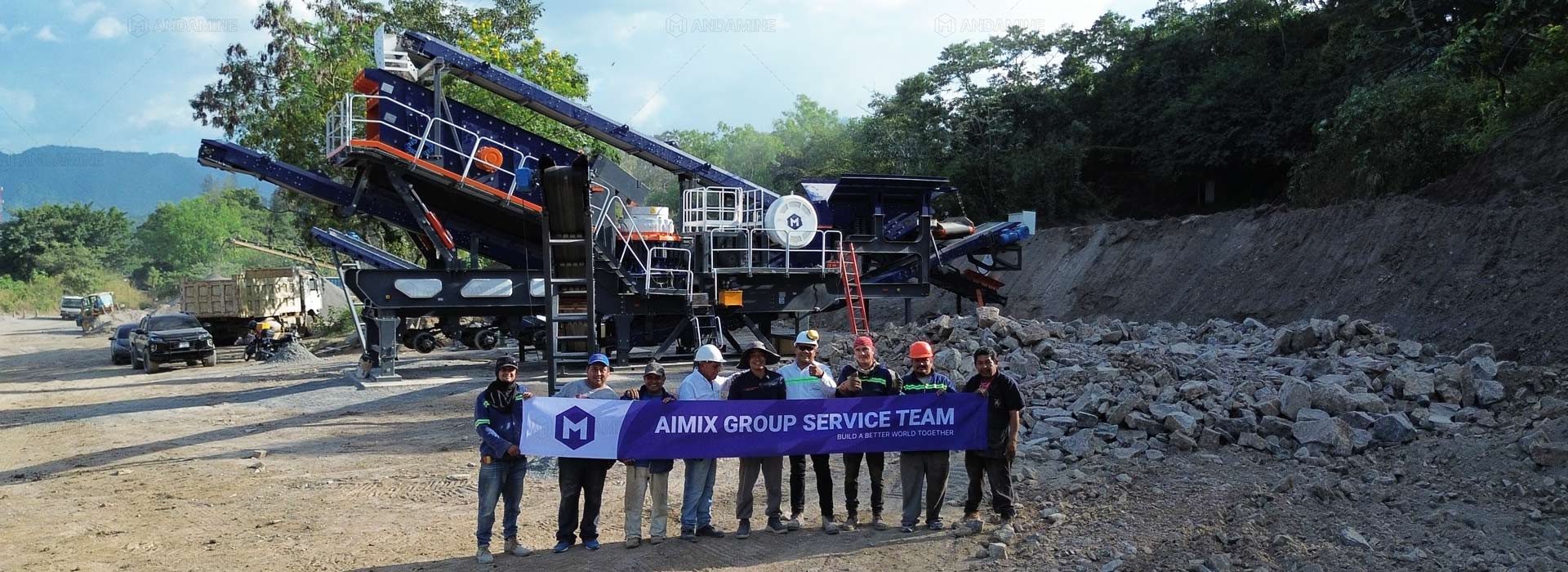
Even for crushing production lines, the design, equipment selection and even investment costs for processing granite and basalt may differ by a factor of several times compared to those for limestone and marl. More crucially, standards, electricity prices, labour costs and environmental regulations in different countries and regions further amplify these differences. This article will provide an in-depth analysis of the fundamental differences in the configuration of crushing production lines designed for high-hardness rock and medium-to-low-hardness rock , offering industry professionals a scientific basis for equipment selection and a reference for process design.
What Are “Hard Rock” and “Soft Rock”?
In global engineering practice, we typically distinguish between “hard” and “soft” rocks based on the Mohs hardness scale (f-value), silicon dioxide (SiO₂) content, and the abrasion index (Ai).
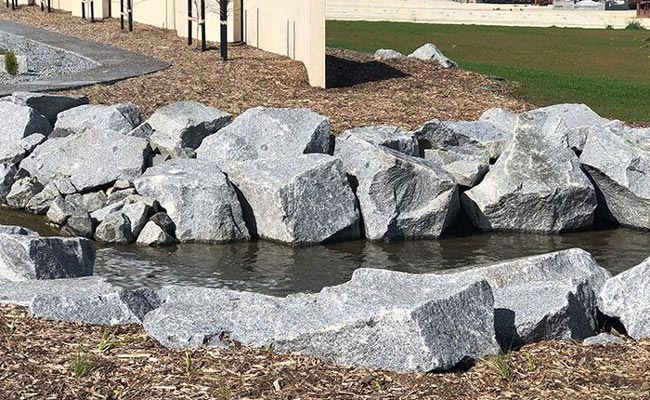
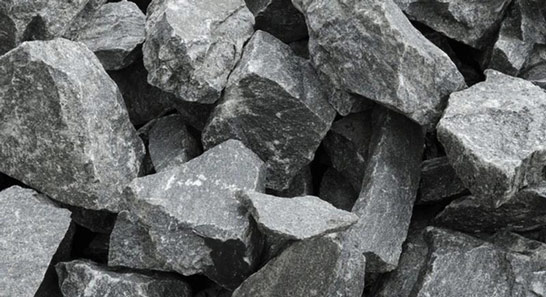
Hard rock (high silica, high abrasiveness):
This primarily includes granite, basalt, diabase, quartzite, riverbed pebbles, etc. The SiO₂ content of such rocks is typically above 60%, with a Proctor hardness f > 10 and an abrasion index Ai > 0.5.
Characteristics: High compressive strength; causes extreme wear to equipment. If the wrong equipment is used, it may result in the disastrous situation of ‘a set of hammer plates being worn through in a matter of hours’, directly affecting the project’s cash flow.
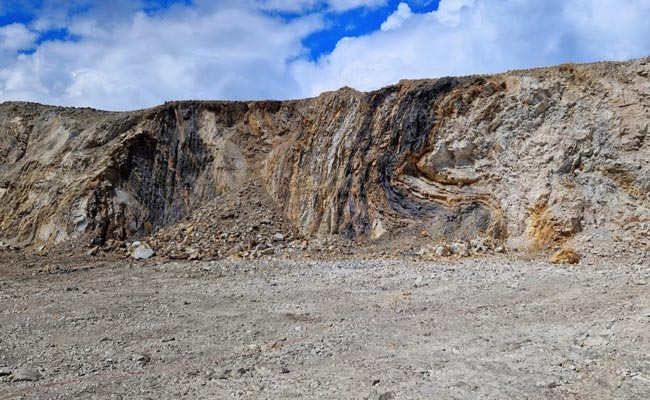
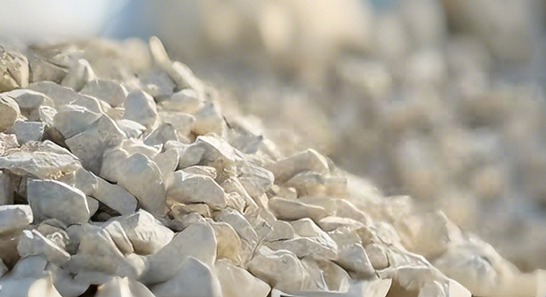
Soft rock (medium to low hardness, brittle):
Mainly includes limestone, dolomite, shale, gypsum, coral rock, etc. These rocks have a lower SiO₂ content, with a Procton hardness (f) generally between 6 and 8, and an abrasion index (Ai) < 0.1. Characteristics: Highly brittle, low toughness; some deposits may contain clay or have high moisture content. The challenge with soft rock lies not in ‘difficulty of crushing’, but in controlling fines, preventing blockages, and ensuring the product particle shape meets the requirements of high-standard concrete.
Core Configuration of Hard Rock Crushing Production Lines
The key challenges in hard rock crushing lie in “high compressive strength” and “high abrasion”. Consequently, the configuration of the production line must be based on three core principles: impact resistance, wear resistance and high efficiency, with a three-stage or even four-stage crushing process generally employed.
1.Core Configuration:
“Jaw crusher for primary crushing + cone crusher for secondary and tertiary crushing + sand-making machine for shaping”. This is the most mainstream and reliable configuration for processing hard rock.
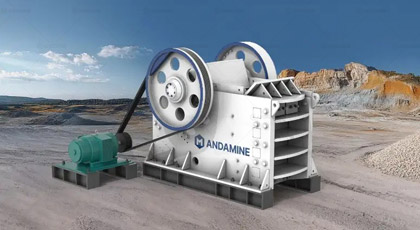
Primary Crusher:
Heavy-duty jaw crushers are the preferred choice. Their deep-chamber design accommodates large chunks of raw ore, whilst the critical liners must be made of high-manganese steel (such as Mn13) and undergo heat treatment, with a hardness of 55 HRC or higher to withstand immense compressive stress. The bearing housing must be a monoblock cast steel structure and equipped with an automatic lubrication system to withstand the continuous, intense impacts caused by hard rock. Feed size should be controlled between 500 mm and 800 mm. For extremely cold regions such as Northern Europe and Canada, a low-temperature hydraulic lubrication system is also required.
Medium and fine crusher:
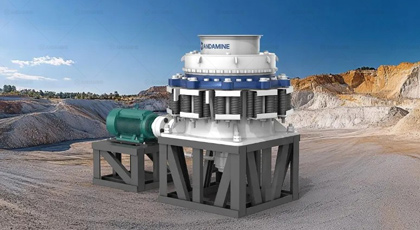
Cone crushers must be employed. Due to impact crushers suffer extremely rapid wear of their hammers and liners when processing hard rock, making them suitable only for small-scale or cost-effective solutions. Cone crushers utilise a laminar crushing principle, squeezing the material through the oscillating motion of the moving cone. This generates a high and concentrated crushing force, effectively reducing the proportion of needle- and flake-shaped particles. There are single-cylinder hydraulic, multi-cylinder hydraulic or fully hydraulic cone crushers may be selected. The European and American markets tend to favour multi-cylinder hydraulic cone crushers, as they feature automatic iron protection and remote discharge opening adjustment, making them suitable for high-automation.
Shaping and sand-making machine:
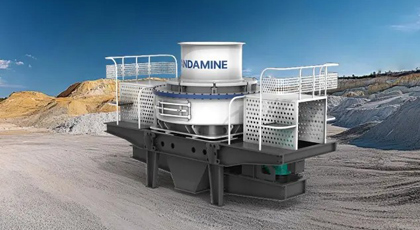
A vertical shaft impact crusher (impact crusher) is configured. For high-grade concrete aggregates meeting EU (EN 12620) or US (ASTM C33) standards, the content of needle- and flake-shaped particles often exceeds limits after hard rock crushing, necessitating an additional shaping process. Its “stone-on-stone” or “stone-on-iron” operating principle effectively shapes the aggregate produced by the cone crusher, removing sharp edges to yield premium manufactured sand with a rounded particle shape and a well-graded particle size distribution. To cope with the high abrasiveness of hard rock, the sand-making machine must be fitted with a highly wear-resistant impeller, whilst the peripheral liners may be coated with a tungsten-cobalt alloy to significantly extend service life.
2. Auxiliary Configuration and Key Points
Screening System: A heavy-duty circular vibrating screen should be used. For the screen mesh, polyurethane-edged manganese steel mesh is recommended to ensure both wear resistance and resistance to blockage.
Feeding System:For large-sized hard rock, it is recommended to use a heavy-duty plate feeder in conjunction with a magnetic separator to remove metallic impurities from the ore and protect the downstream crushers.
Wear Parts Stock:An adequate stock of wear parts must be maintained. Under hard rock conditions, the wear rate of jaw crusher liners and cone crusher concave liners is more than 1.5 times faster than when processing soft rock.
Flexible Configuration of Soft Rock Production Lines
The focus of soft rock crushing lies in process optimisation, cost control and ensuring consistent particle shape. Due to the friability of the material, crushing plant production line configurations are more flexible, with the option of two-stage or three-stage crushing.
1.High-efficiency, Cost-effective Configuration:
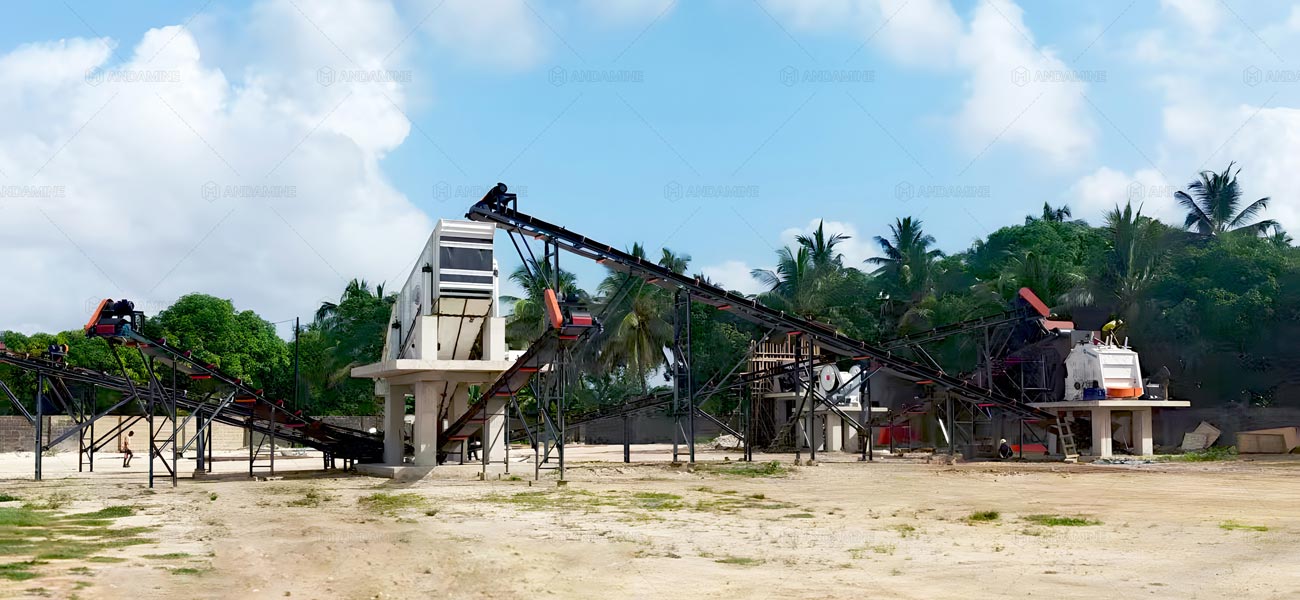
“Single-unit heavy-duty hammer crusher” or “jaw crusher + impact crusher”. For typical soft rocks such as limestone, small and medium-sized projects seeking a high return on investment often adopt these two configuration solutions.
01Single-unit heavy hammer crusher:
Combining primary, secondary and tertiary crushing functions in a single unit, this compact design offers the lowest investment cost and is suitable for operations with an hourly output of less than 200 tonnes. However, the final product’s particle shape is relatively average, and the proportion of needle- and flake-shaped particles may be high. Consequently, very few investors opt for this crushing solution.
02“Jaw crusher + impact crusher” two-stage crushing:
This is the gold standard configuration for soft rock crushing, particularly suitable for the production of ready-mix concrete aggregates where specific particle shape requirements apply. After the jaw crusher completes the primary crushing stage, the material enters the impact crusher. The impact crusher utilises a high-speed rotating rotor to strike the material, causing it to repeatedly collide and break between the impact plate and the hammers. This “impact + rebound” crushing method naturally produces high-quality cubic particles, eliminating the need for additional shaping.
2. High-Quality Sand Production Configuration
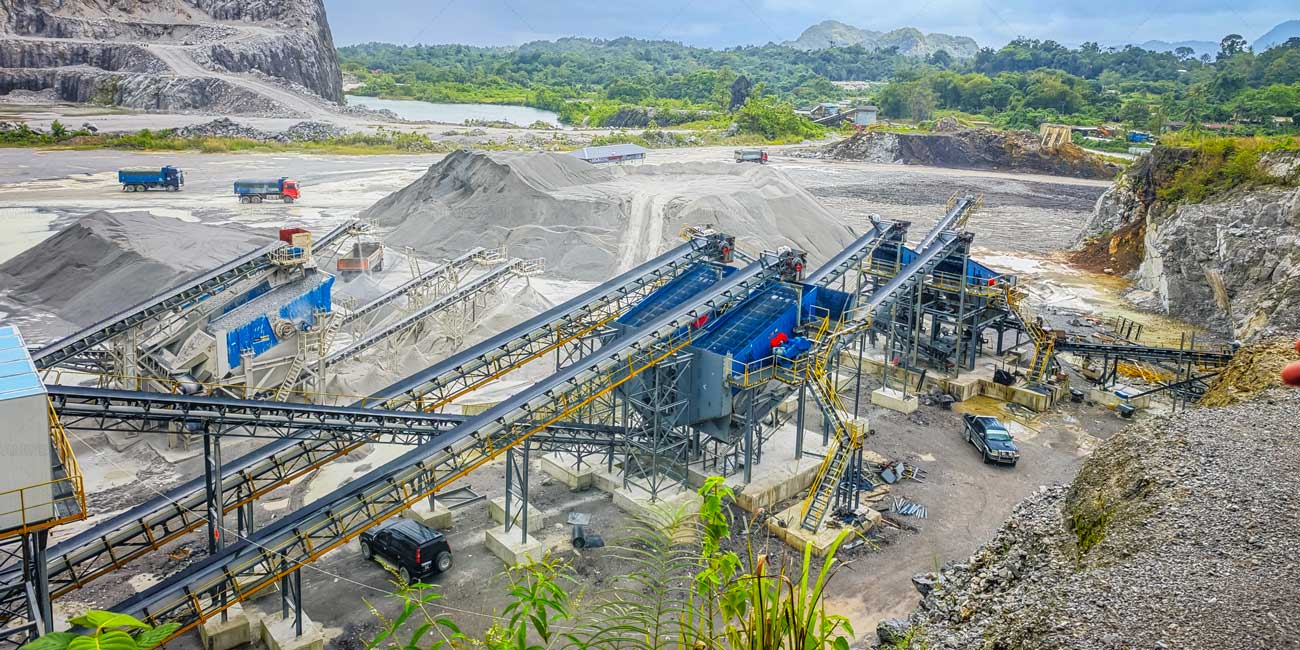
When a soft rock production line needs to produce high-quality manufactured sand simultaneously, a vertical shaft impact crusher and a more precise screening system can be added after the “jaw crusher + impact crusher” stage to form a three-stage closed-circuit crushing process. Taking limestone as an example, two-stage crushing or single-stage crushing. Limestone is brittle with low toughness, making the crushing process relatively straightforward; moreover, the impact crusher’s hammer plates perform optimally in this application. In India, Southeast Asia and the Middle East, single-stage crushing solutions are highly popular to reduce capital expenditure.
01Primary Crushing: Jaw crusher or heavy-duty hammer crusher.
If the raw material has a high clay content (common in deposits found in tropical rainforest regions), it is recommended to use a jaw crusher to prevent soil clumps from blocking the rotor. If the raw material is clean and of uniform size, you can choose a heavy-duty hammer crusher, which directly crushes large limestone blocks into aggregate that meets specifications in a single pass, greatly simplifying the process.
02Fine Crushing/Shaping: Impact Crusher.
Impact crushers utilise high-speed impact from hammers against the impact plate, making them highly suitable for the brittle fracture characteristics of limestone. In Europe, impact crushers are typically equipped with hydraulic opening mechanisms and wear-resistant ceramic impact plates to extend maintenance intervals.
Summary: The common configuration for soft rock is a two-stage combination of “jaw crusher + impact crusher”, or a single-stage combination using a “heavy hammer crusher”. This setup requires fewer machines and has fewer potential points of failure, making it more suitable for regions with unstable power supplies or limited operational and and maintenance capabilities.
What are the Key Differences Between the Two Crushing Line Configurations?
 |
 |
 |
|---|---|---|
| Primarily a three-stage process: primary crushing + secondary and tertiary crushing + shaping. | Core Process | Primarily two-stage: primary crushing + secondary and tertiary crushing. |
| Cone crusher (mandatory), utilising layer compression crushing. | Core Equipment for Secondary and Tertiary Crushing | Impact crusher (preferred), utilising impact and collision for crushing. |
| Extremely high. Top-grade wear-resistant materials such as high-chromium cast iron and tungsten steel alloys must be used. | Equipment Wear Resistance Requirements | Moderate. Standard high-manganese steel is sufficient to meet most operational requirements. |
| Relies on subsequent shaping machines (sand makers) to optimise particle shape. | Final Product Shape Control | The impact crusher itself produces a good particle shape; shaping is an optional process. |
| Relatively high. Total power consumption is approximately 30% higher than that of a soft rock line with the same capacity. | Energy consumption | Low. The equipment offers low crushing resistance, resulting in relatively economical energy consumption. |
| High. Core equipment (cone crushers, high-wear-resistant components) is expensive, and the system is complex. | Investment costs | Medium to low. A wide range of equipment options is available, allowing for cost-effective solutions. |
| High. Wear parts require frequent replacement, and maintenance demands high technical expertise. | Operating and maintenance costs | Low. Equipment wears slowly, maintenance is straightforward, and downtime is minimal. |
| Granite, basalt, diabase, river pebbles. | Typical rock types | Limestone, shale, muddy sandstone, construction waste. |
How Should the Screening and Environmental Protection Configurations be Set up for the Two Types?
1. Screening Stage
- Hard rock: Focus on grading accuracy. Output from cone crushers contains relatively little fine material, screening is relatively straightforward; the key is to separate the finished sand and crushed stone using a circular vibrating screen.
- Soft rock: The focus is on preventing screen clogging. Limestone tends to generate large amounts of fine powder during crushing, and if the raw ore has a high clay content, the wet, sticky material can easily clog the screen mesh. Therefore, soft rock production lines often require polyurethane anti-clogging screens or tension-relaxation screens, supplemented by a washing process to remove excess fine powder and clumps of clay.
2. Environmental Protection and Dust Control
- Hard Rock: Dust is primarily generated at the feed and discharge ports of crushers and at screening machines. As dry processing is the main method, installing a pulse bag filter is sufficient to meet standards.
- Soft rock: Dust generation is substantial (due to the high proportion of limestone powder) and is often accompanied by wet processing (sand washing). Consequently, soft rock production lines require not only dust collectors but also fine sand recovery units and filter presses to treat the sand washing wastewater, thereby achieving zero liquid discharge. This is why environmental investment in soft rock production lines is often higher than in hard rock lines.
New Trends in Rock Crushing for 2026: Smart and Low-Carbon Configurations
As we enter 2026, the simple “hard/soft” dichotomy no longer fully meets market demands. With the implementation of global carbon tariffs and fluctuations in aggregate prices, low-carbon and smart configurations have emerged as the new trend:
The “Aggregate and Sand Co-Production” Model for Hard Rock Lines:
Modern hard rock processing lines no longer settle for producing crushed stone alone. By adjusting the cone crusher’s chamber configuration (from short-chamber to fine-crushing types) and the sand-making machine’s rotational speed, the ratio of manufactured sand to crushed stone can be dynamically regulated. When construction sand prices are high, more sand is produced; when demand for crushed stone is high, more crushed stone is produced.
“Dewatering and Purification” and “Tailings Utilisation” in Soft Rock Processing Lines:
With the depletion of high-quality limestone resources, many mines now contain rock intermixed with significant amounts of clay and weathered layers. Simple crushing alone can no longer meet the clay content requirements of ready-mix concrete plants. Consequently, the addition of mud-washing and screening equipment, air-classification systems for soil removal at the front end of soft rock crushing, and “zero-discharge” solutions that process undersize fines into soil conditioners have become key areas of global technological innovation in 2026.
Modularity and Rapid Deployment:
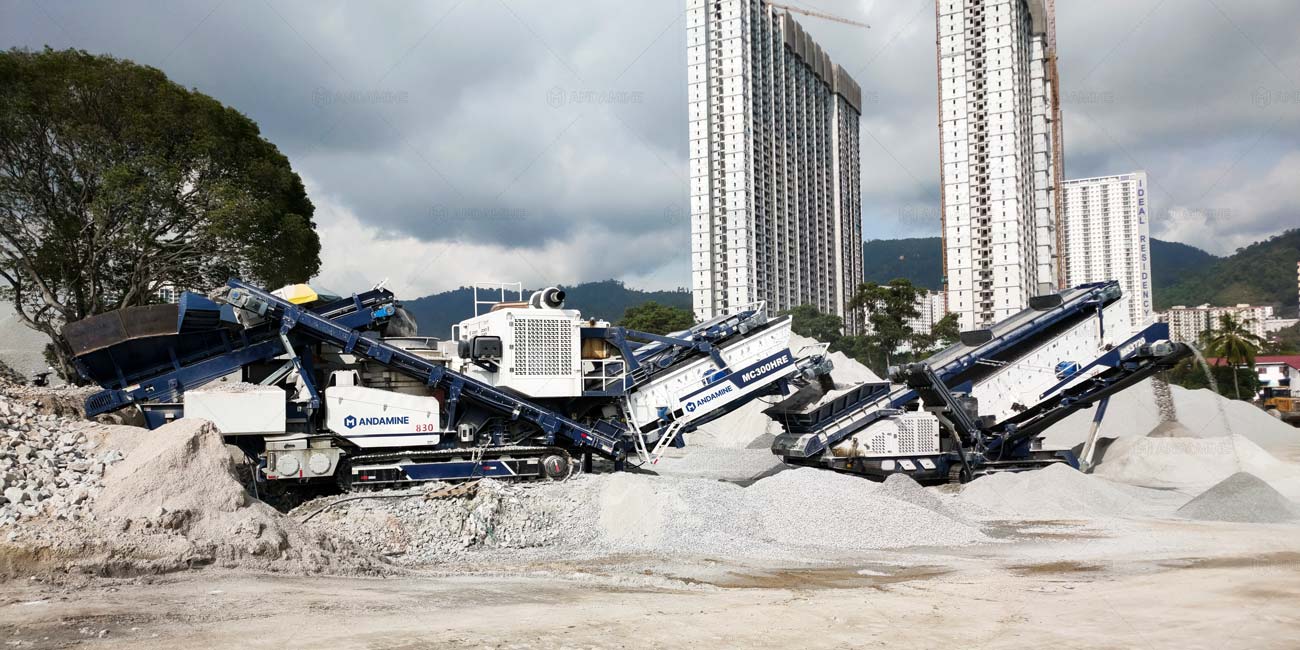
Whether for hard or soft rock, modular steel-structured mobile crushing plants are gradually replacing traditional concrete foundation solutions. This approach is particularly well-suited to infrastructure projects along the Belt and Road Initiative, reducing installation times from six months to six weeks. Furthermore, the equipment can be dismantled and relocated to the next site upon project completion, significantly enhancing its residual value.
Recommendations for Selection and Key Decision-Making Points
When selecting a production line configuration, one must not simply “copy and paste” a standard solution, but rather conduct a systematic decision-making analysis:
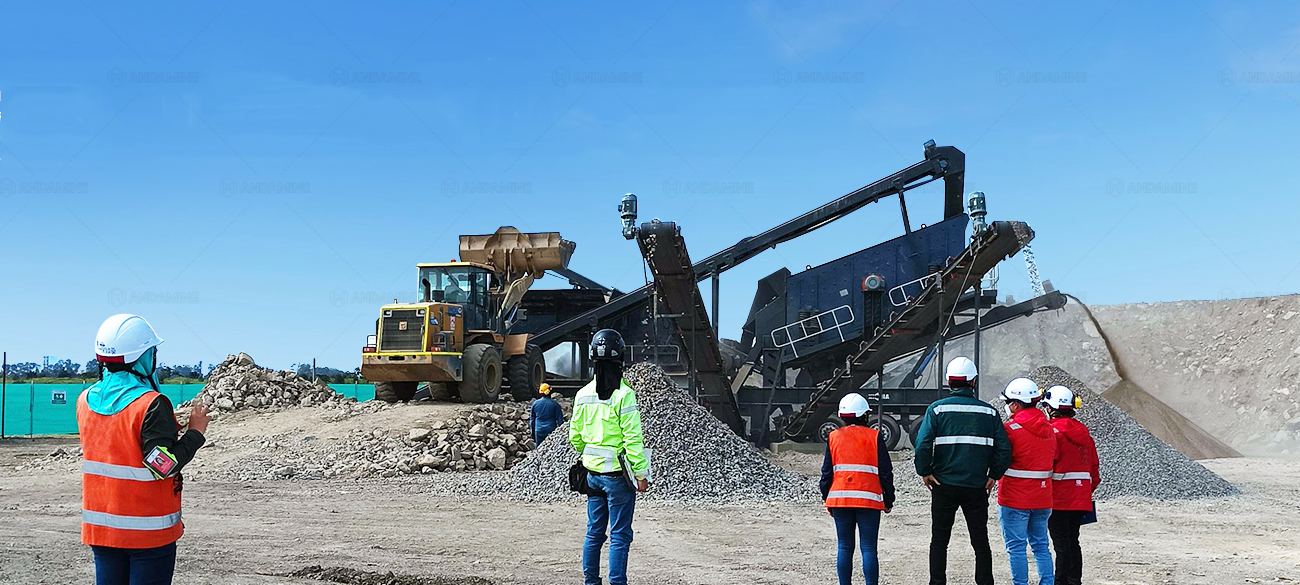
Raw Material Testing First:
Define Product Positioning:
Assess Investment and Operational Budgets:
Consider Environmental and Site Constraints:
So, what exactly is the difference between hard rock and soft rock crushing production lines? In short, it comes down to “abrasion”. Hard rock tests the wear resistance limits of equipment, requiring the laminating action of cone crushers to counter abrasion and the establishment of a robust spare parts supply chain; soft rock tests the limits of process fluidity, requiring the impact of impact crushers to pursue efficiency and the implementation of sophisticated dust and slurry treatment solutions.
For investors, there is no single “best” configuration; rather, there is only the solution that best suits their specific resource conditions, product market and investment strategy. As the aggregates industry moves towards large-scale, green and intelligent operations, a deep understanding of these fundamental differences and the implementation of scientifically tailored designs are key to project success, cost reduction, efficiency gains and sustainable development.