
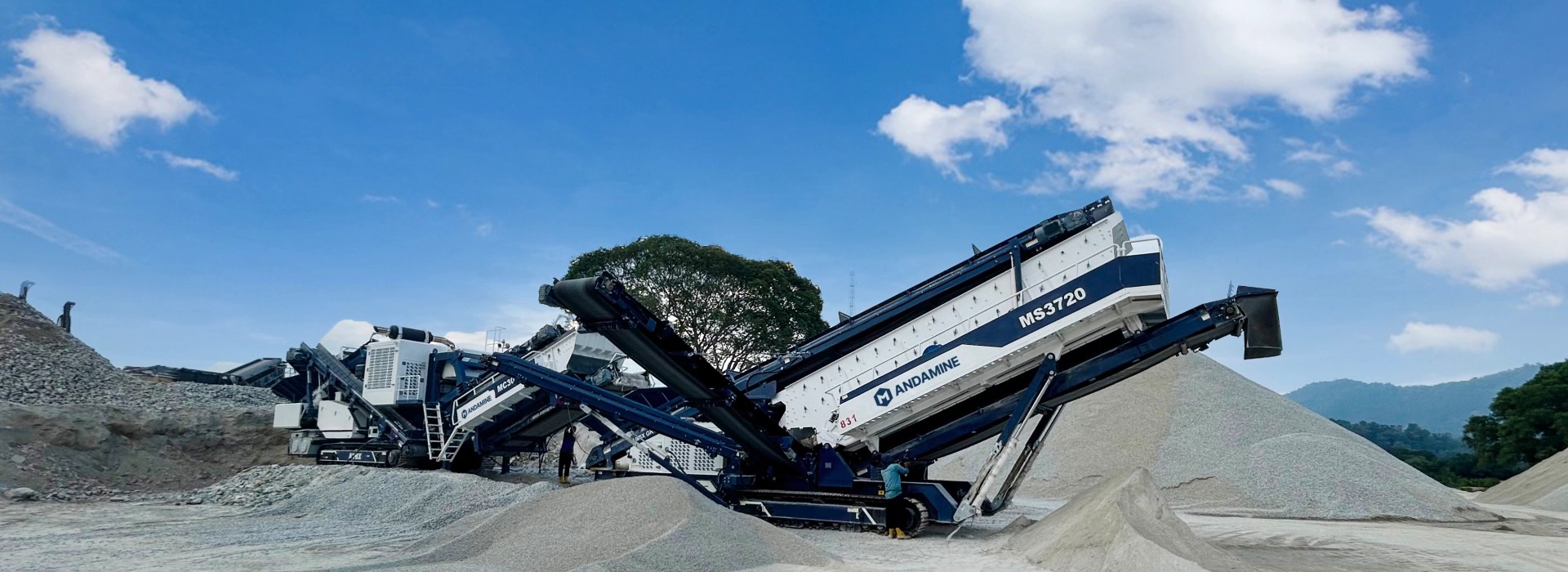

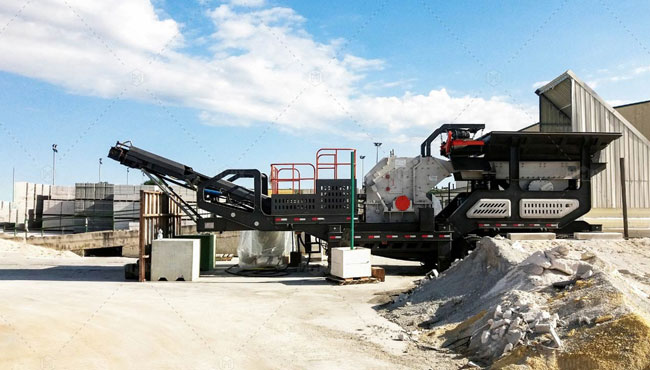
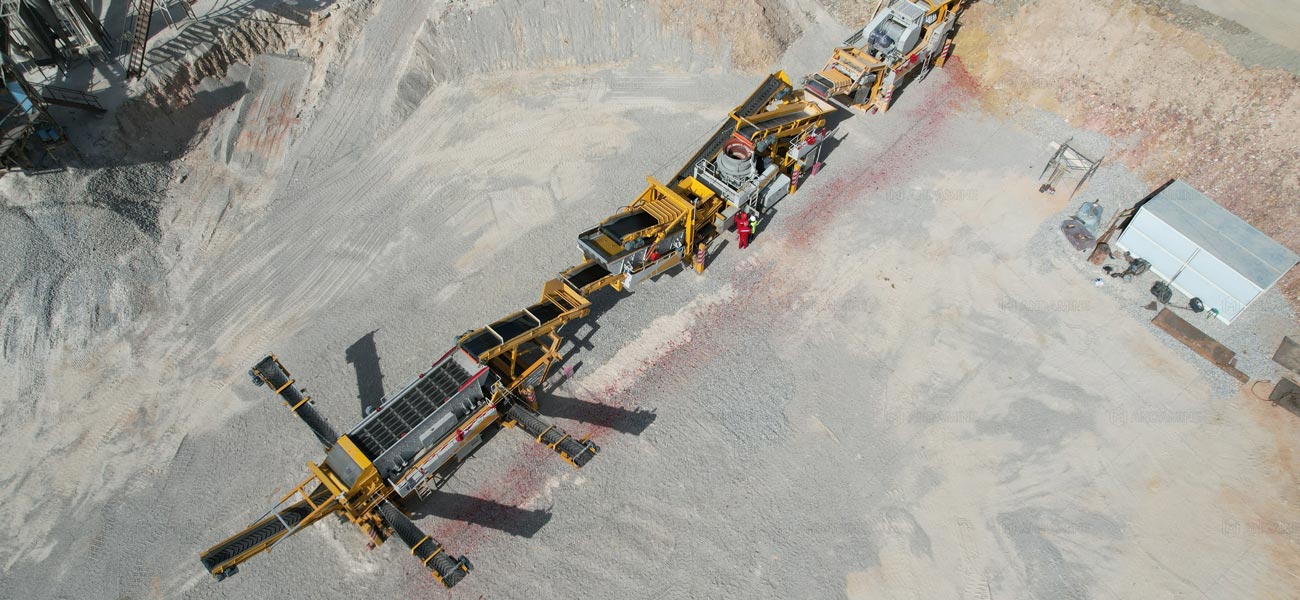
What is a mobile crushing plant? In simple terms, a mobile crushing plant is a portable and movable crushing machine. It is a self-propelled device that integrates feeding, crushing, screening, and conveying systems and is installed on a track or tire chassis, capable of directly going to the operation site to handle materials. This mobility allows them to perform crushing tasks on-site, saving time and costs.
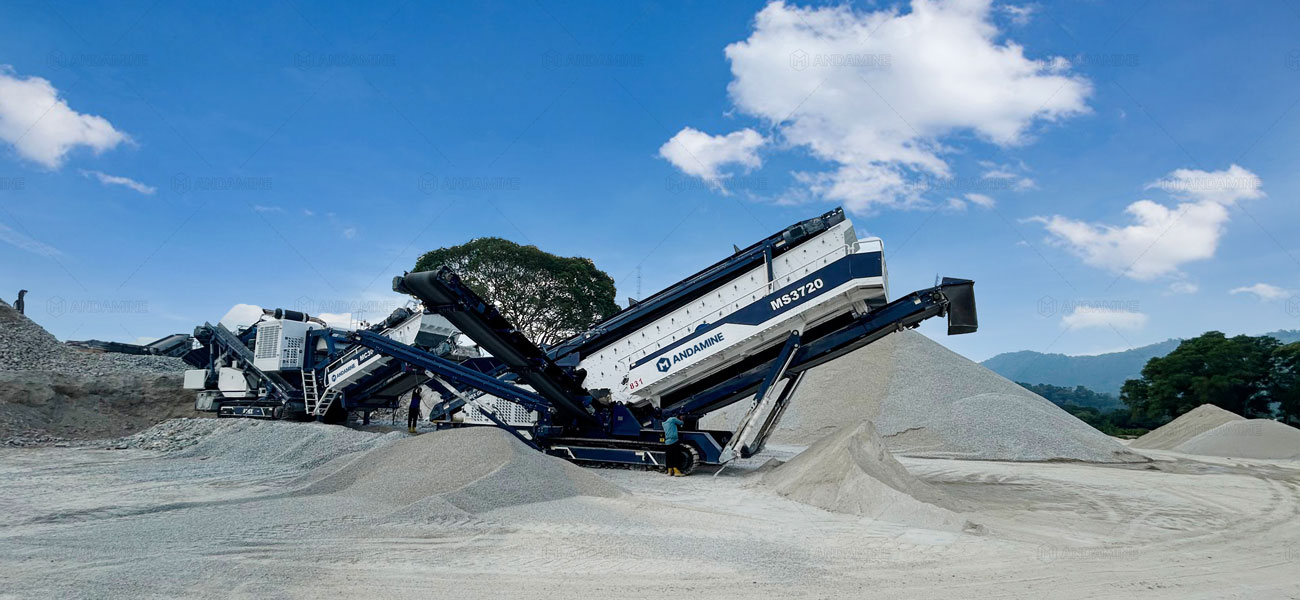
In this article, we will bring you a comprehensive understanding of mobile crushing plant: its important value, benefits, core components, working principle, widely used scenarios, and frequently asked questions.
Why Mobile Crushing Plant Occupies An Important Position in the Crushing Industry?
The best way to understand the value of a mobile crushing plant is to see what challenges it solves that a stationary crushing line cannot. Next, you can imagine a scenario: a building renovation project in a city centre that requires the demolition of an old building. Thousands of tonnes of concrete rubble are generated, which you would need if using a conventional stationary line:
- Transport all this rubble by truck from the crowded city centre to a fixed crushing plant in a distant suburb.
- Carry out the crushing process at the fixed plant.
- Then, transport the crushed aggregate from the far outskirts back to the construction site to be used as road base or fill material.
This process incurs three major costs: double transport costs, fuel consumption, and environmental pollution. Not only that, but organising a large number of trucks in a city centre can cause traffic congestion and safety hazards. The mobile crushing plant has completely changed this model. It solves the following core problems by “bringing the crusher to the material”:
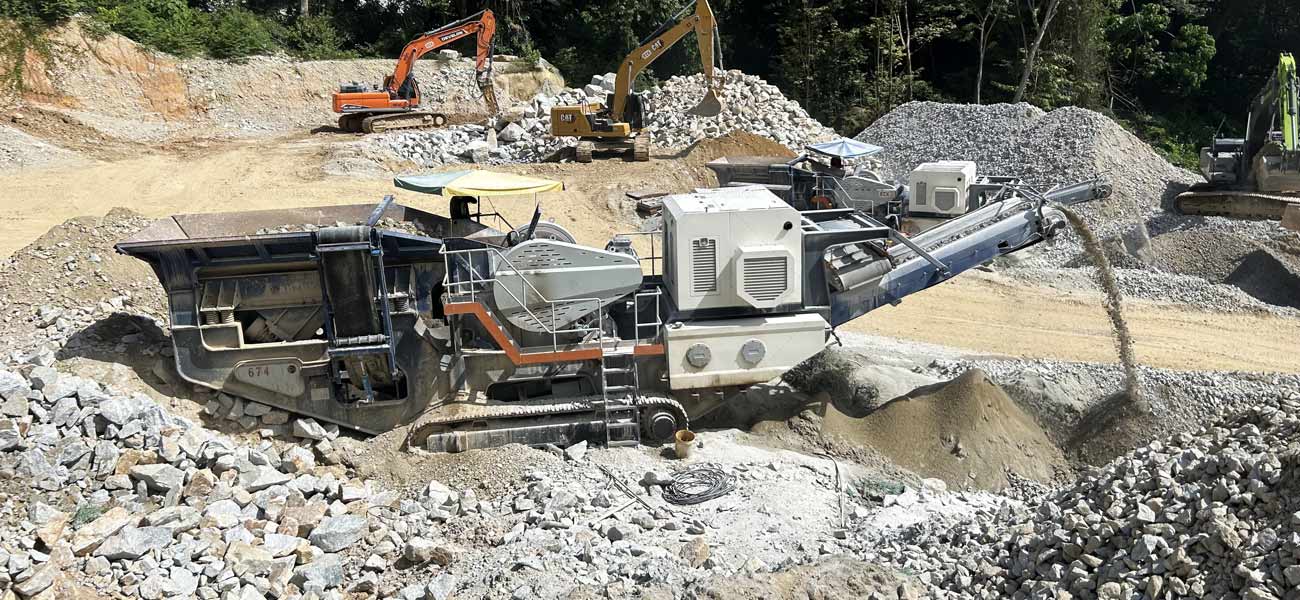
Eliminate transport costs
By crushing the material on site, it saves the huge transport costs of transporting the material to a fixed plant and back to the finished product. This is the biggest cost saving of all.
No Fixed Infrastructure
Unrivalled site adaptability
Whether it’s a steep mine, a remote mountainous area, or a construction site with limited space, the mobile crushing plant can do it all.
Immediate production, fast response
Promote circular economy
It makes it possible to turn construction waste into treasure on site, realizing on-site digestion and reuse of resources, which is a good example of green construction.
In short, stationary production lines are suitable for large-scale projects with long life cycles and fixed locations, while mobile crushing plants are designed for projects that require flexibility, multi-location operations, and on-site recycling. Now that we understand why it exists, let’s take a look at the key components of this mobile crushing plant.
What Are the Core Components of Mobile Crusher Plants?
A mobile crushing plant is a system that works together. Its efficient operation relies on each component doing its own job and cooperating precisely. Let’s disassemble its main components:
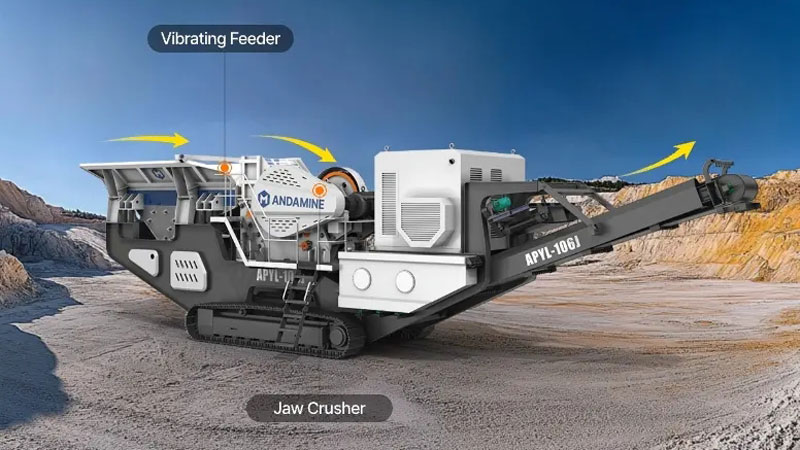
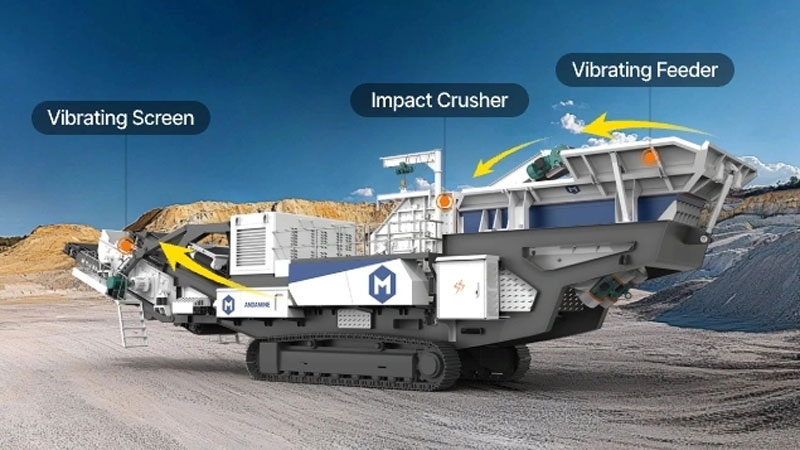
| Feeder | It is responsible for receiving raw materials from the excavator or loader and feeding materials into the crusher evenly and continuously. It is usually equipped with a pre-screening function to remove dirt and fines ahead of time to improve crushing efficiency. |
| Crusher | Responsible for performing the core task of crushing the material. According to the hardness of the crushed material and the required size of the finished product, it is mainly divided into several types: Jaw Crusher (coarse crushing), Cone Crusher (medium and fine crushing), and Impact Crusher (fine crushing and shaping). |
| Vibrating Screen | The crushed material mixture will pass through the vibrating screen and be divided into different grades by the screen mesh according to size. Finished materials that meet the specifications are sent to their respective yards, while oversized materials are sent back to the crusher for re-crushing. |
| Conveyor Belt | The raw material goes from the feeder to the crusher, after crushing to the vibrating screen, the finished material to the yard, and the return material back to the crusher, all of this is done by multiple conveyor belts. |
| Chassis | This is the secret that the equipment can move. It has two main types: tracked chassis (strong off-road ability, can adapt to rugged sites) and tyre chassis (usually towed by semi-trailer headers, easy and fast to move on the road). |
| Power system | usually with a self-contained diesel engine, providing complete autonomous mobility. In fixed sites with power grids, external power supply is also an option, which is more economical and environmentally friendly. |
Having recognised these core components, a natural question is: how do they work together to make the transition from chunky raw material to finished specification? Read on.
How Does A Mobile Crushing Plant Work? A Step-by-Step Introduction
The working process of mobile crushing plant is an efficient and continuous cycle system with the following steps:

Step 1: Feeding
An excavator or loader pours raw materials (e.g. large concrete, rocks) into the feeder hopper of the mobile crushing plant.
Step 2: Primary Crushing and Screening
Step 3: Screening and Classification
On the vibrating screen, the material is classified into different sizes:
- Oversized material: Material larger than the required size is sent back to the crusher (usually a secondary crusher such as a cone or impact crusher) for re-crushing via a return conveyor belt.
- Compliant Finished Material: Material of the required size is transported to the designated finished product pile via separate discharge conveyors. For example, 0-5mm fine aggregate, 5-20mm medium aggregate, etc.
Step 4: Return Cycle
Step 5: Finished Product Stockpiling and Utilisation
Finished graded aggregates are stockpiled on site and can be used directly for backfill, road bedding or as raw material for the production of new concrete, truly realising “self-production and self-marketing”.
This closed-loop system minimises waste and ensures precise control of the final product size. It is this efficient and flexible way of working that allows the mobile crushing plant to be used in a variety of very different scenarios.
Wide Applications of Mobile Crushing Plants
Mobile crushing plant is able to penetrate into various scenarios that are hard to reach by traditional equipment and turn challenges into opportunities. Let’s experience its powerful ability through several specific scenes.
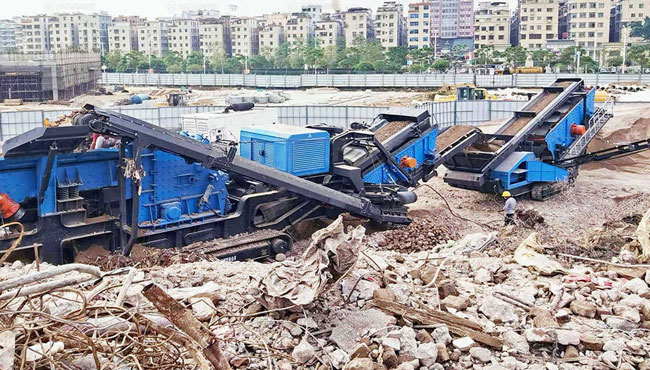
Resource Utilisation of Construction Waste
This is the most typical application. In urban building demolition projects, mobile crushing plants directly process concrete, bricks, asphalt, and other wastes to produce recycled aggregates for use in new roads or buildings, which is the core equipment for the construction of “Waste-Free Cities”.
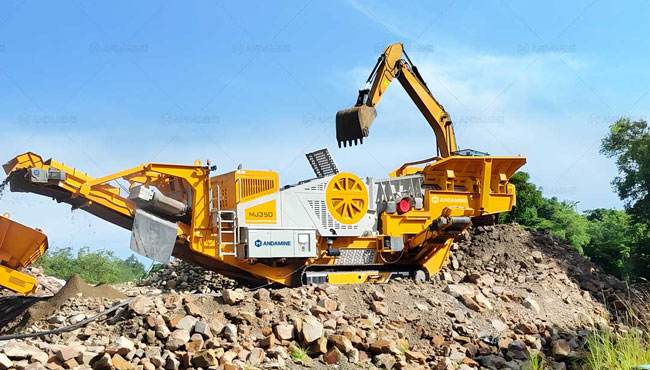
Green Mine Renovation
Remaining sludge from abandoned mines, as well as waste rock, can be processed and mixed by a mobile crusher, which can get products with soil properties, good breathability, and water retention, which can be used for planting trees and for mine rehabilitation to achieve greening again.
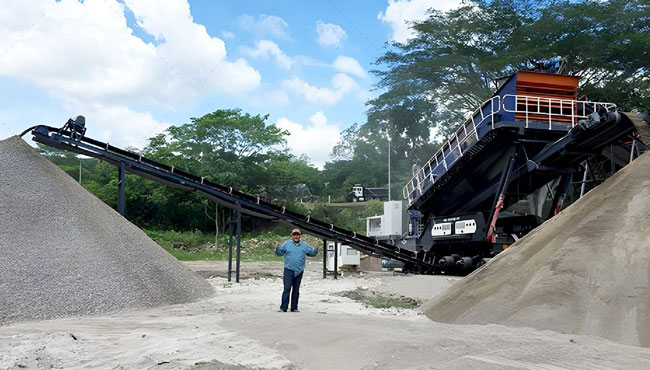
Quarrying and Mining
In mining, mobile crushing plants can be driven directly to the mining face for primary crushing, greatly reducing the costly and carbon-intensive transport of raw ore by giant trucks over long distances to fixed crushing plants.
Road and Bridge Construction
In road reconstruction projects, old concrete pavements or asphalt pavements can be crushed on-site, and the recycled material can be used directly as the base layer of the new pavement, saving a lot of material and transport costs.
After understanding these wide-ranging application scenarios, some more specific and practical questions may surface in your mind. For this reason, we have compiled the following common queries in the hope of providing you with clearer answers.
FAQs of Mobile Crushing Plants?
Q1: How do I choose between a mobile crushing plant and a stationary crushing plant?
Q2: What are the main considerations when choosing between a tracked or a tyred chassis?
- Tracked type: If your site has rough roads, soft ground, or if you need to move the equipment frequently on its own within the work area, tracked crusher is the preferred choice because of its off-road capability and the lack of external traction.
- Choose tyre type: If you have long distances between project sites and need to move frequently on public roads, tyres are more suitable as they can be towed quickly by the front of a truck, making them much faster than tracks, which need to be transported by flatbed trucks.
Q3: My project is small in scale and short in cycle time. Is it cost-effective to use a mobile crushing plant?
Q4: How much does a mobile crushing plant cost?
Q5: What is its capacity?
Q6: Is it complicated to operate and maintain?
However, it is still heavy mechanical equipment, which requires daily inspection, lubrication, and maintenance by trained operators to ensure its long-term stable operation and safety. Our mobile crushing plant is equipped with an IoT remote monitoring system, which monitors the running status of the equipment in real time, and the maintenance is automatically reminds maintenance to reduce the failure rate. And we can provide operation training service for you.
Q7: Can a mobile crushing plant handle wet or sticky materials?
Now, I believe you have a comprehensive understanding of “what is a mobile crushing plant.” If you want to further explore the models and technical specifications for your specific project, please feel free to contact us.