
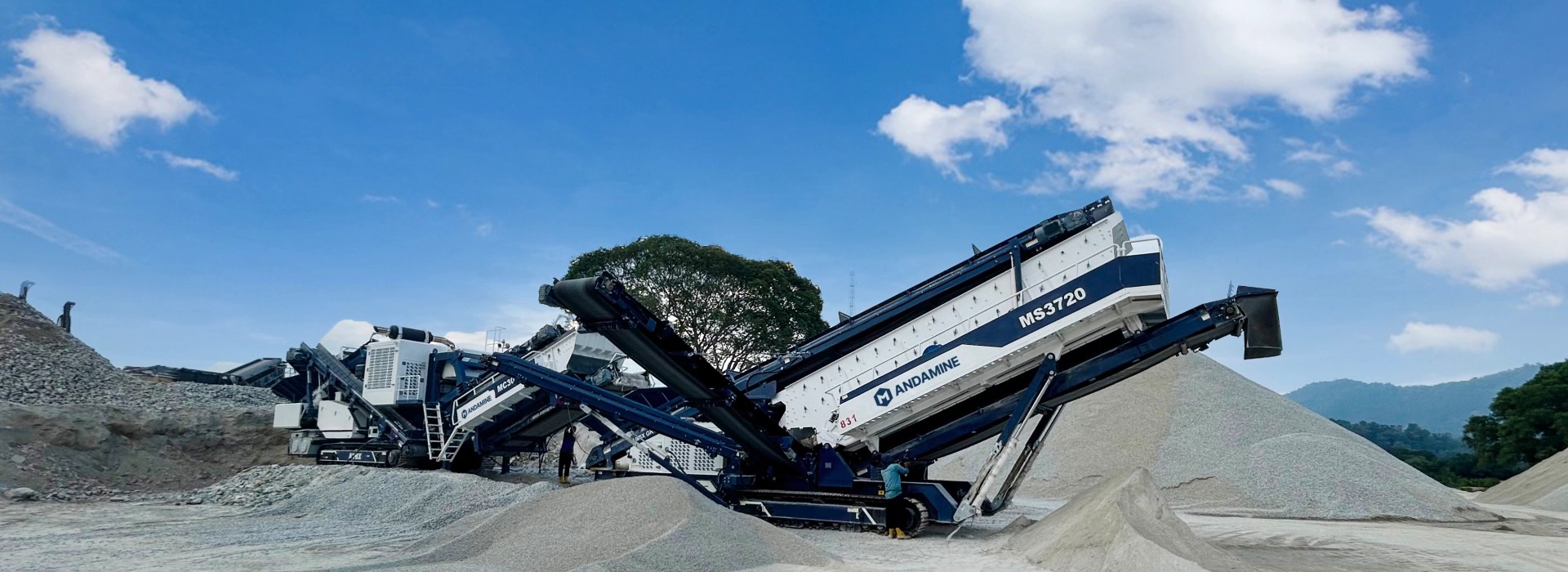

Stone crusher downtime, inconsistent output, and high maintenance costs can seriously disrupt any construction, mining, or quarry project. Project owners, contractors, and investors often struggle to match equipment to material hardness, throughput needs, and long-term production goals. This guide explains how stone crushers work, their applications, and the key factors to consider—helping you maintain smooth operations, reliable material supply, and predictable project outcomes.
What Is a Stone Crusher & How Does It Work?

Definition of a Stone Crusher
A Stone crusher is a machine used to break down large rocks and raw mineral materials into smaller, more manageable sizes. In the material processing chain, it plays a central role by converting quarried or mined stones into forms suitable for transport, construction, or further processing. Its main function is to provide controlled particle size, improve handling efficiency, and ensure smooth, continuous material flow, serving as a bridge between raw extraction and downstream production.
Basic Working Principle
The working principle of a stone crusher involves several stages: feeding → crushing → screening → final output. Raw material is first loaded into a hopper and delivered in a controlled manner to the crushing zone. Here, the material can be broken down using three fundamental mechanical forces:
- Compression: Rocks are squeezed between surfaces, breaking dense and hard materials into smaller pieces.
- Impact: Material is struck or thrown against surfaces, causing fracture, especially effective for brittle rocks.
- Abrasion: Material is rubbed or ground between surfaces, gradually reducing size and shaping particles.
After crushing, the material passes through screening to separate particles by size, with oversized pieces returned for further reduction. Subsequent processes may include shaping, refining, and cleaning, resulting in uniform, high-quality stone and sand ready for construction use.
Where Are Stone Crusher Machines Commonly Used?
Stone crushers are versatile machines widely used in industries that process raw materials into usable forms, they support projects from construction to mining and recycling.

01In Construction Industry
Stone crushing equipment are foundational to building infrastructure and residential projects:
Gravel Production: Crushed stone is used for road bases, driveways, and drainage systems.
Sand Creation: Fine aggregates from crushers mix with cement to produce concrete.
Concrete Aggregates: Crushers break down rocks into uniform sizes for high-strength concrete used in buildings, bridges, and pavements.
Asphalt Mixes: Crushed stone forms the backbone of asphalt for roads and parking lots.
02In Mining Industry
In mining operations, crushers extract valuable minerals and prepare ores for refinement:
Ore Processing: Primary crushers reduce large mined rocks (e.g., iron ore, copper) into manageable chunks.
Mineral Extraction: Crushers liberate minerals from waste rock, enabling efficient separation.
Quarry Operations: Limestone, marble, and gypsum are crushed for use in cement, fertilizers, or industrial products.
03In Recycling Industry
Stone crusher units support sustainability by repurposing waste materials:
Demolition Waste: Concrete, bricks, and asphalt from demolished buildings are crushed into reusable aggregates.
Construction Debris: Crushers turn rubble into base material for new projects, reducing landfill dependency.
Industrial Byproducts: Slag from steel plants or glass waste is crushed for use in road construction or manufacturing.
04In Agriculture & Landscaping Industries
Crushers also serve niche applications in farming and outdoor design:
Soil Stabilization: Crushed limestone adjusts soil pH for crop cultivation.
Landscaping Gravel: Decorative stones are crushed into pebbles for gardens, pathways, or erosion control.
Comparing Different Types of Stone Crusher Machines by Crushing Role
Stone crushers are essential for mining, construction, and aggregate production. Each crusher type performs a specific role in the crushing workflow, from initial size reduction of large rocks to final shaping of aggregates. Below is an overview of commonly used crusher types.

Jaw Stone Crusher – Primary Crushing
- Capacity: 50 – 800T/H
- Feed size: ≤ 1000mm
- Output size: 15 – 300mm
Function: Primary crushing of large, hard rock
How It Works: Jaw crusher uses a fixed and a moving jaw plate to “bite” and compress material
Advantages:
- High crushing ratio and uniform product size
- Simple structure, easy maintenance
- Handles very hard, abrasive rocks effectively
Limitations:
- Produces more elongated particles (less cubical)
- Limited to coarse and medium crushing

Cone Stone Crusher – Secondary & Tertiary Crushing
- Capacity: 20 – 800T/H
- Feed size: 65-300mm
- Output size: 10-40 mm
Function: Cone crushers usually used for secondary and tertiary crushing of medium to hard materials
How It Works: Material is crushed between a fixed concave and a rotating mantle
Advantages:
- High throughput and fine output shape
- Hydraulic adjustment and overload protection
- Suitable for crushing hard, abrasive stones (granite, basalt)
Limitations:
- Higher capital and maintenance costs than a jaw crusher
- Requires skilled operation and regular lubrication

Impact Stone Crusher – Perfect for Shaping and Fine Crushing
- Capacity: 40 – 400T/H
- Feed size: ≤500mm
- Output size: 5 – 200mm
Function: Secondary crushing and shaping of softer or medium-hard materials
How It Works: Material is struck and thrown by high-speed rotating hammers against impact plates
Advantages:
- Produces well-shaped, cubical aggregates
- Lower initial investment than cone crushers
- Adjustable rotor speed and gap to control product size
Limitations:
- High wear rates on hammers and liners when handling very hard rock
- Not ideal for extremely abrasive or large feed sizes

VSI Stone Crusher – Fine Crushing & Sand Shaping
- Capacity: 60-480t/h
- Feed size: 30-55mm
- Output size: 0-4.75mm
Function: Fine crushing and sand shaping for high-quality manufactured sand
Advantages:
- Excellent particle shape with high cubic content
- Ideal for sand making and aggregate shaping
- Adjustable rotor speed to control product quality
- Lower wear cost in rock-on-rock mode
Limitations:
- Strict feed size requirements
- Higher power consumption than conventional crushers
Mobile Stone Crusher Machines – Crush Anywhere, Anytime
Mobile stone crusher machines are designed to deliver flexible and efficient crushing solutions across a wide range of applications, including mining, mineral processing, sand and aggregate production, construction waste recycling, milling, and more.
With a typical capacity range of 50–300 TPH, these plants combine strong crushing performance with excellent mobility. According to site conditions and project requirements, mobile crushers for stone processing can be configured as tire-mounted (wheeled) or crawler-mounted (tracked) units, allowing operators to balance mobility, cost, and operational flexibility.


| Key Decision Factor | Wheeled Mobile Crusher (Tire-mounted) | Crawler Mobile Crusher (Track-mounted) |
|---|---|---|
| Mobility Method | Towed by truck; requires external transport | Self-propelled; moves independently on-site |
| Best Terrain | Flat, paved, or well-prepared ground | Rough, uneven, soft, or confined terrain |
| Relocation Pattern | Occasional relocation between fixed sites | Frequent on-site movement and multi-site work |
| Project Duration Fit | Long-term or semi-permanent projects | Short-term or fast-changing project layouts |
| Site Adaptability | Limited adaptability to uneven ground | Excellent adaptability in complex environments |
| Labor Requirement for Relocation | Higher dependence on external equipment and coordination | Lower dependence; faster and simpler on-site movement |
| Initial Investment | Lower purchase cost | Higher purchase cost |
| Operating Cost Structure | Lower routine maintenance cost | Higher track-related maintenance, offset by efficiency on complex sites |
| Typical Use Cases | Urban construction, road works, stable job sites | Mining, quarrying, demolition, mountainous areas |
Real-World Applications of Our Stone Crushing Solutions

4 in 1 Mobile Stone Crusher Machine for Sale in Zimbabwe
- Crusher Type: Wheel Type
- Production Capacity: 60-80T/H
- Raw Material: Granite
- Max Feeding Size: 430mm
- Finished Product: 0-5-10-15-20mm
- Application: Crushing granite for construction aggregates, ready-mix concrete production, and brick manufacturing
- Configurations: vibrating feeder + jaw crusher + cone crusher + screen + belt

150T/H APY3 Mobile Impact Stone Crusher for Sale in Colombia
- Crusher Type: Wheel Type
- Raw Material: Concrete Waste
- Max Feeding Size: 500mm, with a small amount of steel bars
- Finished Product: 0-1/4’-3/4′-1′-2′(0-5-19-25-50mm)
- Application: Crushing concrete wastes to reuse in metro construction project
- Configurations: vibrating feeder + impact crusher + screen + belt

600T/H Stone Crushers for Sale in Malaysia
- Plant Type: Stationary Type
- Raw Material: Limestone
- Finished Product: 0-5, 10-25mm
- Application: Crushing limestone and providing aggregate for the local construction project
- Configurations: vibration feeder + jaw crusher + cone crusher + vibrating screen + beltAll parts including the main machine are rust-proofed to adapt to the rainy climate in Malaysia.
Stone Crusher Capacity Explained: From Small-Scale to Large Output
When planning a crushing project, one of the most common questions is how much material a stone crusher can realistically process. Capacity is usually expressed in TPH (tons per hour), but real-world output often varies due to material hardness, moisture content, and how consistently the crusher is fed. Understanding these practical influences in advance helps set realistic expectations and keep operations running smoothly.


What Does TPH Mean in Stone Crushing?
TPH, or tons per hour, indicates the rated throughput of a crusher under standard working conditions. It is mainly used to estimate material flow, plan production capacity, and compare different crushing solutions at the planning stage. Rather than a fixed promise, TPH should be viewed as a reference point, with actual performance shaped by site conditions and operating practices.
Typical Capacity Ranges and Project Scale
Crusher capacity is closely linked to the size and demands of a project. In practice, capacity requirements often fall into the following ranges:
- Small-scale operations (<50 TPH): Suitable for local construction, landscaping, small quarries, or on-site material processing.
- Medium-capacity projects (50–200 TPH): Common in commercial aggregate production, road maintenance, and mid-sized infrastructure works.
- Large-scale continuous operations (200–800 TPH or more): Designed for highways, major mining projects, or urban developments requiring a stable, high-volume material supply.
These ranges provide a general reference, helping project planners align production targets with realistic system sizing.
Rated Capacity vs Actual Output
While rated capacity provides a useful reference, on-site performance naturally reflects real materials and operating environments. Several practical factors influence this difference:
- Material hardness and moisture: Dry, uniform stone allows higher throughput, while wet or clay-rich material can cause sticking and slow down crushing.
- Feeding method and consistency: Continuous, even feeding keeps the crusher working efficiently, whereas irregular feed creates interruptions and reduces output.
- Operator practices and workflow: Skilled operation helps maintain optimal feed rates and stable performance, while inconsistent handling can lower effective capacity.
- System matching: Crushers must work in balance with screens, conveyors, and other downstream equipment. Bottlenecks in any part of the system can limit overall production.
For example, crushing dry limestone may achieve the rated capacity of 200 TPH, while wet or clay-containing material may reduce output to around 150–160 TPH. Similarly, even with suitable material, an unstable feed or undersized conveyor may lead to blockages and lower effective throughput.
Factoring in real operating conditions during planning allows teams to better align expectations with site performance and avoid unnecessary operational disruptions.
Stone Crushing Line Design Guide: From Feed to Final Output
Ever wondered how raw stone becomes well-graded aggregates? A stone crushing line works as an integrated system, with each stage supporting smooth material flow and stable output. Understanding this process helps you identify bottlenecks and improve overall production efficiency.


Crushing Line Overview and Material Flow
A stone crushing line moves material step by step from intake to final output, with each stage serving a clear purpose:
- Material intake: Raw stones are delivered and prepared for processing.
- Primary reduction: Large rocks are reduced to manageable sizes.
- Secondary and tertiary processing: Stones are refined to achieve uniform particle sizes suitable for construction.
- Screening and stockpiling: Material is classified, sorted, and stored, while oversized pieces may return for reprocessing.
This structured sequence ensures smooth material flow, minimal waste, and stable operation throughout the line. Understanding how material progresses through each stage helps planners identify potential bottlenecks and optimize workflow efficiency.
Key Design Considerations
To keep a crushing line efficient and reliable, several design principles are essential:
- Continuity: Each stage should handle material at compatible rates to prevent bottlenecks, ensuring smooth operations even during peak production periods.
- Process coordination: Proper integration of feeding, crushing, and screening ensures smooth flow and consistent product quality across all stages of the line.
- Bottleneck prevention: Strategic layout, buffer zones, and efficient conveyors reduce interruptions and maintain steady throughput throughout the entire crushing process.
By considering these factors during planning, project teams can avoid unexpected downtime and keep operations running smoothly.
Automation and Monitoring
Modern crushing lines increasingly use integrated automation to streamline operations and improve output quality. Key features include:
- Integrated control systems: One-touch start and stop, operable via PLC touchscreen or buttons, simplifying workflow and boosting efficiency.
- Intelligent feeding: Remote-controlled feeders allow adjustable feed rates, ensuring continuous material flow and preventing bottlenecks.
- IoT monitoring: Tracks equipment status in real time, provides maintenance reminders, and reduces the risk of faults.
- Consistent output: Automated supervision maintains stable material quality with minimal manual intervention.
Automation enables operators to monitor performance, prevent production interruptions, and maintain steady, reliable output.
How to Choose the Right Stone Crushing Machine for Your Project

Selecting the right stone crushing machine is essential for project efficiency, meeting output goals, and minimizing downtime. The right choice depends on your project’s material, production requirements, site conditions, operational needs, and long-term adaptability.
Key Project Factors
Material Characteristics
- Hardness & Abrasiveness: Hard rocks like granite or basalt need robust machines built to withstand high impact and compression. Softer stones such as limestone or gypsum can be processed with equipment focused on producing uniform particle sizes.
- Moisture & Stickiness: Wet or sticky materials may cause blockages. Crushing machines with anti-clogging features or a short pre-drying stage help maintain smooth operation.
Output Requirements
- Target Size & Shape: Coarse aggregates for road base require high-throughput crushing. Fine sand for concrete or asphalt demands machines that ensure consistent particle shape and strict gradation.
- Production Volume: Small projects benefit from compact, easy-to-deploy crushing equipment. Larger operations need higher-capacity setups capable of handling continuous material flow.
Site Conditions
- Space & Accessibility: Urban or confined sites often require modular, portable stone crushers. Open quarries allow for larger, stationary crusher machines with more extensive screening and stockpiling.
- Mobility Needs: Projects that move between multiple sites or temporary construction zones benefit from crusher equipment that is quick to transport and set up.
Operational Considerations
- Ease of Maintenance: Stone crusher machinery with accessible inspection points and standard wear parts reduce downtime.
- Operational Flexibility: Adjustable feed rates and simple controls allow operators to respond quickly to changing material types or project demands.
- Remote Monitoring Options: Some machines for stone crushing offer IoT-enabled monitoring, providing real-time operational data and maintenance alerts for improved reliability.
Long-Term Suitability
- Scalability: Consider potential increases in production or handling different material types. Modular systems allow adding secondary crushers or extra screening stages as needed.
- Future Adaptability: Choose stone crushing equipment that can meet evolving environmental regulations, energy efficiency standards, and process recycled or high-moisture materials. Flexible crushing machines ensure sustainability and long-term operational relevance.
Stone Crusher Price & Cost Factors: What Influences Your Investment
Investing in a stone crusher is more than choosing a machine—it’s about understanding what drives costs and how to plan your budget effectively. Knowing the main cost factors helps you make smarter, long-term decisions.

Why Stone Crusher Prices Vary
Stone crusher prices differ due to several core reasons:
- Customization & Material Handling Needs: Stone crushing machines adapted to hard, abrasive, or sticky materials require stronger components and wear-resistant parts.
- Capacity & Complexity: Larger throughput and multi-stage crushing lines require more robust structures, conveyors, and control systems.
- Mobility vs Stationary Installation: Mobile stone crushers include transport frames and modular design, while stationary setups need foundations, utilities, and fixed conveyors.
- Manufacturer & Support Quality: Established stone crusher manufacturers with service networks and spare parts availability usually charge more.
- Regulatory Requirements: Environmental compliance (dust control, noise reduction) can add to crushing equipment costs.
Understanding these factors helps explain why two similar-looking crushers may have very different investment levels.
Cost Composition
The total investment for a stone crushing project can be divided into three main categories: Equipment Base Cost (EBC), Additional Costs (AC), and Operating & Maintenance Costs (OMC).
| Cost Category | Approx. Share of Total Cost | Key Elements | Explanation |
|---|---|---|---|
| Equipment Base Cost (EBC) | 50% | – Crusher structure (mobile/stationary) – Capacity & throughput – System complexity – Manufacturer quality & service |
Core equipment, determines crushing capability, production capacity, and efficiency |
| Additional Costs (AC) | 25% | – Installation & commissioning – Transportation & logistics – Foundations & utilities |
Setup and site preparation costs, including assembly, power supply, and foundations |
| Operating & Maintenance Costs (OMC) | 25% | – Wear parts (jaw plates, blow bars) – Energy consumption (electric/diesel) – Spare parts & routine servicing |
Day-to-day operational costs, consumables, and routine maintenance |
| Price Variability Drivers | N/A | – Customization & non-standard features – Environmental compliance – Mobility requirements |
These factors can increase total investment but are not part of the standard Jaw crushercrusher machine cost. They explain why the same machine may have different quotes for different projects. |
Key Cost Recommendations
- Plan Budget Around Core & Setup Costs: Equipment accounts for roughly half of the total investment; installation, transport, and utilities are also significant.
- Factor in Ongoing Maintenance: Wear parts and energy usage can represent ~25% of total investment over time. Scheduled maintenance prevents unplanned downtime.
- Prioritize Reliable Manufacturers: Local support, spare parts availability, and technical guidance reduce operational risk.
- Consider Flexibility for the Future: Modular or relocatable solutions allow adaptation to new material types or expanded production requirements.
- Align Capacity with Project Goals: Ensure crusher throughput, system complexity, and operational flexibility match your material type and production targets.
Stone Crusher Market Size Analysis & Industry Trends
The global stone crushing equipment market is showing stable growth, driven by rising demand from construction, mining, and infrastructure projects worldwide. In 2024, the market was valued at approximately USD 6.02 billion and is projected to reach USD 10.7 billion by 2031, growing at a CAGR of 7.46% (according to Verified Market Research).
This growth reflects more than just construction activity—it highlights a shift toward larger-scale infrastructure projects, higher aggregate consumption, and integrated crushing operations, where crushers play a central role in long-term material supply.
Key Market Drivers
- Infrastructure Development: Continuous investment in roads, bridges, railways, and urban projects drives demand for aggregates, emphasizing stable production and continuous operations.
- Mining Expansion: Mining growth, especially in resource-rich regions, increases the need for crushers capable of handling demanding materials.
- Urbanization in Emerging Economies: Rapid urban growth boosts demand for concrete and asphalt aggregates, highlighting the need for scalable crushing solutions.
- Recycling & Construction Waste: Sustainability initiatives promote recycling of construction and demolition waste, expanding stone crusher applications beyond traditional quarrying.
Regional Market Overview
- Asia-Pacific: Largest market, led by China, India, and Japan, driven by rapid industrialization and ongoing infrastructure investment.
- North America & Europe: Steady demand, focused on infrastructure modernization, efficiency upgrades, and environmental compliance.
- Africa: Robust growth supported by infrastructure and mining projects, projected 7% CAGR through 2032.
- Latin America: Moderate growth from highway construction, urban development, and mining, estimated 5.5% CAGR (2023–2032).
Overall, emerging markets are driving volume growth, while mature markets focus on efficiency, sustainability, and system optimization. These trends indicate that stone crushers are increasingly viewed as strategic assets within long-term production planning, making informed project-level decisions more important than ever.
Planning Stone Crushing Projects with Confidence

Successfully planning a stone crushing project goes beyond selecting a single machine — it requires evaluating material, output targets, and site conditions. By focusing on project-specific needs, you can ensure continuous operations, consistent product quality, and long-term efficiency.
If you’re ready to take the next step, connect with us. We provide tailored solutions — from planning and design to full aggregate production — to help you maximize reliability, minimize risk, and adapt to future demands.