
In modern aggregate production, particle shape has emerged as a decisive quality indicator, directly influencing concrete performance, asphalt durability, and overall project value. Experience shows that particle shape issues cannot be solved by choosing a single ‘better’ crusher; they require understanding the crushing mechanisms and coordinating the process. Cone crushers and impact crushers serve different purposes in shaping aggregates. Only by using them together properly can consistent, high-quality particle shapes be achieved.

Why Particle Shape Is Becoming a Global Differentiator in Aggregates

Global Market ShiftAggregate production is moving from volume-driven supply toward specification-driven demand. Concrete and asphalt increasingly require aggregates that meet strict standards not only for size but also for particle shape, which directly affects structural performance, workability, durability, and pavement longevity.
Impact of Particle ShapeParticle geometry influences concrete strength, mix workability, and asphalt stability. Poorly shaped particles, such as elongated or flaky material, can compromise performance in demanding applications.
Common Design MisconceptionsMany plants focus on maximizing throughput, assuming higher output ensures quality. Others treat performance issues as single-machine problems, neglecting process-level coordination. Such approaches often fail to manage particle shape effectively.
Achieving superior particle shape is a system-level goal, not something a single crusher can deliver. It requires careful coordination of crushing stages and thoughtful equipment positioning. Rather than trying to fix particle shape at the final stage, it should be treated as a process objective throughout the entire production line.
Technical Foundations: How Crushing Mechanisms Shape Aggregate Geometry
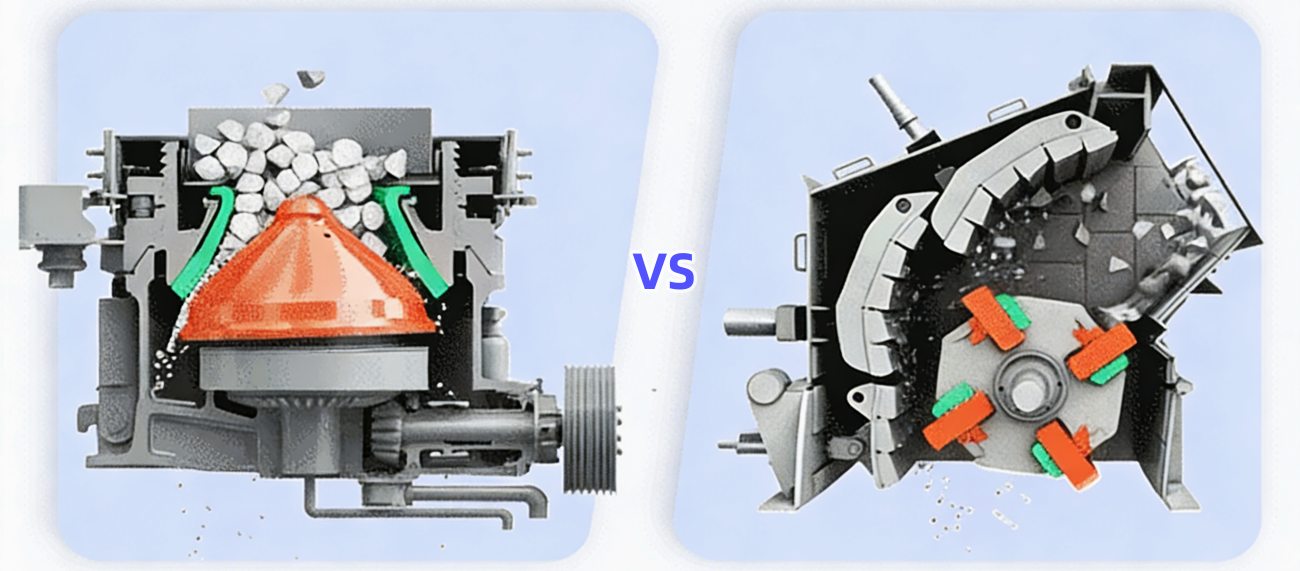
Compression-Based Crushing
Cone crushing machines rely on inter-particle compression. Rock particles are crushed as they are squeezed between the mantle and concave surfaces, breaking along natural fissures.
Effects on Material:
- Produces uniform intermediate particle sizes.
- Maintains predictable gradation, ensuring consistent feed for downstream processes.
- Reduces production of fines compared to high-impact methods.
Limitations in Particle Shape:
- Output particles are angular, often with sharp edges.
- Cone crushing alone does not guarantee fully cubical shapes; final geometry depends on subsequent shaping.
- Further shaping stages are typically needed for aggregates requiring strict specifications.
Impact-Based Crushing
Impact crushers operate through high-speed impact and particle-to-particle collision. Material is accelerated against blow bars or impact plates, fracturing along multiple points.
Effects on Material:
- Refines particle edges, increasing cubical content.
- Reduces elongated or flaky particles, enhancing particle uniformity.
- Generates visually consistent aggregates suitable for precise specifications.
Limitations:
- Higher wear on components compared to compression-based crushers.
- Energy consumption is typically greater.
Common Misunderstandings in Mechanism Selection
- Adding more stages does not automatically improve particle shape; improper sequencing can produce excessive fines or irregular shapes.
- Ignoring mechanism compatibility: Compression and impact mechanisms are complementary; mismatched use reduces efficiency.
- Overemphasis on single-machine performance: Particle shape is determined by the interaction of mechanisms and process flow, not by any individual crusher.
Particle shape is a system-level outcome, determined by mechanism selection and stage sequencing rather than the brand or size of a single crusher.
The Role of Cone Crushers: Structural Stability and Throughput Control
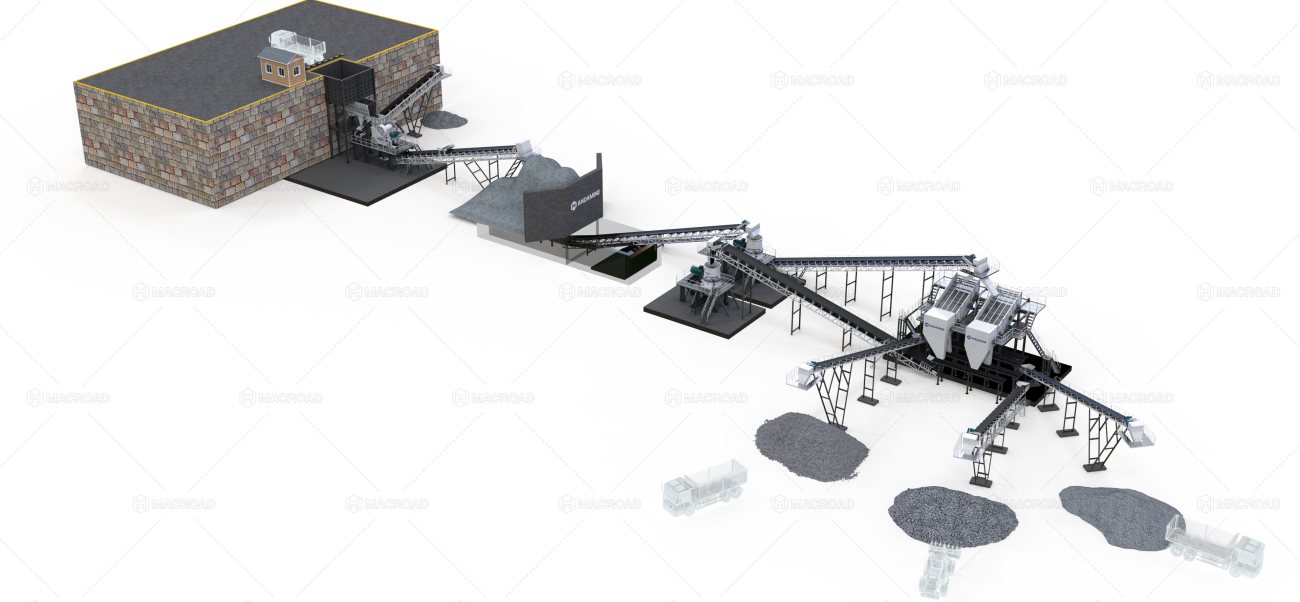
Core System Functions
- Continuous and stable secondary and tertiary crushing: Cone crushers handle medium to hard rock reliably, ensuring that high-volume plants operate without unexpected interruptions.
- Supports plant capacity and production planning: By providing a predictable and steady output, cone crushers enable precise scheduling and resource allocation across the production line.
- Energy efficiency in high-throughput operations: Designed to process large volumes with minimal energy per ton of material, they reduce operational cost while maintaining high productivity.
- Operational reliability and maintenance advantages: Robust construction reduces unplanned downtime. Standardized maintenance procedures and modular design features allow for faster servicing, minimizing disruption to plant schedules.
- System load balancing: Cone crushers stabilize workflow between primary reduction equipment and shaping stages, preventing bottlenecks and uneven feed to downstream machines.
Contribution to Particle Shape
- Production of well-graded intermediate material: While not shaping the final product, cone crushers generate uniform particle size ranges that are ideal for efficient downstream processing.
- Gradational consistency across feedstock: Predictable gradation helps impact crushers, screens, and classifiers operate optimally, avoiding material segregation and improving overall plant efficiency.
- Preparation for high-spec aggregates: By delivering intermediate material within target ranges, cone crushers provide the foundation for final shaping or quality enhancement steps without producing unnecessary fines.
- Mitigation of processing inefficiencies: Uniform feed reduces wear and tear on downstream equipment and helps maintain consistent operational parameters.
Placement in Aggregate Plant Layouts
- Secondary or tertiary stage positioning: Cone crushers typically follow jaw crushers and precede shaping equipment, forming a bridge between coarse reduction and fine shaping.
- Optimized feed management: Correct placement ensures uniform feed to impact crushers, vibrating screens, or other processing units, preventing overloading and uneven wear.
- Throughput integration: Capable of handling high production rates without causing bottlenecks, they allow upstream and downstream processes to operate at designed capacities.
- Flexible configuration for plant design: Depending on production goals, cone crushers can be arranged in parallel or series to balance output and maintain material consistency across multiple lines.
Cone crushers form the backbone of aggregate production by bridging primary reduction and final shaping stages, ensuring smooth integration and coordinated workflow. Their main value lies in supporting overall system efficiency and creating the operational conditions that allow downstream processes to produce high-quality aggregates.
The Role of Impact Crushers: Targeted Particle Shaping and Value Enhancement
Advantages in Final Particle Shaping
- Reduction of elongated and flaky particles: Enhances structural performance in concrete, asphalt, and other engineered materials.
- Increased cubical content: Produces visually consistent aggregates with uniform geometry, improving product quality.
- Edge refinement and surface quality: Enhances particle uniformity, ensuring high-quality finished material suitable for demanding applications.
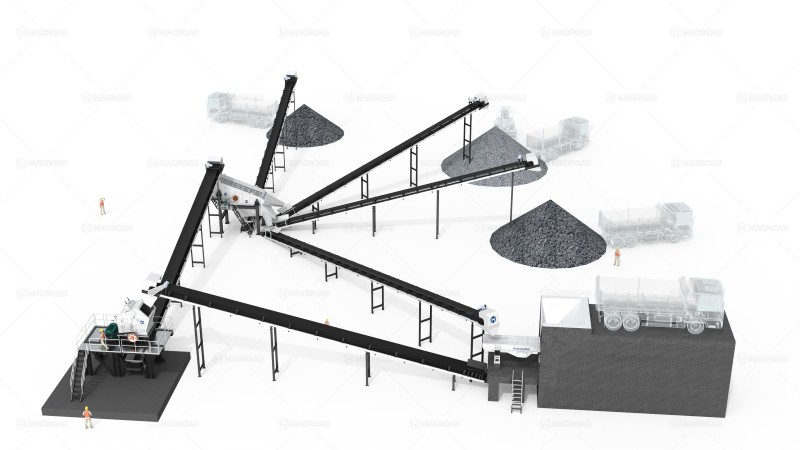
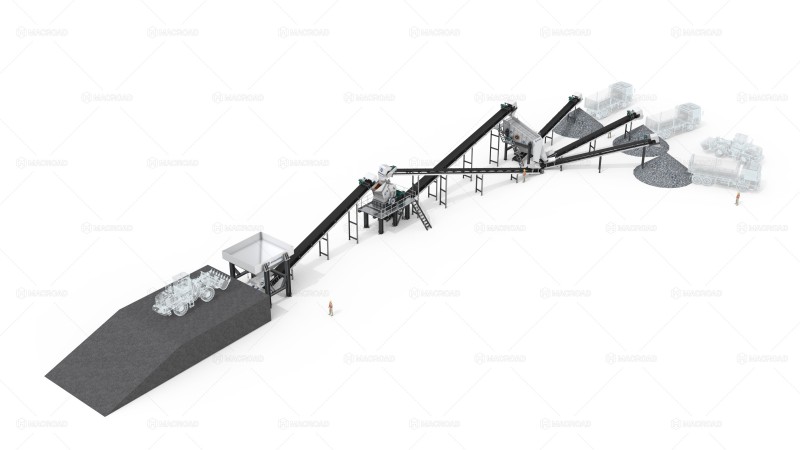
- Conversion of intermediate material: When used after cone crushers, impact crushers shape well-graded feed into aggregates that meet tight tolerances.
Impact crushing machines excel in scenarios where particle shape directly affects structural or aesthetic performance, making them critical for premium aggregate production.
Operational Considerations
- Material sensitivity: Highly abrasive rocks increase wear on blow bars, impact plates, and liners.
- Wear and maintenance demands: Frequent replacement of components can increase operational cost.
- Energy consumption: Generally higher than compression-based crushers, especially when used for bulk reduction rather than selective shaping.
- Process control: Requires consistent feed size from upstream cone crushers to maintain efficiency and avoid excessive fines.
Careful consideration of these factors is essential to maintain performance while controlling operating costs.
Optimal Role in the Production Process
- Dedicated final shaping stage: Ensures particle geometry meets design and specification requirements.
- Quality maximization: Reduces flaky or elongated particles and improves cubical content.
- System complementarity: Works in tandem with upstream cone crushers, refining particle shape without overloading the plant.
- Cost-benefit alignment: Applied selectively where final particle shape impacts product value, balancing operational efficiency with quality requirements.
Impact crushers enhance aggregate quality by refining particle shape at the final stage, and their effectiveness relies on proper placement, stable feed, and appropriate material. When integrated with upstream cone crushers, they support the production of premium-grade aggregates while maintaining smooth workflow and overall plant efficiency.
Functional Comparison: Complementary Roles, Not Interchangeable Solutions
How Cone and Impact Crushers Work Together
- Distinct contributions: Cone crushers maintain stable intermediate material and throughput; impact crushers focus on refining particle geometry in the final stage.
- Production line coordination: Each crusher achieves optimal efficiency when integrated according to its intended stage in the workflow.
- System over size: Proper sequencing and stage alignment are more important than machine capacity or brand, ensuring smooth operations and consistent output.
Operational Challenges in Integration
- Incorrect stage placement: Using impact crushers too early can reduce throughput, while relying solely on cone crushers for shaping may result in inconsistent aggregate quality.
- Workflow misalignment: Oversized or mismatched equipment increases energy use and wear without improving production.
- Feed regulation issues: Inconsistent feed lowers both shaping effectiveness and overall production efficiency, highlighting the need for coordinated process control.
Cone and impact crusher machines perform best when each is applied according to its intended function and properly integrated into the production line. Correct sequencing, consistent feed, and coordinated operation ensure high throughput, operational stability, and premium aggregate quality, without overreliance on equipment size or brand.
Designing Aggregate Plants for Shape and Stability
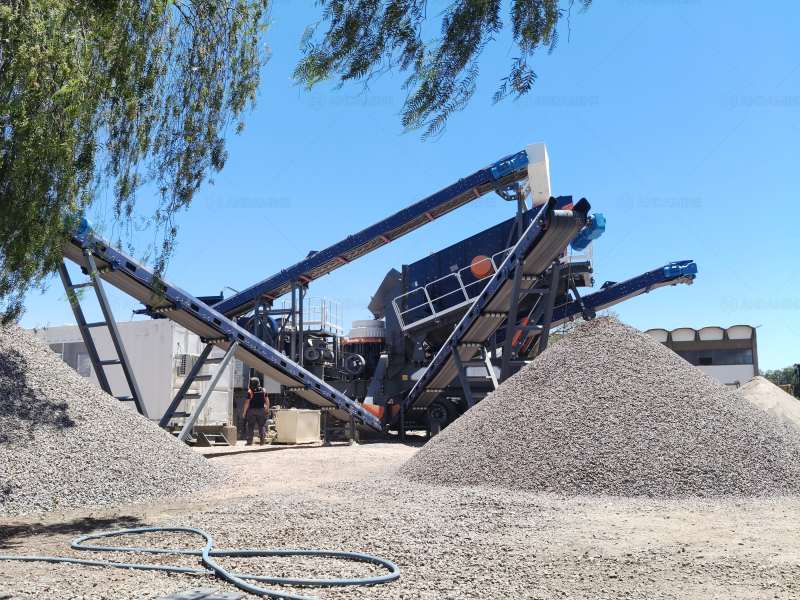
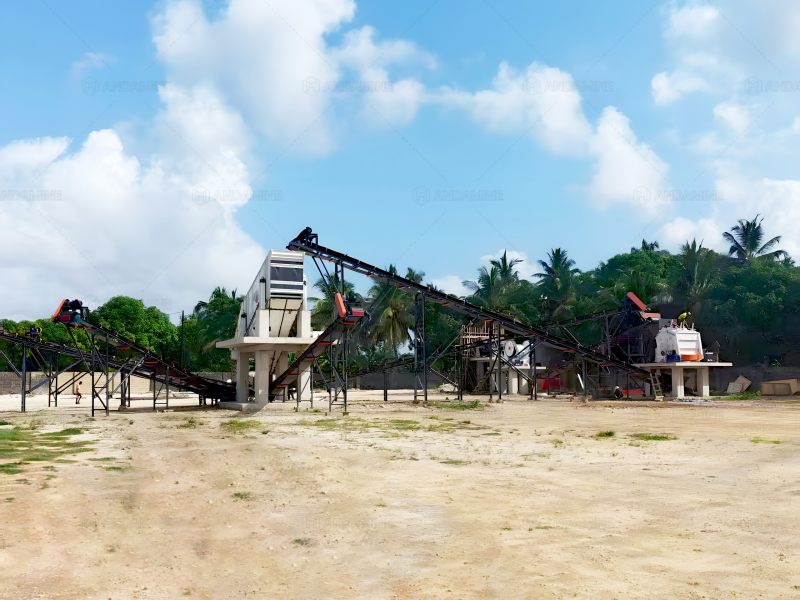
Optimized Crusher Flow for Aggregate Production
- Primary crushing: Jaw crusher reduces coarse feed into manageable size for secondary crushing.
- Secondary/tertiary stage: Cone crusher produces uniform intermediate material, stabilizing throughput and facilitating downstream shaping.
- Pre-screening: Removes fines and directs suitable feed to the shaping stage, preventing overloading of impactor crushers.
- Final shaping: Impact crusher refines particle edges, increases cubical content, and ensures consistency.
- Final screening: Confirms product meets size and shape specifications, maintaining quality standards.
This workflow illustrates how cone and impact crushers contribute at their optimal stage, avoiding bottlenecks and supporting consistent production.
Configuration Strategies Based on Rock Type
High-abrasion rock (granite, quartzite, basalt):
- Prioritize cone crusher durability and stable operation to handle tough, abrasive feed.
- Limit impact crusher use to final shaping to reduce wear and maintenance costs.
- Ensure consistent feed size and pre-screen oversized material to prevent overloading.
- Schedule regular wear inspections to avoid unexpected downtime and maintain quality output.
Medium to low-abrasion rock (limestone, sandstone, shale):
- Greater flexibility in impact crusher deployment allows more aggressive shaping.
- Adjust feed rate and rotor settings to refine particle shape and increase cubical content.
- Combine moderate impact usage with cone pre-crushing for energy-efficient operation.
- Use pre- and post-screening to prevent over-crushing and maintain consistent gradation.
Tailoring crusher operation and sequencing to rock abrasiveness ensures stable production, optimized particle shape, and balanced maintenance costs.
System-Level Optimization Considerations
- Closed-circuit operation: Adjust recirculation ratios to control particle size distribution and minimize over-crushing.
- Screening placement and bypass options: Efficiently direct material to shaping stages or bypass to balance throughput and particle quality.
- Cost-quality balance: Evaluate particle shape improvement against energy usage, wear rates, and maintenance requirements.
System-level coordination—beyond single-machine performance—is essential for achieving both superior particle shape and plant stability.
A Decision Framework for Aggregate Plant Owners and Investors
Integrating Equipment Selection into System Design
- Focus on system synergy: High-performance output depends on how each crusher stage interacts, not on individual machine specifications.
- Consider lifecycle costs: Include energy consumption, wear parts, maintenance, and downtime alongside aggregate quality benefits.
- Outcome-driven planning: Define production goals first—throughput, particle shape, gradation—then select equipment to meet these objectives efficiently.
- Process alignment: Ensure cone and impact crushers are assigned roles that match their strengths—throughput and stability versus final particle shaping.
Step-by-Step Decision Logic
- Define target markets and product requirements: Particle size, shape, gradation, and end-use performance.
- Assess raw material properties: Hardness, abrasiveness, fragmentation behavior from lab and field tests.
- Design process flow: Determine primary, secondary, tertiary, and shaping stages based on capacity and specifications.
- Assign crusher roles and capacities: Allocate cone and impact crushers according to functional strengths.
- Plan for flexibility: Include closed-circuit recirculation, bypass options, or extra shaping stages for future adjustments.
- Select a supplier with system-level support: Prioritize partners who provide engineering guidance, layout optimization, and maintenance planning.
Operational Guidance for Owners and Investors
- Clear role definition: Minimizes bottlenecks and ensures stable, consistent production.
- System-focused planning: Adapts plants to varying rock types, abrasive content, and market demands without major redesign.
- Investment efficiency: Optimized layouts maximize throughput, reduce wear, and control energy consumption.
- Long-term value: Integrated system design ensures predictable performance, lowers operational risk, and supports premium aggregate production.
Decisions should be system-oriented, not single-machine-focused. By combining production goals, material properties, and lifecycle cost considerations, plant owners and investors can design aggregate processing equipment that balance efficiency, product quality, and sustainable profitability.
Market and Technology Trends in Aggregate Production

Market Demand for High-Quality Particle Shape
- Urbanization and infrastructure projects worldwide increase the need for aggregates with controlled particle shape and consistent gradation for concrete and asphalt performance.
- Southeast Asia favors mobile and small-scale plants for rapid deployment, while Africa and Latin America prioritize rugged, high-durability crushers to handle variable materials.
- Environmental regulations and low-carbon initiatives influence equipment choice and material handling, indirectly shaping achievable particle geometry.
Technological Trends Enhancing Particle Shape
- Adjustable impact crushers: Enable precise control over cubical content and particle geometry, reducing the need for downstream reprocessing.
- Energy-efficient cone and impact crushers: Support stable throughput and consistent gradation with lower energy consumption.
- Automation and digital monitoring: Real-time control of feed, crusher settings, and recirculation ensures uniform particle size and shape.
- Wear-resistant materials and predictive maintenance: Minimize downtime and maintain consistent crusher performance, supporting continuous high-quality production.
Production System Implications
- Flexible, modular plant layouts allow crushers to be deployed optimally based on raw material characteristics and market specifications.
- Pre-screening, closed-circuit recirculation, and sequencing strategies maximize the efficiency of final shaping stages.
- Integrating modern technology with process design ensures compliance with particle shape requirements while controlling energy use, wear, and operational costs.
From Equipment Selection to Process Excellence
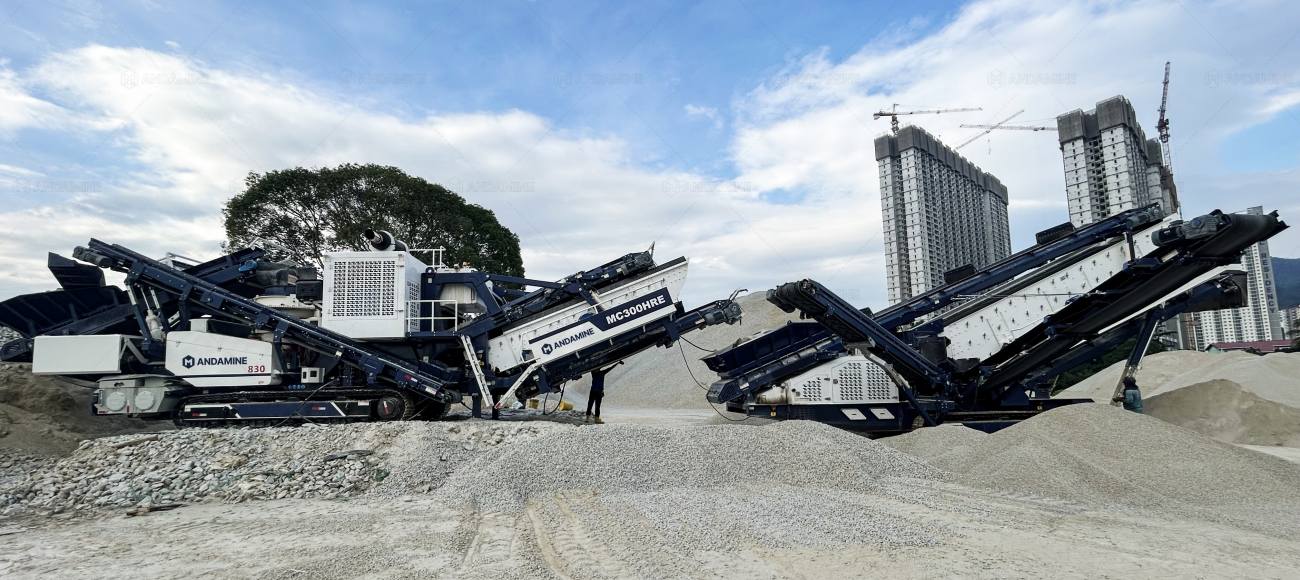
Achieving high-performance aggregate production depends on designing workflows that integrate equipment, material properties, and operational objectives. Crushing plants that consider throughput balance, energy efficiency, and maintenance planning in their process design can maintain stable, reliable operations while meeting project demands.
By focusing on system-level coordination and flexible plant layouts, plant managers and stakeholders can optimize costs, maximize productivity, and ensure sustainable, high-value aggregate production over the long term. This approach positions aggregate crushing plants to adapt efficiently to evolving construction standards and market requirements.